






















EV Insurance Guide
Tesla Model S
Tesla Model S insurance considerations, from battery repairs and advanced technology to high-performance Plaid coverage.
Overview
The Tesla Model S is a luxury electric sedan introduced in 2012. Over its long production history, it has evolved through numerous battery, drivetrain, technology, and interior configurations. An early rear-wheel-drive Model S, a later dual-motor version, and a modern Model S Plaid can present significantly different insurance risks and repair costs.
The Model S combines a high-voltage battery, sophisticated electronics, an aluminum-intensive body structure, and performance capabilities that can influence insurance premiums. Depending on model year and configuration, equipment may include adaptive air suspension, advanced driver-assistance cameras, and specialized wheels and tires.
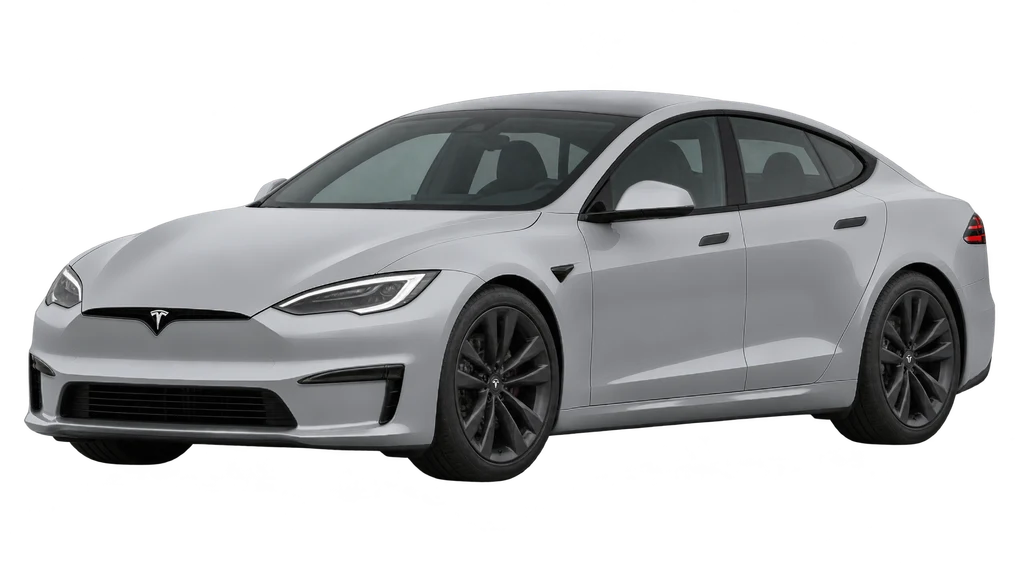
The 2021 redesign introduced substantial interior and drivetrain changes, including the tri-motor Plaid. Because the Model S has changed considerably since 2012, insurers should evaluate the exact vehicle rather than relying on assumptions about the model name.
This guide explains the main insurance considerations for Model S owners, including repair costs, battery coverage, glass and camera systems, deductibles, and total-loss valuation. Actual insurance availability and pricing depend on the driver, location, vehicle, and policy.
How Much Does Tesla Model S Insurance Cost?
Tesla Model S insurance costs vary by model year, configuration, driver, location, coverage, and insurer. The Model S is a luxury electric sedan with specialized repair requirements, so its insurance premiums may differ from those of smaller or less expensive EVs. The vehicle's value is important, but it is not the only consideration. Insurers may evaluate performance, repair expenses, claim history, battery components, safety equipment, and the cost of replacement parts. A Model S Plaid may be assessed differently from an older standard Model S because of its performance and market value. Repair availability can also matter. Structural work and high-voltage repairs may require appropriately qualified facilities, potentially increasing repair time and transportation expenses. There is no reliable single insurance price that applies to every Model S. Owners should compare quotes using their exact VIN, annual mileage, garaging location, driver information, deductibles, and coverage limits. Compare equivalent policies rather than choosing solely by the lowest advertised premium.
What affects insurance cost
Several factors specific to the Tesla Model S are worth understanding when shopping for insurance.
Vehicle Year, Trim, and Value
The Model S has been sold in many configurations since 2012. Market value, battery version, mileage, condition, and equipment can differ substantially between an older Model S and a newer Plaid. These differences can affect comprehensive and collision premiums, as well as total-loss settlements.
Tesla Collision Repair Requirements
The Model S uses an aluminum-intensive structure and specialized EV components. Certain structural and high-voltage repairs require trained technicians, appropriate equipment, and Tesla repair procedures. Labor, parts, and access to appropriately qualified repair facilities can influence claim costs and repair duration.
Battery and High-Voltage Components
The high-voltage battery and related electrical equipment are important parts of the Model S. Physical damage from a covered event may involve specialized inspection or repair. Battery age, configuration, replacement cost, and repair feasibility can affect claims, while ordinary degradation is generally not covered by auto insurance.
Cameras, Glass, and Driver Assistance
Model S camera and driver-assistance equipment varies by production year. Repairs involving certain cameras, windshields, or body components may require inspection or calibration under applicable Tesla procedures. Large glass components and specialized electronics can also influence repair expenses.
Performance and Plaid Configuration
The Model S includes configurations ranging from earlier standard versions to high-performance dual-motor and tri-motor models. Plaid versions offer exceptional acceleration. Insurers may consider vehicle performance, configuration, driver history, and other underwriting factors when calculating premiums.
Air Suspension, Wheels, and Specialized Parts
Many Model S configurations have adaptive air suspension and specialized wheel or tire options. Repair costs can vary depending on the exact equipment and the damage involved. Parts availability, labor requirements, and model-year differences may influence repair timelines and insurance claims.
Battery and insurance
The Model S uses a high-voltage lithium-ion battery system, with battery design and capacity varying across production years and configurations. The battery is an important part of the vehicle's value and requires appropriate safety procedures when inspected or repaired. Collision coverage may apply to battery damage caused by a covered accident. Comprehensive coverage may apply to qualifying non-collision events, such as certain fires or floods. Coverage always depends on the specific policy, cause of damage, exclusions, and deductible. Normal battery aging, gradual capacity loss, and mechanical failure without a covered cause are generally not covered by standard auto insurance. Manufacturer warranty coverage is separate from insurance and depends on the vehicle's applicable warranty terms. Owners should ask how their insurer evaluates damaged battery packs, whether specialist inspection is covered, and when battery damage could result in a total-loss determination.
Repair considerations
Tesla recommends appropriately trained repair facilities for Model S collision repairs, particularly when structural components or high-voltage systems are involved. The vehicle's aluminum-intensive construction and specialized electronics require procedures that may differ from those used on conventional vehicles. Tesla operates collision facilities and supports independent approved repair centers. Availability varies by location. Owners should confirm whether their insurer permits the repair facility they prefer and how genuine replacement parts and specialized labor are handled. Complex repairs can take longer when components must be ordered or specialized work is required. Review rental reimbursement limits and transportation benefits before a claim occurs.
Cameras, sensors, glass and technology
The Model S has evolved through multiple generations of cameras, driver-assistance hardware, and electronic systems. Equipment and capabilities vary by production year, hardware version, and software configuration. After a covered collision or windshield replacement, camera inspection or calibration may be required according to the applicable Tesla service procedure. Owners should confirm whether related labor and diagnostic work are included in the repair estimate. Glass roofs, windshields, exterior cameras, lighting, and electronic components can add complexity to certain repairs. Not every Model S has the same equipment, so insurers and repair facilities should use the exact VIN and configuration. Advanced driver-assistance features do not eliminate accident risk or guarantee lower insurance premiums.
Coverage considerations
Tesla Model S owners should compare liability, collision, comprehensive, uninsured or underinsured motorist coverage, and applicable medical coverage. Coverage availability and requirements vary by state. Collision coverage generally addresses damage caused by covered collisions, while comprehensive coverage generally addresses qualifying events such as theft, fire, falling objects, and certain weather damage. Both are subject to policy terms, exclusions, and applicable deductibles. Because Model S values and equipment vary considerably by year and configuration, owners should confirm how their insurer values the exact vehicle. Review optional GAP coverage if the vehicle is financed or leased, and ask whether new-car replacement coverage is available for eligible newer vehicles. Confirm how the policy handles Tesla-approved repair facilities, high-voltage components, replacement parts, and camera-related repair procedures. Higher liability limits and rental reimbursement may also be worth considering based on individual circumstances.
Deductibles
A deductible is the amount an insured owner pays toward a covered claim before the applicable insurance payment. Collision and comprehensive coverage commonly have separate deductibles. Choosing a higher deductible may reduce premiums but increases out-of-pocket costs after a claim. A lower deductible generally increases premiums while reducing the amount paid toward an eligible loss. For the Model S, consider the cost of body repairs, glass replacement, and specialized electrical work when choosing deductibles. Some insurers offer separate glass deductibles or glass coverage options, depending on the state and policy. Compare quotes using equivalent deductibles and coverage limits. The lowest premium does not necessarily provide the best overall protection.
Accidents and total loss
A Model S may be declared a total loss when repair costs meet the applicable insurer and state-law criteria relative to the vehicle's value. Total-loss rules and settlement methods vary by jurisdiction and policy. For standard auto insurance, settlement commonly depends on actual cash value, considering model year, trim, mileage, condition, equipment, and comparable vehicle prices. Battery configuration and significant production-year differences can be relevant to valuation. A Model S Plaid should not automatically be valued using comparisons with older or lower-performance Model S configurations. Owners should review the valuation report and provide accurate supporting documentation if necessary. GAP coverage may help address an eligible difference between the insurance settlement and an outstanding loan or lease balance. It does not necessarily cover every unpaid amount. New-car replacement coverage may be available for qualifying vehicles under certain policies.
Questions to ask an insurer
Does your policy cover physical damage to the Model S high-voltage battery from an eligible collision or comprehensive claim?
Can I use a Tesla Collision Center or qualified Tesla-approved repair facility for structural and high-voltage repairs?
How does your insurer calculate actual cash value for my specific Model S year, trim, battery configuration, and equipment?
Are camera inspections, diagnostics, and required calibration procedures covered following an eligible windshield or collision repair?
What rental reimbursement and towing limits apply if Tesla parts or specialist repairs cause delays?
Are there different underwriting considerations or coverage requirements for Model S Plaid and other high-performance configurations?
Do you offer GAP, new-car replacement, or separate glass coverage, and what eligibility rules or exclusions apply?
Ways to shop smarter
Compare quotes from multiple insurers using the exact Model S year, trim, VIN, and garaging location. Insurance prices can vary substantially between providers.
Compare equivalent liability limits, comprehensive and collision deductibles, and optional coverages rather than evaluating premiums alone.
Ask whether the insurer works with Tesla Collision Centers or approved repair facilities and how specialist labor is handled.
Confirm coverage for eligible high-voltage battery damage and distinguish physical-damage insurance from battery warranty protection.
Review glass coverage and ask whether necessary camera inspections or calibration procedures are included after a covered repair.
Consider rental reimbursement and towing limits because specialized repairs or replacement-part delays may extend the time your Model S is unavailable.
If you finance or lease your Model S, review whether GAP coverage is appropriate and understand its exclusions and payment limits.
Recompare coverage at renewal, especially after significant changes in vehicle value, mileage, driving habits, or household circumstances.
Frequently asked questions
Is the Tesla Model S expensive to insure?
The Model S can be relatively expensive to insure because it is a luxury electric vehicle with specialized components and potentially costly repairs. However, premiums vary by model year, trim, driver, location, coverage, and insurer. A newer Plaid and an older standard Model S may receive very different quotes. Comparing personalized quotes is more useful than relying on a single published average.
Does insurance cover the Tesla Model S battery?
Collision or comprehensive insurance may cover physical battery damage caused by an eligible insured event, subject to policy terms and deductibles. Normal battery aging, gradual capacity loss, and mechanical failure without a covered cause generally are not covered by standard auto insurance. Manufacturer battery warranties are separate and have their own conditions.
Is the Model S Plaid more expensive to insure?
Plaid's high performance and vehicle value may influence an insurer's pricing, but there is no universal premium difference that applies to every driver. Rates also depend on location, driving record, coverage limits, deductibles, and the insurer's underwriting methods. Compare quotes using the exact Plaid configuration rather than estimates for the Model S lineup generally.
Does Model S insurance cover windshield and glass roof damage?
Comprehensive coverage commonly applies to eligible glass damage from events such as falling objects or certain weather incidents, while collision coverage may apply when damage results from a covered collision. Deductibles and special glass provisions vary. Some repairs may also require camera-related procedures depending on the model year and affected equipment.
Can I repair my Model S at a Tesla-approved collision facility?
Tesla Collision Centers and approved repair facilities are equipped for various Tesla-specific repairs, but insurance arrangements vary. Ask your insurer whether your preferred facility is eligible, whether special authorization is needed, and how labor rates and replacement parts are handled. High-voltage and structural work should follow applicable Tesla repair procedures.
Does Autopilot reduce Tesla Model S insurance premiums?
Advanced driver-assistance equipment does not automatically qualify a Model S for lower premiums. Insurers evaluate many factors, including driver history, vehicle configuration, repair costs, location, and their own underwriting rules. Available discounts vary by provider and jurisdiction. Drivers remain responsible for supervising applicable driver-assistance features.
How does insurance determine the total-loss value of a Model S?
Standard policies generally use actual cash value, considering model year, configuration, mileage, condition, and comparable market prices. Because the Model S has undergone major changes since 2012, the correct trim and equipment are important. Owners can review a valuation report and submit supporting information if they believe the comparison vehicles or vehicle details are inaccurate.
Should I purchase GAP insurance for a financed Model S?
GAP coverage may be useful when the outstanding eligible loan or lease balance exceeds the amount paid by the primary insurer after a covered total loss. Whether it is worthwhile depends on the financing terms, down payment, vehicle depreciation, and the GAP contract. Coverage limits and exclusions vary, and GAP does not necessarily pay every outstanding charge.
Does insurance cover Tesla Model S charging equipment?
Damage to charging equipment permanently installed at home may fall under homeowners or another property policy rather than the vehicle's auto insurance. Coverage depends on ownership, installation, cause of loss, and policy wording. Portable charging equipment may be treated differently. Owners should confirm coverage with their home and auto insurers rather than assuming all charging accessories are included.
Related EV insurance topics
Ready to compare?
Compare EV insurance options and find coverage that fits your needs.