




















EV Insurance Guide
Tesla Cybertruck
Tesla Cybertruck insurance considerations, including stainless-steel body repairs, steer-by-wire technology, battery coverage, and commercial-use risks.
Overview
The Tesla Cybertruck is an all-electric pickup truck that began customer deliveries in late 2023. Its distinctive angular design, stainless-steel exterior panels, high-voltage electrical architecture, and advanced vehicle systems create insurance considerations that differ from those of conventional pickup trucks and many other electric vehicles.
Cybertruck configurations have included all-wheel-drive and high-performance Cyberbeast versions, with equipment and availability varying by model year. The truck combines a large high-voltage battery, electronically controlled steering, four-wheel steering, and specialized structural and exterior components.
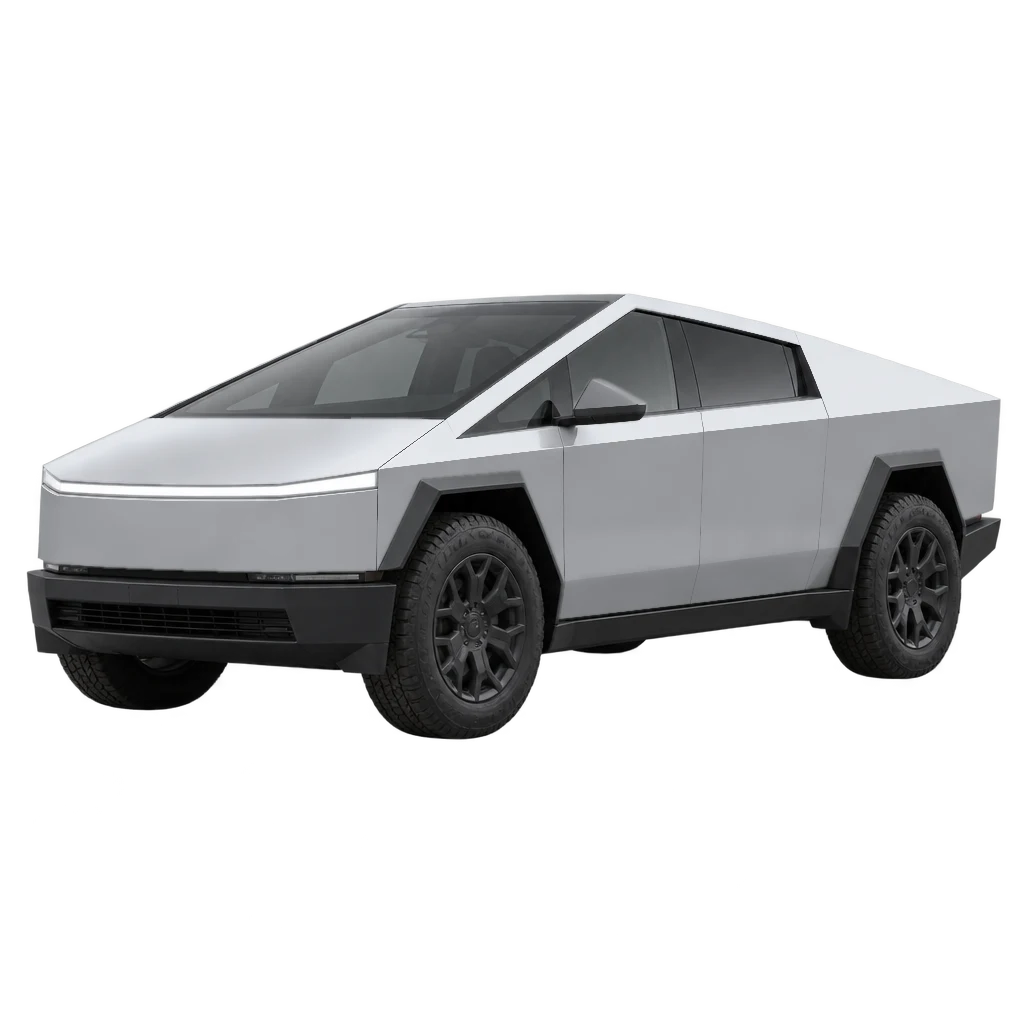
Unlike a conventional painted pickup, the Cybertruck uses exposed stainless-steel exterior panels. Damage assessment and repair may involve specialized procedures, replacement components, and qualified facilities. Its size, weight, glass, cameras, and electrical systems can also influence collision repair costs.
Owners should distinguish personal driving from business or commercial use, including work-related hauling, deliveries, or other activities that may require different insurance arrangements. This guide explains the major Cybertruck insurance considerations, including physical damage, repair facilities, battery coverage, deductibles, and total-loss valuation.
How Much Does Tesla Cybertruck Insurance Cost?
Tesla Cybertruck insurance premiums depend on the vehicle's configuration, value, driver, location, coverage, deductibles, use, and insurer. Its specialized exterior construction and electronic systems can influence repair expenses and underwriting decisions. The Cybertruck's stainless-steel exterior differs from conventional painted body panels. Depending on the location and severity of damage, repairs may require specialized techniques or panel replacement. Insurers may consider the cost of these procedures and access to qualified repair facilities. Vehicle configuration also matters. All-wheel-drive and Cyberbeast versions may have different performance characteristics, equipment, and insured values. Insurers may evaluate these differences when calculating premiums. Personal versus commercial use is another important consideration. A personal auto policy may exclude certain business activities, and a commercial policy may be necessary depending on how the truck is used. There is no single premium that accurately represents every Cybertruck. Compare personalized quotes using the exact VIN, model year, configuration, garaging address, annual mileage, intended use, coverage limits, and deductibles.
What affects insurance cost
Several factors specific to the Tesla Cybertruck are worth understanding when shopping for insurance.
Stainless-Steel Exterior Repairs
The Cybertruck's exposed stainless-steel exterior panels require different repair considerations from conventional painted body panels. Damage severity, panel location, repair methods, and parts availability may affect claim costs. Some damage may require specialized work or replacement rather than ordinary body-shop techniques.
Vehicle Value and Cyberbeast Performance
Cybertruck values vary by model year, configuration, mileage, condition, and equipment. High-performance Cyberbeast versions have different capabilities and components from other configurations. Insurers may consider these differences, along with driver and location factors, when determining premiums and total-loss values.
Battery and High-Voltage Architecture
The Cybertruck uses a large high-voltage battery and specialized electrical systems. Damage from an eligible insured event may require high-voltage inspections, diagnostics, and complex repairs. Normal battery degradation and unrelated mechanical or electrical failure generally are not covered by standard auto insurance.
Steer-by-Wire and Four-Wheel Steering
The Cybertruck uses electronically controlled steering and rear-wheel steering systems that differ from conventional mechanical steering arrangements. Collision damage affecting these components may require specialized diagnostics, repair procedures, and calibration, potentially influencing claim costs.
Glass, Cameras, and Specialized Components
The Cybertruck's windshield, glass, cameras, lighting, and electronic equipment can affect repair complexity. Certain covered repairs may require diagnostic checks or calibration under applicable Tesla procedures. Replacement-part availability and facility capabilities can influence repair timelines.
Personal, Business, and Commercial Use
Insurance eligibility and pricing can depend on whether a Cybertruck is used for personal transportation, business activities, deliveries, or other commercial purposes. Some uses may require commercial auto coverage or additional endorsements. Owners should accurately disclose intended use when obtaining quotes.
Battery and insurance
The Tesla Cybertruck uses a large high-voltage lithium-ion battery system and an advanced electrical architecture. Its battery and related electrical components require vehicle-specific safety procedures, diagnostics, and repair methods. Collision coverage may apply to physical battery damage caused by an eligible accident. Comprehensive coverage may apply to qualifying non-collision events, such as certain fires, flooding, or other covered perils. Actual coverage depends on policy terms, exclusions, deductibles, and the circumstances of the loss. Ordinary battery degradation, gradual capacity loss, and mechanical or electrical failure without an insured cause generally fall outside standard auto insurance coverage. Tesla's battery warranty is separate and subject to its own conditions. After a collision, high-voltage inspections may be necessary even when damage is not immediately visible. Owners should ask how their insurer evaluates battery damage, specialist labor, repair feasibility, and potential total-loss decisions.
Repair considerations
The Cybertruck's stainless-steel exterior, specialized body construction, high-voltage components, and electronically controlled systems require careful repair planning. Not every collision repair facility has the training, equipment, or experience needed for all Cybertruck repairs. Exterior damage may involve specialized stainless-steel repair techniques or replacement panels. The correct procedure depends on the affected components and Tesla's applicable repair instructions. Steer-by-wire, rear-wheel steering, structural components, cameras, and electrical systems may require additional diagnostics or calibration following certain collisions. Repairs should follow Tesla's vehicle-specific procedures. Owners should verify that a Tesla Collision Center or Tesla-approved facility can perform the required work and ask their insurer how labor, parts, diagnostics, and repair authorization are handled. Parts availability, facility capacity, and repair complexity can affect downtime. Consider rental reimbursement and towing coverage, including any limits that may apply to pickup trucks or replacement vehicles.
Cameras, sensors, glass and technology
The Tesla Cybertruck uses cameras, electronic controls, and software to support driver-assistance and other vehicle functions. Its technology differs from conventional pickup trucks and may require specialized procedures after certain repairs. Windshield replacement or collision damage affecting cameras and related equipment may require inspection, diagnostics, or calibration under applicable Tesla instructions. Owners should confirm how necessary procedures are covered when associated with an eligible claim. The Cybertruck's steer-by-wire and four-wheel steering systems introduce additional repair considerations. Damage involving steering components or associated electronic controls should be evaluated by appropriately qualified technicians. Advanced driver-assistance systems do not guarantee lower insurance premiums or eliminate the driver's responsibility to supervise the vehicle.
Coverage considerations
Tesla Cybertruck owners should compare liability, collision, comprehensive, uninsured or underinsured motorist coverage, and applicable medical coverage. Requirements and availability vary by state, insurer, and vehicle use. Collision coverage generally addresses damage from eligible collisions, while comprehensive coverage generally addresses qualifying non-collision events such as theft, fire, falling objects, and certain weather damage. Both are subject to policy terms, exclusions, and deductibles. The Cybertruck's stainless-steel exterior, high-voltage battery, steer-by-wire system, and specialized electronic components make it important to understand how covered repairs are evaluated. Ask whether necessary diagnostics, calibration, specialized labor, and replacement parts are included when associated with an eligible claim. Owners using the Cybertruck for work should disclose their actual activities to the insurer. Some business activities may be permitted under a personal policy, while others require endorsements or commercial auto insurance. Do not assume that a personal auto policy covers deliveries, paid transportation, or all business-related hauling. Review rental reimbursement, towing, and roadside assistance limits. Owners financing or leasing a Cybertruck should also consider whether GAP coverage is appropriate and whether new-car replacement coverage is available.
Deductibles
A deductible is the amount an insured owner pays toward an eligible claim before the applicable insurance payment. Collision and comprehensive coverage commonly have separate deductibles. Higher deductibles may reduce premiums but increase out-of-pocket expenses following a covered claim. Lower deductibles generally cost more in premiums but reduce the amount paid toward an eligible loss. For the Cybertruck, consider potential stainless-steel panel damage, specialized glass replacement, and electronic or steering-system repairs when choosing deductibles. Some insurers offer separate glass provisions, and state rules may affect windshield coverage. Compare quotes using equivalent deductibles, coverage limits, and declared vehicle use. A lower premium may not provide better overall protection if it carries substantially higher deductibles or excludes the truck's intended activities.
Accidents and total loss
A Tesla Cybertruck may be declared a total loss when repair costs meet applicable insurer and state-law criteria relative to the vehicle's value. Total-loss rules and settlement methods vary by jurisdiction and policy. Standard auto insurance commonly settles total losses based on actual cash value, considering model year, configuration, mileage, condition, equipment, and comparable market prices. Cyberbeast and other Cybertruck configurations may have different market values. Stainless-steel exterior damage, high-voltage battery damage, structural repairs, and specialized steering components may influence repair estimates and total-loss decisions. However, damage to one of these systems does not automatically mean the truck is a total loss. Owners should review valuation reports for the correct configuration, factory equipment, mileage, condition, and comparable vehicles. Aftermarket accessories, wraps, and modifications may require additional coverage or documentation, depending on the policy. GAP coverage may help address an eligible difference between the insurance settlement and the outstanding loan or lease balance, subject to contract terms and exclusions.
Questions to ask an insurer
Does your policy cover physical damage to the Cybertruck high-voltage battery from an eligible collision or comprehensive claim?
Can I use a Tesla Collision Center or Tesla-approved facility qualified to repair Cybertruck stainless-steel panels and specialized systems?
Are necessary steer-by-wire, rear-wheel steering, camera, and electronic-system diagnostics or calibrations included after a covered collision?
How does your policy handle stainless-steel exterior panel repairs or replacement, including specialized labor and genuine replacement parts?
Does my intended personal or business use qualify for this policy, and which activities would require commercial coverage or endorsements?
How do you calculate actual cash value for my Cybertruck configuration, including Cyberbeast equipment, accessories, and modifications?
What towing, rental reimbursement, GAP, and new-car replacement options are available for my Cybertruck, and what limits or exclusions apply?
Ways to shop smarter
Compare personalized quotes using the exact Cybertruck year, VIN, configuration, garaging location, annual mileage, and intended vehicle use.
Ask how the insurer handles eligible stainless-steel panel damage, including specialized repair procedures, replacement parts, and labor.
Confirm whether your preferred Tesla Collision Center or approved facility can perform the required Cybertruck repairs and how the insurer evaluates those costs.
Review high-voltage battery coverage and distinguish physical damage caused by an insured event from ordinary degradation or mechanical failure.
Disclose any business, delivery, or commercial use before purchasing coverage. Confirm that your actual activities are permitted under the selected policy.
Compare equivalent liability limits, collision and comprehensive deductibles, glass provisions, and optional coverages rather than selecting solely by premium.
Ask about coverage for aftermarket accessories, wraps, and modifications, and retain documentation of their purchase and installation.
Consider towing and rental reimbursement limits, review GAP or replacement coverage when appropriate, and compare policies again at renewal.
Frequently asked questions
Is the Tesla Cybertruck expensive to insure?
Cybertruck premiums depend on the driver, location, configuration, vehicle use, coverage, deductibles, and insurer. Its specialized stainless-steel exterior, high-voltage systems, and collision repair requirements may influence claim costs. Cyberbeast and other configurations may be priced differently. Personalized quotes provide a more reliable comparison than a single published average.
Does insurance cover Cybertruck stainless-steel body damage?
Collision or comprehensive insurance may cover stainless-steel exterior damage caused by an eligible insured event, subject to policy terms and deductibles. Repair methods depend on the affected panels and severity of damage. Ordinary cosmetic deterioration, wear, or maintenance generally is not covered by standard auto insurance.
Does insurance cover the Cybertruck battery?
Physical battery damage caused by an eligible collision or comprehensive event may be covered, subject to policy terms, exclusions, and deductibles. Normal battery degradation, gradual capacity loss, and mechanical or electrical failure without a covered cause generally are not covered by standard auto insurance. Tesla's battery warranty is separate.
Does Cybertruck insurance cover steer-by-wire repairs?
Damage to the steer-by-wire system resulting from an eligible insured event may be covered under applicable collision or comprehensive coverage. Ordinary mechanical or electronic failure without a covered cause generally is excluded from standard auto insurance. Repairs may require specialized diagnostics and Tesla-specific procedures.
Is Cyberbeast more expensive to insure than other Cybertruck versions?
Cyberbeast has different performance characteristics and equipment that may affect vehicle value, repair costs, and insurer pricing. However, the premium difference varies by driver, location, coverage, deductibles, and underwriting rules. Request quotes using the exact Cyberbeast VIN and configuration.
Can I insure a Cybertruck for business or commercial use?
Cybertruck insurance options depend on the type of business activity, vehicle ownership, driver arrangements, and insurer. Some limited business use may be permitted under a personal policy, while deliveries, commercial hauling, or other activities may require additional coverage or a commercial auto policy. Describe your actual use accurately when obtaining quotes.
Can I repair my Cybertruck at a Tesla-approved collision facility?
Tesla Collision Centers and approved repair facilities may perform qualifying Cybertruck repairs, but not every location necessarily handles every specialized repair. Confirm the facility's Cybertruck capabilities and ask your insurer how parts, labor, diagnostics, and authorization are handled. Repairs should follow applicable Tesla procedures.
How is a Tesla Cybertruck valued after a total loss?
Standard auto insurance generally uses actual cash value, considering model year, configuration, mileage, condition, equipment, and comparable market prices. Cyberbeast equipment and certain accessories may affect valuation. Review the insurer's report and confirm whether aftermarket additions are included or require separate coverage.
Does Cybertruck insurance cover wraps and aftermarket accessories?
Coverage for wraps, aftermarket accessories, and modifications depends on the insurer and policy. Some equipment may have limited coverage under a standard policy, while additional protection or scheduled coverage may be needed. Owners should disclose modifications and retain receipts, photographs, and installation records.
Related EV insurance topics
Ready to compare?
Compare EV insurance options and find coverage that fits your needs.