












EV Insurance Guide
Smart EQ fortwo
Insurance considerations for the Smart EQ fortwo electric city car, including battery protection, used-vehicle valuation, coupe and cabrio repairs, replacement-parts availability, charging equipment, and coverage options.
Overview
The Smart EQ fortwo is a fully electric, two-passenger city car designed for short-distance transportation, easy parking, and urban maneuverability.
The EQ fortwo was officially sold in the United States for the 2019 model year, following earlier Smart fortwo electric drive vehicles. The EQ name aligned the car with Mercedes-Benz's electric vehicle branding.
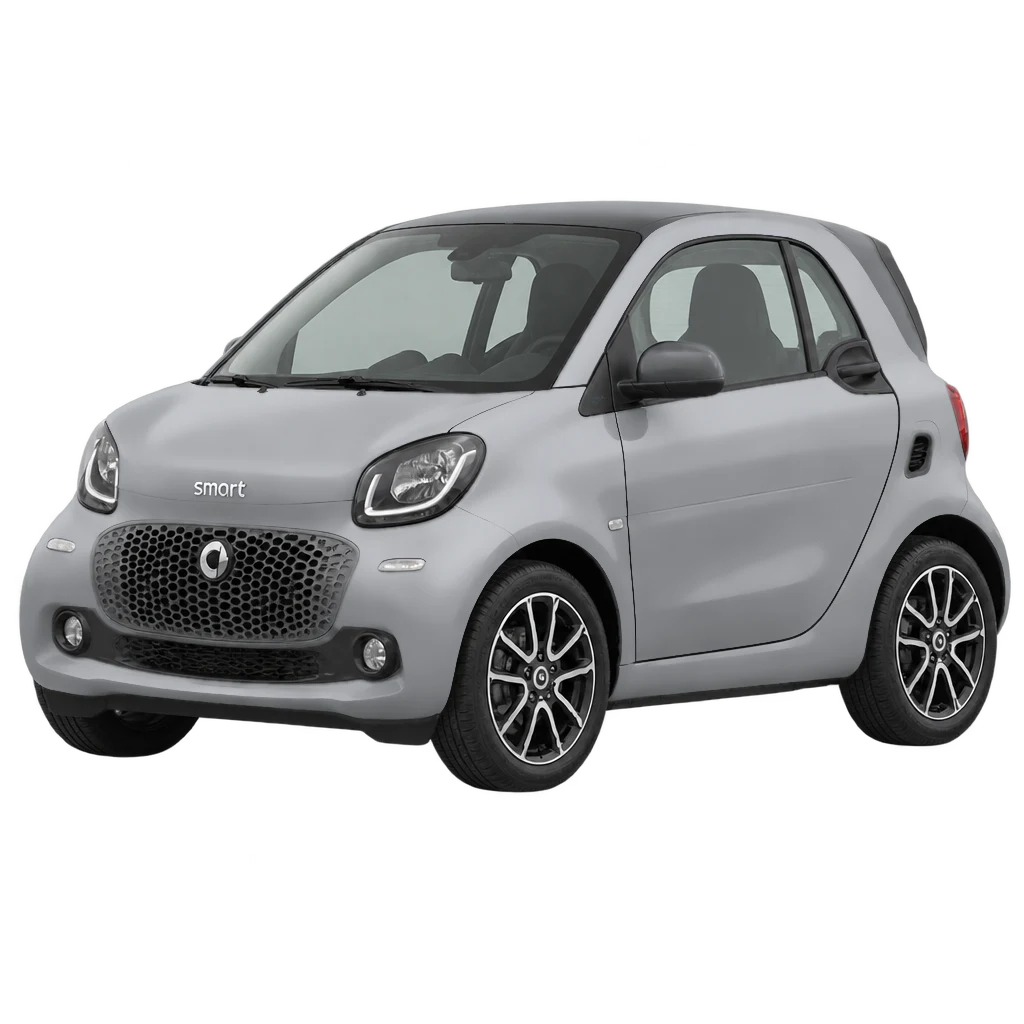
The 2019 U.S. EQ fortwo was offered as a fixed-roof coupe and a soft-top cabrio convertible. Both versions use a single electric motor driving the rear wheels.
The EQ fortwo's unusually compact dimensions, short wheelbase, two-seat cabin, rear-mounted electric drivetrain, and small high-voltage battery distinguish it from larger electric vehicles.
The U.S. 2019 model has a 17.6 kWh lithium-ion battery. Its EPA-rated driving range is 58 miles for the coupe and 57 miles for the cabrio.
These figures are official new-vehicle ratings, not guarantees of the range available from an older used example. Actual range depends on battery condition, temperature, driving speed, climate-control use, terrain, and other factors.
Smart ended sales of new vehicles in the United States after the 2019 model year. Consequently, American buyers now generally encounter the EQ fortwo as a used vehicle.
Mercedes-Benz continues to provide Smart owner resources and access to service and parts channels, although availability of particular components and qualified repair facilities may vary.
The Smart EQ fortwo is also distinct from the newer Smart-branded electric vehicles developed for other markets.
For insurance purposes, the EQ fortwo raises several questions: how the insurer values an older, discontinued EV; whether specialized replacement parts are available; how battery damage is evaluated; whether coupe and cabrio components are correctly identified; and what coverage is appropriate for a relatively low-value but specialized electric vehicle.
Owners should obtain quotes using the correct model year, body style, trim, vehicle identification number, annual mileage, and intended use.
How Much Does Smart EQ fortwo Insurance Cost?
Smart EQ fortwo insurance premiums depend on the driver's location, age, driving history, annual mileage, vehicle value, coverage choices, deductibles, and the insurer's underwriting criteria. Because the U.S. EQ fortwo is a discontinued vehicle, the condition and market value of a particular used example are especially important. A well-maintained EQ fortwo coupe may have a different value and repair profile from a cabrio convertible with different equipment, mileage, or condition. Although the vehicle is physically small and has a modest original battery capacity compared with modern long-range EVs, these characteristics do not automatically guarantee inexpensive insurance. Collision repairs can involve specialized body panels, the tridion safety cell, rear-mounted electric drivetrain, high-voltage battery, electrical systems, lighting, or other model-specific parts. The cabrio adds a retractable soft-top mechanism, fabric roof, seals, and associated components that may affect repair costs. Replacement-parts availability can also influence the economic feasibility of repairing an older, discontinued vehicle. The cost of a major repair may be substantial relative to the vehicle's actual cash value, increasing the possibility of a total-loss determination after a covered accident. Insurance premiums may also reflect theft and claim experience, garaging location, driving patterns, and the insurer's rating methodology. There is no reliable universal Smart EQ fortwo insurance premium that applies to every owner. The best approach is to compare personalized quotes using the exact vehicle and the same coverage limits and deductibles.
What affects insurance cost
Several factors specific to the Smart EQ fortwo are worth understanding when shopping for insurance.
Model Year, Body Style, Trim, and Used-Vehicle Value
The U.S. 2019 Smart EQ fortwo was available in coupe and cabrio body styles. Earlier Smart fortwo electric drive vehicles share aspects of the platform but may have different model-year equipment and naming. The insurer should identify the actual vehicle using its VIN rather than assuming that every electric Smart fortwo has the same configuration. Used-vehicle values depend on age, mileage, condition, service history, battery health, body style, factory equipment, and comparable market prices. The cabrio's convertible roof and related equipment may influence both vehicle value and repair costs. Actual cash value generally reflects the vehicle's market value immediately before a covered loss, subject to policy terms and state law. Owners should review the vehicle's current value before deciding how much collision and comprehensive coverage to purchase.
High-Voltage Battery, Age, and Condition
The U.S. 2019 EQ fortwo uses a 17.6 kWh lithium-ion high-voltage battery located within the vehicle's underbody structure. Battery age, prior usage, charging history, temperature exposure, and overall condition may affect usable driving range and ownership considerations. A battery problem caused by ordinary aging or degradation is generally different from physical damage caused by an insured collision or other covered event. Following a significant accident or underbody impact, qualified technicians may need to inspect the battery enclosure, high-voltage cables, cooling equipment, and surrounding structure. Battery-related repairs may require specialized safety procedures and diagnostic equipment. The battery's relatively small capacity does not mean that every battery repair is inexpensive. Owners should review coverage for eligible battery damage and understand any policy limitations.
Discontinued U.S. Sales and Replacement-Parts Access
Smart stopped selling new vehicles in the United States after model year 2019. Mercedes-Benz continues to provide owner support and service and parts resources, but specific parts may have varying availability. Replacement body panels, glass, electronic modules, high-voltage components, and cabrio roof parts may require specialized sourcing. Repair facilities with experience working on older Smart electric vehicles may be less common than facilities servicing mainstream gasoline-powered cars. Limited availability of a particular component can increase repair time or affect whether a repair is economically reasonable. Owners should ask insurers about appropriate repair facilities, original-equipment parts, towing, and rental reimbursement.
Tridion Safety Cell, Compact Body, and City Driving
The Smart fortwo uses a tridion safety cell designed to form a protective passenger compartment. Its very short body and compact exterior panels are central to the vehicle's city-oriented design. A collision can involve exterior body panels, structural components, airbags, seat belts, suspension, lighting, or the rear electric drivetrain. The vehicle's small size should not be interpreted as a guarantee of low collision repair costs or reduced injury risk. Urban driving can involve frequent parking maneuvers, tight spaces, traffic congestion, and exposure to minor impacts. Insurance rates depend on the insurer's claims experience and other permitted rating factors rather than vehicle size alone. Owners should consider appropriate liability and physical-damage coverage for their driving circumstances.
Coupe Versus Cabrio Roof, Glass, and Body Equipment
The EQ fortwo coupe has a fixed-roof body, while the cabrio uses a retractable fabric soft top. The cabrio's roof fabric, folding mechanism, seals, and related components can require specialized repair or replacement after damage. Both body styles may require model-specific glass, exterior panels, lighting, and interior components. Water intrusion, storm damage, vandalism, and theft-related damage may be relevant considerations for owners of convertible vehicles. Coverage for these events depends on the applicable comprehensive policy and its exclusions. Owners should ensure their quote identifies the correct coupe or cabrio body style and factory-installed equipment.
Rear Electric Drivetrain, Charging Hardware, and Electronics
The 2019 EQ fortwo uses a single rear-mounted electric motor and rear-wheel drive. Its charging system includes a vehicle charging port, onboard AC charger, high-voltage components, and related electronics. The U.S. 2019 model was equipped with a 7.2 kW onboard AC charger. The vehicle also includes electronic safety and convenience systems, with equipment varying by trim and options. Collision or electrical damage may require vehicle-specific diagnostics and appropriately trained technicians. Owners should ask about coverage for eligible damage to charging equipment, electronic modules, and electric drivetrain components.
Battery and insurance
The Smart EQ fortwo uses a compact high-voltage lithium-ion battery designed primarily for urban and suburban driving. The U.S. 2019 model has a 17.6 kWh battery and an EPA-rated range of 58 miles for the coupe and 57 miles for the cabrio. These ratings describe new-vehicle testing. An older used vehicle may provide less range depending on battery condition, temperature, driving habits, and climate-control use. The EQ fortwo uses AC charging. Its U.S. 2019 specification includes a 7.2 kW onboard charger. Mercedes-Benz's U.S. reference guide describes approximately three hours for a full charge using appropriate 240-volt charging equipment under specified conditions. Charging from an ordinary 120-volt household outlet takes substantially longer. The U.S. 2019 EQ fortwo should not be described as supporting DC fast charging. Owners should use compatible charging equipment and verify connector requirements for their exact vehicle. Because these vehicles are older, battery condition may be important when purchasing, maintaining, or insuring a used EQ fortwo. Battery-capacity testing or a qualified vehicle inspection may help buyers understand the condition of a particular example. Manufacturer warranty coverage depends on the original model-year documents, eligibility, mileage, age, and other terms. Owners should not assume that an original battery warranty remains active in 2026. A qualifying manufacturing defect may be addressed by an applicable manufacturer warranty if the vehicle remains eligible. Physical battery damage from an eligible collision, fire, flood, or other insured event may be covered by collision or comprehensive insurance, depending on the cause of loss and policy provisions. Normal battery aging and capacity degradation generally are not automobile insurance claims. A battery issue does not automatically make the vehicle a total loss, although repair cost relative to current market value may influence the outcome.
Repair considerations
The Smart EQ fortwo may require specialized repairs because of its high-voltage electrical system, rear electric drivetrain, compact structure, and model-specific components. Repair work can involve the tridion safety cell, exterior body panels, suspension, high-voltage battery, charging system, electric motor, and vehicle electronics. The coupe and cabrio have different roof-related components, and the cabrio's retractable top can introduce additional repair complexity. Smart's withdrawal from the U.S. new-vehicle market after 2019 means that owners should verify access to qualified service facilities and replacement parts before an accident occurs. Mercedes-Benz maintains U.S. Smart service and parts resources, but availability of specific components and service expertise can vary. Some repair costs may be significant compared with the vehicle's current market value. Owners should ask insurers whether an appropriate repair facility is available, whether original-equipment parts can be sourced, and how claims are handled when specialized components are delayed. Rental reimbursement may help cover eligible transportation expenses during a covered repair, subject to policy limits. Roadside assistance and towing coverage may also be useful, especially if a vehicle requires transport to a qualified electric-vehicle service facility.
Cameras, sensors, glass and technology
The Smart EQ fortwo includes electronic safety, convenience, and driver-support features appropriate to its model year and equipment. The U.S. 2019 model includes a rearview camera, crosswind assist, electronic stability-related systems, and available infotainment features. The vehicle should not be described as having the sophisticated autonomous-driving technology, extensive camera networks, or modern sensor systems found on some newer electric vehicles. Damage to the rearview camera, exterior lighting, windshield, body panels, or related electronics may require replacement parts and vehicle-specific diagnostics. The cabrio's retractable soft top introduces additional mechanisms, seals, and materials that may be affected by collision damage, vandalism, or weather-related incidents. Owners should ask whether necessary electronic repairs, original-equipment parts, glass replacement, and related labor are covered following an eligible insured event. Coverage for optional equipment depends on the policy and the vehicle's documented configuration.
Coverage considerations
Collision coverage generally helps pay for covered damage caused by a collision with another vehicle or object, subject to policy terms and deductibles. Comprehensive coverage generally addresses covered non-collision events such as theft, vandalism, fire, falling objects, and certain weather-related damage. Physical damage to the EQ fortwo's high-voltage battery, rear electric drivetrain, charging hardware, body panels, glass, cabrio roof, and other factory-installed components may fall under collision or comprehensive coverage when caused by an eligible insured event. Liability coverage addresses covered bodily injury or property damage for which the insured driver is legally responsible, subject to policy limits. Uninsured or underinsured motorist coverage may provide protection for certain covered injuries, depending on state law and policy selections. Owners should also review any applicable personal injury protection or medical payments coverage. Because the EQ fortwo is an older, discontinued vehicle, the choice to purchase collision and comprehensive coverage should take into account its current market value, potential repair costs, premiums, and deductibles. Dropping physical-damage coverage may reduce the premium but leaves the owner responsible for certain losses to the vehicle that would otherwise have been covered. Coverage for portable charging cables, home charging equipment, aftermarket accessories, and personal belongings varies by policy. Roadside assistance and rental reimbursement may be useful when a vehicle requires specialized service or replacement parts are delayed.
Deductibles
A deductible is the amount a policyholder pays toward an eligible covered claim before the insurer pays the remaining covered amount. A higher deductible may reduce the insurance premium but increases the amount the owner must pay following a claim. For an older Smart EQ fortwo, deductible selection should be considered in relation to the vehicle's actual cash value. A high deductible may leave relatively little insurance benefit after a moderate claim involving an older, lower-value vehicle. Owners should compare the annual cost of collision and comprehensive coverage against the amount they could reasonably receive after a covered loss. They should also consider whether a lower deductible is appropriate for glass, vandalism, or other risks, where available.
Accidents and total loss
A Smart EQ fortwo may be declared a total loss when the insurer determines that applicable policy provisions and state requirements have been met. Repair costs, actual cash value, salvage value, and applicable state rules can influence the determination. Because the U.S. EQ fortwo was last sold new for the 2019 model year, its market value may be substantially lower than its original purchase price. Specialized body components, battery diagnostics, high-voltage repairs, cabrio roof mechanisms, or limited parts availability may increase repair costs relative to the vehicle's value. Consequently, a collision that would be repairable on a more valuable vehicle may lead to a total-loss determination on an older EQ fortwo. Battery damage does not automatically mean the vehicle must be totaled. The insurer should evaluate the actual damage, repair requirements, applicable state rules, and economic feasibility of repair. Actual cash value generally reflects the vehicle's pre-loss market value, including age, mileage, condition, body style, equipment, and comparable sales. Owners should retain service records, photographs, battery-condition documentation, and information about recent major repairs where relevant to valuation.
Questions to ask an insurer
Does your company insure the U.S.-market 2019 Smart EQ fortwo, and does my quote correctly identify the coupe or cabrio body style?
How will the insurer determine the actual cash value of my discontinued EQ fortwo, including its mileage, condition, battery health, and factory-installed options?
Does the policy cover high-voltage battery, rear electric drivetrain, and onboard charging equipment damage caused by an eligible collision or comprehensive event?
Are repairs involving the tridion safety cell, model-specific body panels, rearview camera, glass, and cabrio roof components covered after an eligible loss?
Can I use an appropriate Smart or Mercedes-Benz service facility, and how does the policy address original-equipment parts or delays in obtaining discontinued-model components?
What collision and comprehensive deductibles are available, and how do they compare with the current market value of my vehicle?
What rental reimbursement, roadside assistance, towing, and total-loss settlement provisions apply if the vehicle requires specialized repairs or is declared a total loss?
Ways to shop smarter
Compare personalized quotes from multiple insurers using the exact Smart EQ fortwo model year, VIN, coupe or cabrio body style, and factory-installed equipment.
Confirm that the quote identifies the electric EQ fortwo rather than a gasoline Smart fortwo or a different Smart electric model.
Review the vehicle's current market value before deciding whether collision and comprehensive coverage are financially worthwhile.
Consider battery condition, service history, and potential high-voltage repair needs when evaluating a used EQ fortwo.
Ask about access to qualified Smart or Mercedes-Benz repair facilities and availability of original-equipment parts.
Review comprehensive coverage for glass, theft, vandalism, weather damage, and the cabrio's convertible roof where applicable.
Compare deductibles against the vehicle's actual cash value and the amount you could reasonably recover after a claim.
Consider roadside assistance, towing, and rental reimbursement, particularly if specialized parts or service may be difficult to obtain.
Frequently asked questions
Was the Smart EQ fortwo sold in the United States?
Yes. The Smart EQ fortwo was officially sold in the United States for the 2019 model year. Earlier electric Smart fortwo models were marketed as Smart fortwo electric drive. New U.S. Smart vehicle sales ended after model year 2019.
Is the Smart EQ fortwo still in production?
No. The original Smart fortwo is no longer in production. Smart ended new U.S. sales after 2019, and global fortwo production subsequently ended. Used examples remain available.
How many people does the Smart EQ fortwo seat?
The EQ fortwo has two seats. It is a compact electric city car offered in coupe and cabrio convertible body styles.
What is the battery capacity of the 2019 Smart EQ fortwo?
The U.S. 2019 EQ fortwo uses a 17.6 kWh lithium-ion battery. Actual usable capacity and driving range in an older vehicle depend on battery condition and other factors.
What is the driving range of the Smart EQ fortwo?
The U.S. 2019 EQ fortwo coupe has an EPA-rated range of 58 miles, while the cabrio is rated at 57 miles. Real-world range varies with driving conditions, temperature, climate-control use, and battery condition.
Does the Smart EQ fortwo support DC fast charging?
The U.S. 2019 EQ fortwo uses AC charging and does not offer DC fast charging. It has a 7.2 kW onboard charger, with approximately three hours for a full charge using suitable 240-volt equipment under specified conditions.
Does insurance cover Smart EQ fortwo battery damage?
Battery damage caused by an eligible collision or comprehensive event may be covered, subject to policy terms and deductibles. Normal battery aging or degradation generally is not an automobile insurance claim. Manufacturer warranty protection depends on the vehicle's original warranty terms and eligibility.
Is the Smart EQ fortwo expensive to insure?
Insurance premiums depend on the driver, location, vehicle condition, coverage, deductibles, and insurer. Although the EQ fortwo is small, discontinued-model parts and specialized electric repairs may affect claim costs. Compare personalized quotes rather than relying on a universal premium.
What happens if my Smart EQ fortwo is declared a total loss?
The insurer generally determines the settlement using the vehicle's actual cash value, subject to policy terms and state law. Because the EQ fortwo is an older, discontinued vehicle, a significant repair bill may exceed its economic repair threshold. The settlement may be substantially lower than the vehicle's original purchase price.
Related EV insurance topics
Ready to compare?
Compare EV insurance options and find coverage that fits your needs.