










EV Insurance Guide
Rivian R1T
Insurance considerations for the Rivian R1T electric pickup, including battery protection, dual-, tri-, and quad-motor configurations, towing, off-road equipment, truck-bed repairs, and advanced technology.
Overview
The Rivian R1T is an all-electric pickup truck combining electric performance, four-wheel traction, towing capability, outdoor-oriented equipment, and everyday practicality.
The R1T entered U.S. customer deliveries in 2021, with early vehicles generally associated with the 2022 model year. Rivian subsequently expanded its motor and battery configurations and introduced a substantially updated second-generation R1T for the 2025 model year.
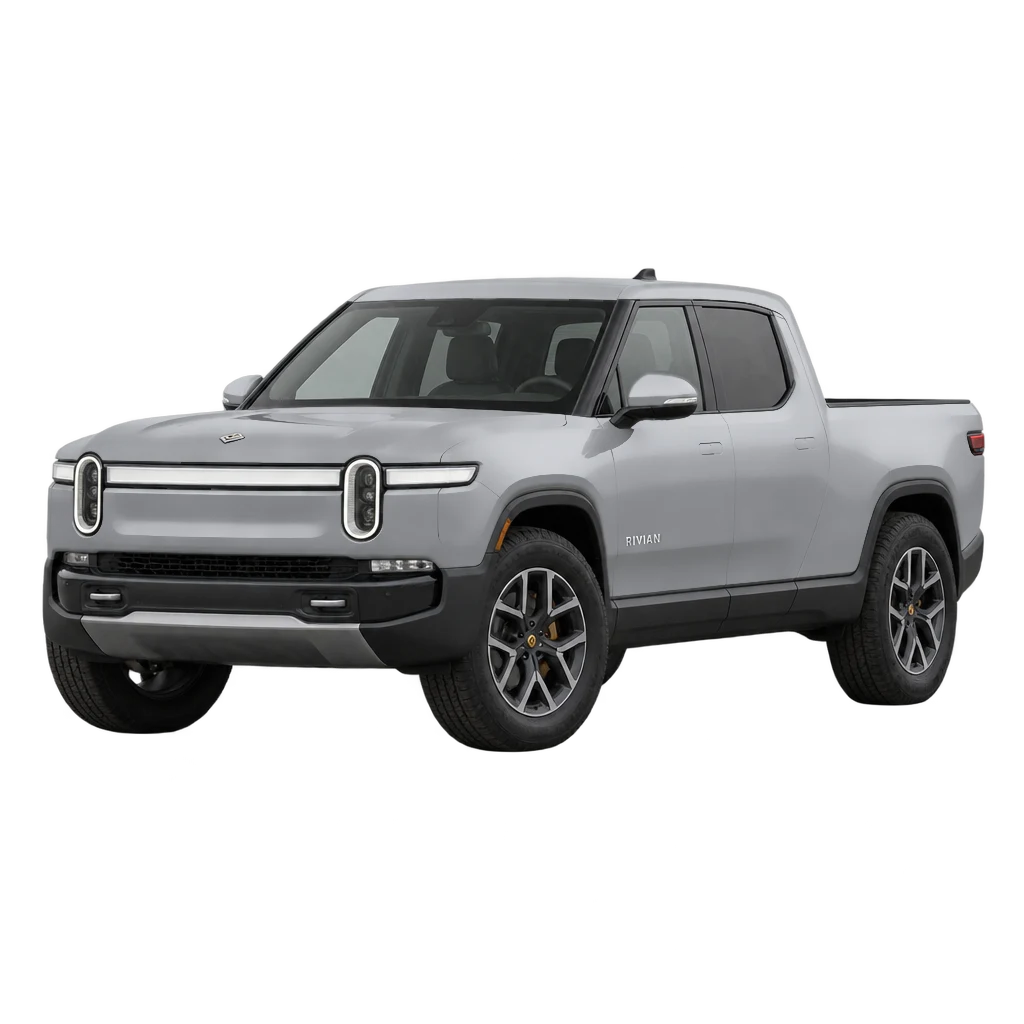
The R1T is distinct from the Rivian R1S electric SUV. Although the vehicles share important underlying technology, the R1T has a pickup bed, tailgate, Gear Tunnel storage compartment, and truck-specific body components that can affect collision repairs and insurance considerations.
Depending on model year, the R1T has been offered with dual-motor, tri-motor, and quad-motor all-wheel-drive systems. Earlier quad-motor configurations differ from newer-generation quad-motor vehicles, and available battery packs, performance equipment, and software features have evolved.
Rivian has offered Standard, Large, and Max battery configurations across different model years and versions. Owners should verify the exact battery, motor configuration, model year, and factory-installed equipment rather than assuming that specifications from one R1T apply to every vehicle.
The R1T may include adaptive air suspension, adjustable ride height, multiple drive modes, sophisticated vehicle electronics, driver-assistance systems, specialized lighting, and off-road equipment.
These characteristics can influence repair complexity following an accident, particularly when damage involves the high-voltage battery, underbody, electric drive units, suspension, cameras, sensors, truck bed, tailgate, or Gear Tunnel.
Insurance quotes should identify the vehicle specifically as a Rivian R1T and accurately reflect its model year, battery configuration, drivetrain, factory equipment, and intended use.
How Much Does Rivian R1T Insurance Cost?
Rivian R1T insurance premiums depend on the driver's location, age, driving record, annual mileage, vehicle value, model year, motor configuration, selected coverage, deductibles, and insurer underwriting. The R1T combines an advanced electric drivetrain with pickup-truck utility. Its high-voltage battery, sophisticated suspension, specialized body components, cameras, sensors, and electronic systems may influence repair costs. Insurance costs may vary between dual-motor, tri-motor, and quad-motor versions because these configurations can have different vehicle values, performance characteristics, and repair requirements. The R1T's truck-specific equipment introduces additional considerations. A collision may involve the pickup bed, powered or manual tonneau equipment where fitted, tailgate, Gear Tunnel doors, cargo-area components, underbody protection, or towing-related equipment. Some repairs may require Rivian-certified collision facilities, specialized high-voltage training, original-equipment parts, and electronic calibration. There is no reliable universal R1T insurance premium. Published averages may not account for differences between early and newer-generation vehicles, battery configurations, performance variants, or individual driver circumstances. The most dependable approach is to compare personalized quotes from multiple insurers using the exact vehicle configuration and coverage selections.
What affects insurance cost
Several factors specific to the Rivian R1T are worth understanding when shopping for insurance.
Model Year, Motor Configuration, and Vehicle Value
The R1T has evolved substantially since its initial introduction, including a major second-generation update for the 2025 model year. Different versions have used dual-motor, tri-motor, and quad-motor all-wheel-drive configurations. Motor availability, performance, battery equipment, and factory features vary by model year. Vehicle value can reflect the drivetrain configuration, battery pack, mileage, condition, factory options, and comparable market sales. Higher-performance versions may have different drive units, cooling requirements, wheels, tires, and other components that affect repair estimates. Insurance quotes should identify the correct R1T configuration rather than treating every R1T as mechanically identical.
High-Voltage Battery and Underbody Protection
The R1T carries a large high-voltage battery pack within its vehicle structure. Battery size and chemistry vary across Standard, Large, and Max configurations and model years. Rivian has updated its battery technology over time, so a single battery-capacity figure should not be applied to every R1T. Following an eligible collision or underbody impact, repairs may require inspection of the battery enclosure, protective structures, high-voltage cables, cooling systems, electrical connections, and nearby components. Off-road driving can introduce additional exposure to rocks, debris, uneven terrain, and underbody contact. A reinforced underbody shield may be available or included depending on configuration. Owners should verify their vehicle's equipment and review whether applicable damage is covered under the policy. Battery damage can increase repair costs, but it does not automatically mean the truck must be declared a total loss.
Dual-, Tri-, and Quad-Motor Electric Performance
The Rivian R1T has been offered with multiple all-wheel-drive systems. Dual-motor versions use one electric drive unit at each axle. Tri-motor versions use three motors, while quad-motor versions use four motors, with system designs differing by generation. These configurations can provide different performance, traction-control capabilities, and driving characteristics. Repair requirements may vary for electric motors, drive units, power electronics, cooling components, and related control systems. Performance alone does not determine insurance premiums. Vehicle value, repair characteristics, driver history, location, and insurer underwriting also matter. Owners should verify that their insurer correctly identifies the vehicle's drivetrain and performance configuration.
Air Suspension, Wheels, Tires, and Off-Road Equipment
The R1T uses an advanced suspension system designed for both paved roads and more demanding terrain. Depending on configuration, equipment may include adjustable air suspension, specialized dampers, off-road drive modes, all-terrain tires, reinforced underbody protection, and additional adventure-oriented components. Wheels, tires, suspension hardware, and underbody equipment may require specialized replacement parts after damage. Off-road use can create risks different from normal highway driving. Insurance policies may distinguish ordinary recreational use from racing, organized competition, commercial activities, or other excluded uses. Owners should verify how their specific policy treats off-road incidents and whether installed equipment is covered.
Pickup Bed, Tailgate, Gear Tunnel, and Towing Equipment
The R1T's pickup body introduces insurance considerations not found on the Rivian R1S SUV. Its cargo bed, tailgate, Gear Tunnel, storage doors, lighting, seals, wiring, and available tonneau cover can be involved in collision or comprehensive claims. Repairing truck-specific body components may require specialized parts and procedures. Towing capacity varies significantly by drivetrain, battery configuration, equipment, and model year. Owners should verify the vehicle's published limits and towing setup. Damage involving a trailer, hitch, or towed property may be treated differently from damage to the insured truck. Owners who regularly tow should ask how liability, trailer damage, and attached equipment are addressed by their policy.
Rivian Collision Repair, Cameras, and Electronics
The R1T uses sophisticated electronic systems, including digital displays, cameras, parking and driver-assistance technology, lighting, and electronic vehicle controls. Features and sensor hardware differ between first-generation and second-generation vehicles. Damage involving the windshield, bumpers, cameras, sensors, lighting, or electronic control modules may require diagnostic testing or calibration. Rivian-certified collision facilities may be needed for specialized structural work, high-voltage repairs, electronic systems, and manufacturer-approved repair procedures. Parts availability and access to qualified repair facilities can affect repair duration. Owners should ask about original-equipment replacement parts, electronic calibration, rental reimbursement, and transportation options during repairs.
Battery and insurance
The Rivian R1T uses a high-voltage battery system designed to support electric driving, towing, and outdoor-oriented vehicle use. Battery configurations have included Standard, Large, and Max packs, with specifications varying by model year, generation, and drivetrain. Early R1T vehicles were associated with large battery packs, while later vehicles introduced additional battery options and updated technology. Battery chemistry, usable capacity, charging performance, and estimated range should be verified for the exact vehicle. Rivian has used different charging-port standards across model years. U.S. R1T vehicles from model years 2022 through 2025 have CCS1 charging ports, while model-year 2026 and newer vehicles use native NACS charging ports. Older CCS1-equipped vehicles can access compatible Tesla Superchargers using an approved NACS DC adapter. Newer NACS-equipped vehicles may require an appropriate CCS1 DC adapter at CCS fast chargers. Charging-network compatibility, adapter requirements, and charging speeds depend on the vehicle, charging equipment, and network. Rivian provides battery and drivetrain warranty coverage subject to the applicable warranty guide. Coverage terms can vary by model year, battery configuration, and other conditions. A qualifying manufacturing defect may fall under Rivian's warranty. Physical battery damage caused by an eligible collision, fire, flood, or other insured event may fall under automobile insurance, depending on policy terms. Normal battery degradation generally is not an automobile insurance claim. Following significant collision or underbody damage, Rivian-qualified technicians may need to inspect the battery enclosure, high-voltage connections, cooling system, and surrounding structure.
Repair considerations
The Rivian R1T may require specialized collision repairs because of its high-voltage battery, electric drive units, sophisticated suspension, electronic systems, and truck-specific body structure. Repairs may involve high-voltage safety procedures, battery inspection, cooling systems, drive-unit diagnostics, manufacturer-approved structural repairs, and electronic calibration. The pickup bed, tailgate, Gear Tunnel, tonneau equipment, underbody protection, and towing hardware introduce additional considerations beyond those of a conventional passenger car. Some repairs may require Rivian-certified collision facilities and original-equipment components. Availability of specialized parts and repair capacity can influence the time needed to complete covered repairs. Rental reimbursement may help with eligible transportation expenses while the truck is being repaired, subject to policy limits. Owners who depend on their R1T for towing, outdoor activities, or daily transportation should consider whether their rental coverage provides a suitable replacement vehicle. Rental reimbursement limits do not necessarily guarantee an equivalent electric pickup.
Cameras, sensors, glass and technology
The Rivian R1T uses sophisticated vehicle electronics, digital displays, cameras, and available driver-assistance technology. First-generation and second-generation R1T vehicles differ in sensor hardware, computing systems, and certain driver-assistance capabilities. Depending on model year and equipment, systems may include exterior cameras, radar sensors, parking assistance, highway driving assistance, advanced lighting, and other electronic features. Damage to the windshield, bumpers, camera housings, lighting, or sensor mounting areas may require specialized repairs and calibration. The R1T's truck body also includes electronic and mechanical components associated with its tailgate, cargo bed, Gear Tunnel, and available tonneau cover. Glass replacement and body repairs can require additional diagnostic work when nearby cameras or electronic systems are affected. Owners should ask whether their insurer covers manufacturer-required diagnostics, sensor calibration, original-equipment parts, and specialized repairs following an eligible claim.
Coverage considerations
Collision coverage generally helps pay for covered damage resulting from a collision with another vehicle or object, subject to policy terms and deductibles. Comprehensive coverage generally addresses covered non-collision losses such as theft, vandalism, fire, falling objects, and certain weather-related events. Physical damage to the R1T's high-voltage battery, electric drivetrain, suspension, pickup bed, tailgate, Gear Tunnel, cameras, and other factory-installed components may fall under collision or comprehensive coverage when caused by an eligible insured event. Liability coverage addresses covered injuries or property damage for which the insured driver is legally responsible, subject to policy limits. Uninsured or underinsured motorist coverage may provide protection for certain covered injuries, depending on state law and policy selections. Off-road use deserves particular attention. Owners should verify how their policy treats recreational trail driving, underbody impacts, water damage, organized competitions, and other activities. Towing and trailer coverage should also be reviewed separately. Liability for a trailer and physical damage to the trailer may be governed by different policy provisions. Coverage for portable charging equipment, home charging stations, aftermarket accessories, camping equipment, cargo, and personal belongings varies by policy. Rental reimbursement and roadside assistance may be useful when Rivian-specific repairs take additional time or when a certified repair facility is not nearby.
Deductibles
A deductible is the amount the policyholder pays toward an eligible covered claim before the insurer pays the remaining covered amount. Choosing a higher deductible may reduce the premium but increases the potential out-of-pocket cost following a claim. The R1T's battery, suspension, truck-specific body components, cameras, sensors, and specialized electronics can make certain repairs expensive. Owners should evaluate deductibles against the truck's market value, expected use, financial circumstances, and ability to pay an unexpected repair expense. Ask whether separate glass deductibles or special provisions apply to windshield and other glass claims.
Accidents and total loss
A Rivian R1T may be declared a total loss when the insurer determines that the applicable policy provisions and state requirements have been met. Repair costs, actual cash value, salvage value, and state-specific rules can influence that determination. Damage involving the battery enclosure, underbody structure, electric drive units, suspension, advanced electronics, pickup bed, or frame-related components may increase repair costs. Battery damage does not automatically mean the truck is a total loss. The extent of damage, safety requirements, manufacturer repair procedures, and economic feasibility of repair all matter. Actual cash value generally reflects model year, mileage, condition, drivetrain, battery configuration, factory options, and comparable market sales. For financed or leased vehicles, GAP coverage may help address an eligible difference between the insurance settlement and outstanding loan or lease balance, subject to contract terms and exclusions.
Questions to ask an insurer
Does your repair network include Rivian-certified collision facilities equipped to service the R1T's high-voltage battery and electric drivetrain?
Does my policy cover qualifying battery enclosure or underbody damage from an eligible collision, including incidents during recreational off-road driving?
Are the R1T's pickup bed, tailgate, Gear Tunnel, factory-installed tonneau cover, and other truck-specific components covered following an eligible insured event?
Does my quote correctly identify the R1T's model year, dual-, tri-, or quad-motor configuration, battery pack, and factory-installed equipment?
Are manufacturer-required camera, radar, lighting, and driver-assistance system diagnostics and calibrations covered following an eligible repair?
How does my policy address towing, trailer liability, trailer physical damage, and any commercial or business use of the truck?
What rental reimbursement, roadside assistance, and total-loss settlement provisions apply if specialized Rivian repairs are delayed or the truck cannot be repaired economically?
Ways to shop smarter
Compare personalized quotes from multiple insurers using the exact Rivian R1T model year, motor configuration, and battery pack.
Confirm that the insurer identifies the vehicle as an R1T electric pickup rather than an R1S SUV or a conventional pickup truck.
Review high-voltage battery and underbody coverage, and distinguish automobile insurance protection from Rivian's manufacturer warranty.
Identify relevant factory-installed equipment, including wheels, all-terrain tires, suspension, underbody protection, tonneau cover, and towing hardware.
Ask whether Rivian-certified collision facilities with high-voltage training are available within the insurer's repair network.
Review the policy's treatment of recreational off-road use, towing, trailers, aftermarket accessories, and cargo.
Compare collision and comprehensive deductibles with the vehicle's current market value and your ability to pay an unexpected expense.
Consider rental reimbursement, roadside assistance, and GAP coverage where appropriate, particularly if the R1T is financed, leased, or essential for daily transportation.
Frequently asked questions
When did the Rivian R1T first become available in the United States?
Rivian began U.S. customer deliveries of the R1T in 2021, with early vehicles generally associated with the 2022 model year. A substantially updated second-generation R1T arrived for the 2025 model year.
What motor configurations does the Rivian R1T offer?
Depending on model year, the R1T has been offered with dual-motor, tri-motor, and quad-motor all-wheel-drive configurations. Early quad-motor systems differ from newer-generation quad-motor versions. Verify the exact drivetrain using the vehicle's documentation.
What battery packs are available for the Rivian R1T?
Rivian has offered Standard, Large, and Max battery configurations across different R1T versions. Battery chemistry, capacity, range, and availability vary by model year and drivetrain.
Does Rivian R1T insurance cover battery damage?
Physical battery damage from an eligible collision or comprehensive event may be covered, subject to policy terms. Qualifying manufacturing defects may fall under Rivian's warranty. Normal battery degradation generally is not an automobile insurance claim.
Does insurance cover off-road damage to a Rivian R1T?
Coverage depends on the policy, the activity, and the cause of damage. Some recreational off-road incidents may be covered, while exclusions or restrictions can apply to racing, organized competition, commercial use, or other activities. Confirm the details with the insurer.
Does the Rivian R1T use Tesla Superchargers?
Compatible Rivian vehicles can use supported Tesla Superchargers. Model years 2022 through 2025 use CCS1 charging ports and require an approved NACS DC adapter. Model-year 2026 and newer vehicles have native NACS charging ports. Compatibility varies by station and equipment.
Does towing a trailer affect Rivian R1T insurance?
Towing can introduce additional liability and property-damage considerations. Trailer liability and physical damage coverage may be handled differently. Owners should confirm coverage for the truck, trailer, hitch equipment, and intended towing use.
Is the Rivian R1T expensive to insure?
Premiums depend on the vehicle, driver, location, coverage, deductibles, and insurer. The R1T's battery, advanced electronics, suspension, specialized body components, and repair requirements may affect claim costs. Personalized quotes are more useful than a universal premium estimate.
What happens if my Rivian R1T is declared a total loss?
The insurer generally determines the settlement using actual cash value, subject to policy terms and applicable state law. The amount may differ from the original purchase price or remaining loan balance. GAP coverage may help with an eligible loan or lease shortfall, subject to its contract terms.
Related EV insurance topics
Ready to compare?
Compare EV insurance options and find coverage that fits your needs.