




















EV Insurance Guide
Porsche Cayenne Coupe Electric
Porsche Cayenne Coupe Electric insurance guide for the 2026 U.S. electric performance SUV Coupe, covering three electric variants, a 113 kWh gross battery, fast charging, specialized repairs, and insurance protection.
Overview
The 2026 Porsche Cayenne Coupe Electric brings fully battery-electric propulsion to Porsche's distinctive sloping-roof luxury SUV.
It combines Cayenne practicality with a sportier Coupe silhouette, advanced electric all-wheel drive, high-performance chassis technology, and rapid charging.
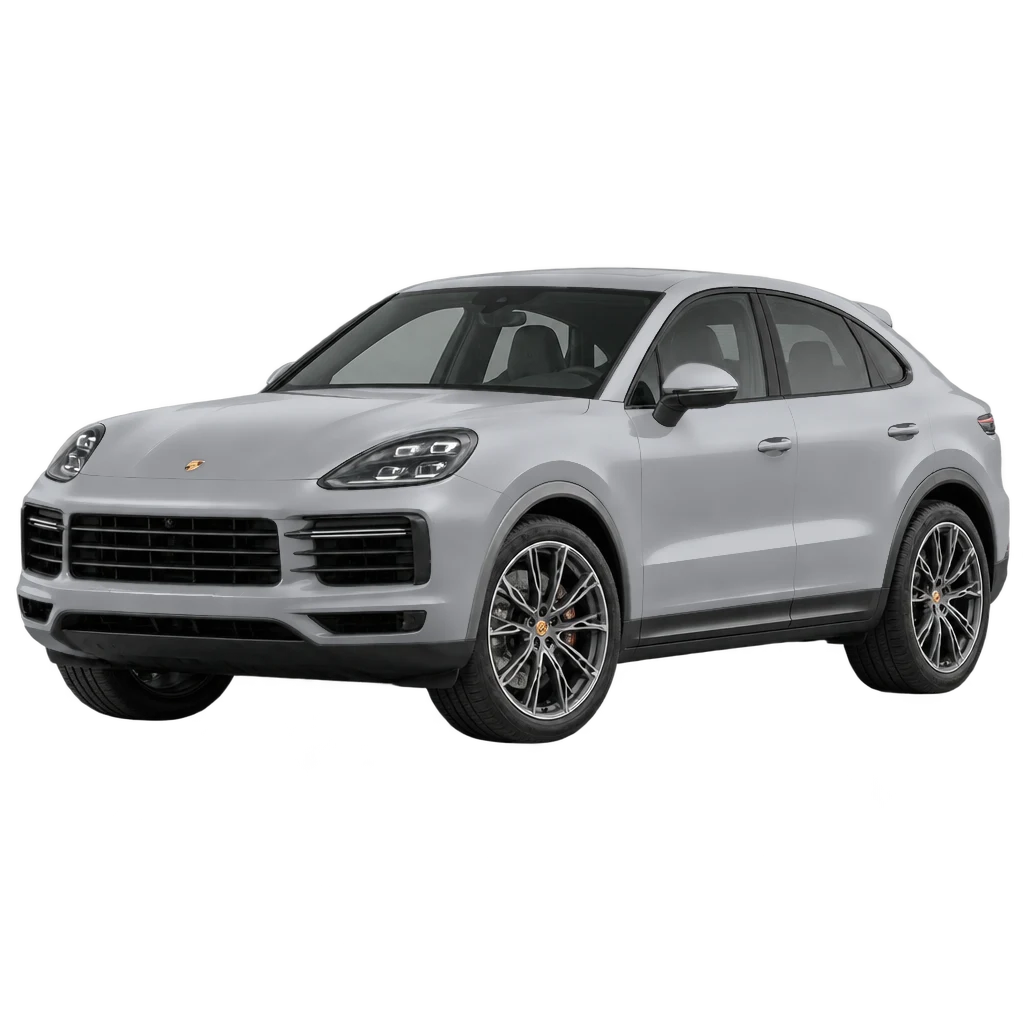
The official U.S. lineup includes the Cayenne Coupe Electric, Cayenne S Coupe Electric, and Cayenne Turbo Coupe Electric.
These are distinct from Porsche's gasoline and plug-in hybrid Cayenne Coupe models. They also have their own body configuration and published EPA range figures compared with the conventional Cayenne Electric SUV.
All three Coupe versions use electric all-wheel drive with dual electric motors.
The Cayenne Coupe Electric produces up to 435 horsepower with Launch Control and accelerates from zero to 60 mph in approximately 4.5 seconds.
The Cayenne S Coupe Electric increases peak Launch Control power to 657 horsepower and completes the same acceleration test in approximately 3.6 seconds.
At the top of the lineup, the Cayenne Turbo Coupe Electric delivers up to 1,139 horsepower with Launch Control and reaches 60 mph in approximately 2.4 seconds.
These figures describe peak performance under specified conditions rather than constant motor output.
Porsche's published U.S. EPA estimates provide 326 miles of range for the Cayenne Coupe Electric, 316 miles for the S Coupe Electric, and 302 miles for the Turbo Coupe Electric.
Specific tire or efficiency configurations have different ratings.
The standard Coupe Electric can reach a listed 339 miles with Porsche's Range Setup. The S Coupe Electric has a listed 330-mile Range Setup figure, and the Turbo Coupe Electric can achieve a listed 307 miles with specified 21-inch all-season tires.
These are American EPA estimates, not European WLTP figures.
All three models use a high-voltage lithium-ion battery with 113 kWh of gross energy capacity.
The battery is integrated into the vehicle architecture and supported by advanced cooling and electrical monitoring.
An 800-volt system enables particularly high charging performance.
Porsche specifies DC charging at up to approximately 390 kW under appropriate conditions, with brief peaks of 400 kW possible under narrower test conditions.
The manufacturer estimates approximately 16 minutes from 10% to 80% charge using suitable high-power equipment.
Actual charging time varies with battery temperature, charge level, charger output, and other operating conditions.
The U.S. vehicle uses a factory NACS/J3400 DC charging port and a separate J1772 AC charging port.
Porsche supplies a CCS DC adapter for compatible stations. Charging-station and adapter compatibility should always be confirmed.
The Coupe uses an aerodynamic rear roofline influenced by Porsche sports-car design.
Compared with the conventional Cayenne Electric SUV, its unique roof, rear glass, liftgate area, active aerodynamic features, and selected body components can create different repair and replacement requirements.
The vehicle also includes a practical rear compartment and seating configurations that vary with equipment.
Adaptive air suspension and Porsche Active Suspension Management provide a performance-oriented balance of handling and comfort.
Available rear-axle steering and active chassis equipment add maneuverability and control.
Porsche also offers distinctive wheel packages, premium interior finishes, specialized brakes, and additional performance features depending on version.
Inside, the Cayenne Coupe Electric uses Porsche's Flow Display digital cockpit architecture, with advanced infotainment, driver information, connected functions, and available passenger displays.
Cameras, radar sensors, parking technology, and other driver-assistance equipment support vehicle operation but do not provide fully autonomous driving.
For insurance purposes, the Coupe's high-value electric drivetrain, roof-specific bodywork, large traction battery, advanced electronics, luxury equipment, and high-performance options deserve accurate identification.
Owners should provide the exact VIN, electric variant, model year, and factory equipment when comparing coverage or discussing repair and total-loss values.
How Much Does Porsche Cayenne Coupe Electric Insurance Cost?
Insurance premiums for the Porsche Cayenne Coupe Electric depend on the vehicle's configuration, driver, garaging location, coverage choices, and insurance provider. There is no single verified national premium that accurately represents every owner. The three electric Coupe variants differ in performance, equipment possibilities, and market value. The Turbo Coupe Electric's high-performance hardware, optional brakes, premium wheels, and chassis systems may influence certain physical-damage repair expenses. The battery-electric architecture introduces additional considerations involving the 113 kWh battery, electric drive units, high-voltage wiring, and charging equipment. The Coupe's distinctive roofline, rear glass, liftgate area, and aerodynamic components may also require model-specific body parts. However, an expensive vehicle or powerful motor does not automatically determine the insurance premium. Personal factors such as driving history, annual mileage, previous claims, garaging location, and legally permitted underwriting information remain important. Coverage limits and deductibles also influence price. An insurer may quote different premiums for liability protection, collision, comprehensive, uninsured or underinsured motorist coverage, glass provisions, and optional benefits. Owners should compare quotations using consistent coverage limits, deductibles, vehicle information, and factory options. SureEV does not publish invented Cayenne Coupe Electric premiums or guarantee individual rates.
What affects insurance cost
Several factors specific to the Porsche Cayenne Coupe Electric are worth understanding when shopping for insurance.
Coupe Version, Value, and Options
The Cayenne Coupe Electric, S Coupe Electric, and Turbo Coupe Electric have different performance levels and available factory equipment. Vehicle value depends on the exact version, original options, market conditions, condition, and mileage. Wheels, brakes, active suspension, premium lighting, interior materials, and special packages can influence covered repair costs. Insurance records should not confuse the Coupe with the conventional SUV body or gasoline-powered versions.
The 113 kWh Gross Battery
All three models use a high-voltage battery with 113 kWh of gross capacity. Significant covered underbody or collision damage may require qualified inspection of the battery enclosure, cooling components, electrical connections, and nearby vehicle structure. Physical-damage coverage depends on the insured event and policy terms. Normal battery aging generally is not a collision or comprehensive insurance claim.
Electric All-Wheel Drive and Performance
The 2026 electric Coupe lineup uses dual electric motors and all-wheel drive. Peak Launch Control output ranges from 435 horsepower in the standard Coupe to 1,139 horsepower in the Turbo Coupe. Damage to electric motors, inverters, power electronics, or associated systems may require specialized repair. The actual affected components determine repair requirements rather than horsepower alone.
Coupe-Specific Roof and Body
The sloping roofline, rear glazing, liftgate area, and aerodynamic equipment distinguish the Coupe from the conventional Cayenne SUV. A qualifying rear-end or roof-related accident may involve model-specific components, glass, seals, body panels, or alignment procedures. Parts should match the exact body style and VIN. The Coupe shape does not automatically mean every body repair costs more.
Suspension, Brakes, Cameras, and Displays
Adaptive air suspension, available rear-axle steering, Porsche Active Ride on eligible versions, premium brakes, and digital equipment can influence specific repairs. Covered damage may require diagnostics, alignment, programming, or sensor calibration. Optional components should be documented rather than described as standard on every vehicle.
Driver, Location, and Coverage
Driving history, annual mileage, previous claims, location, vehicle use, deductibles, and selected coverage limits influence personalized premiums. State regulations and local repair costs may also affect pricing. Owners should compare equivalent policies instead of relying on generic insurance averages.
Battery and insurance
The Porsche Cayenne Coupe Electric uses a lithium-ion traction battery with approximately 113 kWh of gross capacity. The same general battery architecture supports the three electric Coupe versions, but performance and range depend on drivetrain calibration, equipment, tires, and driving conditions. The published 113 kWh figure refers to gross energy capacity. It should not be presented as verified usable capacity. Porsche integrates the battery into the vehicle structure and uses sophisticated thermal management to support performance and rapid charging. The 800-volt architecture enables high-power DC charging, with up to approximately 390 kW across the relevant charging interval under ideal conditions and brief higher peaks in specified circumstances. Porsche estimates approximately 16 minutes to charge from 10% to 80% using compatible equipment. In practical use, charger output, battery temperature, initial charge, and operating conditions affect charging speed. The U.S. Coupe has a NACS/J3400 DC connection and a separate J1772 AC connection. Compatible CCS DC charging is supported using the Porsche-supplied adapter, subject to charger availability and network requirements. The manufacturer also describes optional inductive home charging equipment, with availability dependent on the vehicle, equipment, and installation. Home chargers, portable cables, adapters, and fixed residential electrical infrastructure are not automatically insured in the same way as factory-installed vehicle components. For physical-damage coverage, the cause of the loss is critical. Collision insurance may cover qualifying battery damage caused by a covered accident. Comprehensive insurance may apply to certain covered non-collision events, including specified fire or flood losses. Normal battery degradation, manufacturing defects, and routine maintenance generally are not covered physical-damage claims. After a significant underbody impact or collision, qualified technicians may inspect the battery enclosure, high-voltage isolation, thermal system, electrical connections, and nearby structures. Such an inspection does not automatically require replacement of the entire battery. The appropriate repair decision depends on actual damage, Porsche procedures, component availability, and safety requirements. Manufacturer battery warranties operate separately from insurance and should be evaluated using the correct U.S. documentation.
Repair considerations
Repairing a Porsche Cayenne Coupe Electric requires correct identification of the fully electric model and Coupe-specific body components. The vehicle uses an 800-volt high-voltage system, dual electric motors, specialized cooling, and advanced electronics. Substantial accident damage may require qualified technicians to inspect the battery enclosure, electrical isolation, drive units, structural areas, and charging equipment. The Coupe's unique sloping roof, rear glass, liftgate, and aerodynamic hardware can introduce different replacement components from the standard Cayenne Electric SUV. Certain performance versions also have specialized wheels, brakes, cooling equipment, or optional chassis systems. Adaptive air suspension and available rear-axle steering may need alignment or electronic calibration after qualifying damage. Porsche Active Ride, when fitted, introduces additional active chassis components. Glass, lighting, cameras, radar equipment, and interior displays can also require model-specific repair procedures. Not every collision damages the battery, electronic controls, or high-performance chassis equipment. A qualified estimate should identify the actual physical damage and appropriate factory components. Owners should confirm access to Porsche-qualified electric-vehicle repair facilities. Rental reimbursement and roadside assistance can provide useful benefits during eligible covered repairs, subject to policy terms.
Cameras, sensors, glass and technology
The 2026 Cayenne Coupe Electric includes Porsche's digital cockpit with a curved Flow Display, driver information, infotainment controls, and connected technology. Equipment and available passenger displays vary by version and options. The vehicle also uses cameras, radar sensors, electronic safety systems, and parking assistance technology. These systems support the driver but do not make the vehicle fully autonomous. Following a qualifying windshield, bumper, or collision repair, affected cameras and sensors may require inspection, diagnostic testing, programming, or calibration. Coupe-specific rear glass, premium lighting, panoramic roof options, and active aerodynamics may involve specialized replacement parts after covered damage. Optional active suspension and steering equipment may require additional electronic procedures if affected. An ordinary software fault or connected-service subscription is different from accidental physical damage covered under an insurance policy. Owners should keep the factory window sticker and equipment records to establish the correct technology, glass, wheel, and body configurations. Accurate documentation can help insurers prepare quotations, repair estimates, and total-loss valuations.
Coverage considerations
Insurance for the Porsche Cayenne Coupe Electric should reflect its combination of high-performance electric propulsion, luxury equipment, and Coupe-specific body design. The 2026 U.S. lineup includes the Cayenne Coupe Electric, Cayenne S Coupe Electric, and Cayenne Turbo Coupe Electric. Each version has distinct performance characteristics and available equipment. Insurance records should identify the correct version by VIN and factory configuration. Liability insurance generally covers qualifying bodily injury or property damage for which an insured driver is legally responsible. It does not ordinarily pay to repair the policyholder's own Cayenne Coupe Electric. Owners should consider liability limits based on their financial exposure, personal circumstances, and applicable state requirements rather than assuming legal minimums are always adequate. Collision insurance may cover qualifying physical damage caused by an accident involving another vehicle or object. Depending on the incident, eligible repairs may involve Coupe-specific body panels, rear glass, structural components, wheels, suspension, electric motors, or battery protection equipment. Comprehensive insurance generally applies to specified non-collision events, including qualifying theft, vandalism, hail, falling objects, certain fires, and flooding. Factory glass, lighting, electronic equipment, charging components, and high-voltage hardware may be eligible when damaged by a covered event and permitted by the policy. Ordinary battery degradation, manufacturing defects, routine maintenance, and unrelated software failures generally are not standard physical-damage insurance claims. Uninsured and underinsured motorist coverage may provide protection when another driver has insufficient applicable insurance. Coverage requirements and available benefits vary by state. Medical payments or personal injury protection may also be relevant depending on the jurisdiction. The Coupe's sloping roofline, unique rear glass, aerodynamic features, and available high-performance chassis components can affect certain repair procedures. Owners should verify how their insurer handles manufacturer-specified diagnostics, glass repair, camera calibration, and specialized equipment following covered damage. Rental reimbursement can help with qualifying transportation expenses during covered repairs, subject to daily and total policy limits. It does not necessarily guarantee another Porsche or an equivalent luxury electric vehicle. Roadside assistance should be reviewed for EV-specific towing requirements and appropriate Porsche service destinations. Optional GAP protection may be relevant for eligible financed or leased vehicles, subject to its own contractual conditions. Home charging equipment, portable cables, adapters, and residential electrical installations may require separate automobile or property insurance consideration. The scope of protection depends on the actual policy, covered event, deductibles, exclusions, limits, and applicable law.
Deductibles
A deductible is the portion of an eligible covered loss that the policyholder is responsible for before the applicable insurance payment is calculated. Collision and comprehensive insurance commonly have separate deductible amounts. Choosing a higher deductible generally lowers the premium but increases out-of-pocket responsibility following a qualifying claim. A lower deductible usually raises the premium while reducing that responsibility. For a Cayenne Coupe Electric, owners should consider current vehicle value, optional equipment, potential repair costs, and available financial reserves. The vehicle's high-voltage battery, Coupe-specific glass, performance hardware, and advanced chassis systems can influence the cost of particular repairs. However, these systems are not automatically damaged in every accident. For example, comparing a $500 collision deductible with a $1,500 deductible involves evaluating the annual premium difference against the possibility of paying an additional $1,000 following a covered collision. Some insurers have special provisions or different deductibles for qualifying glass repairs. Owners should confirm whether necessary camera or radar calibration associated with a covered windshield replacement is included. Leasing or financing agreements may also impose deductible requirements. There is no universal deductible that suits every Porsche Cayenne Coupe Electric owner.
Accidents and total loss
After an accident involving a Porsche Cayenne Coupe Electric, personal safety is the first priority. Drivers should seek emergency assistance when necessary and avoid contact with exposed high-voltage components. Significant underbody damage, flooding, or collisions may require qualified assessment before the vehicle is driven or charged. The 2026 Cayenne Coupe Electric uses a 113 kWh gross lithium-ion traction battery, dual electric motors, and an 800-volt electrical architecture. Repair facilities may need to inspect battery structures, electrical isolation, thermal management, high-voltage wiring, electric drive units, and damaged suspension or body components. The Coupe has distinct roof, rear glass, liftgate, and aerodynamic components compared with the conventional Cayenne Electric SUV. Those differences can matter when estimating repairs after a rear-end collision, roof-related impact, or glass damage. The S and Turbo Coupe versions may also have specialized wheels, brakes, suspension, and performance-related equipment. Cameras, sensors, steering, and active chassis equipment may require diagnostic testing or calibration when affected. A nearby impact does not automatically mean the entire battery must be replaced. Qualified technicians should determine the actual damage and safe repair options. An insurer may declare the vehicle a total loss when relevant repair economics, policy provisions, and applicable state-law criteria are satisfied. These rules can consider repair costs, salvage value, actual cash value, and other jurisdiction-specific factors. There is no single nationwide total-loss percentage. Under standard actual cash value coverage, an eligible total-loss settlement generally reflects the vehicle's market value immediately before the covered loss, subject to policy terms and applicable law. The original MSRP or outstanding loan balance is not automatically the settlement amount. The exact Cayenne Coupe Electric, S Coupe Electric, or Turbo Coupe Electric version matters for valuation. Factory options, mileage, condition, wheel configuration, brakes, chassis equipment, interior features, and appropriate comparable vehicles may also affect value. A conventional Cayenne Electric SUV, gasoline Coupe, or plug-in hybrid Coupe should not automatically be treated as an identical comparable. Owners should retain the original window sticker, purchase records, photographs, maintenance history, and documentation of factory options. If a total-loss valuation omits important equipment or uses inappropriate comparisons, the owner can request the supporting report and review available dispute procedures. Optional GAP protection may help with a qualifying difference between an eligible insurance settlement and a remaining financing balance, subject to its terms.
Questions to ask an insurer
Does your policy correctly identify my 2026 Porsche Cayenne Coupe Electric, Cayenne S Coupe Electric, or Cayenne Turbo Coupe Electric by VIN, Coupe body style, factory equipment, and current market value?
Does collision or comprehensive coverage apply to qualifying physical damage involving the 113 kWh gross traction battery, battery enclosure, thermal management, charging components, high-voltage wiring, and electric motors?
Can your insurer provide access to Porsche-qualified electric-vehicle repair facilities familiar with the Cayenne Coupe Electric's 800-volt system and Coupe-specific body structure?
How does the policy cover qualifying damage to the sloping roof, rear glass, liftgate, aerodynamic equipment, and other Coupe-specific panels or components?
Does the policy include necessary diagnosis, replacement, programming, or calibration for affected cameras, radar sensors, advanced suspension, rear-axle steering, premium brakes, and electronic systems following covered damage?
If my Cayenne Coupe Electric is declared a total loss, how will you determine its actual cash value using the correct electric Coupe variant, factory options, condition, mileage, and appropriate market comparisons?
What liability limits, collision and comprehensive deductibles, uninsured or underinsured motorist coverage, glass protection, rental reimbursement, EV towing, GAP options, and relevant exclusions are available?
Ways to shop smarter
Identify the correct electric Coupe. Provide the VIN and exact Cayenne Coupe Electric, S Coupe Electric, or Turbo Coupe Electric version. Avoid gasoline, hybrid, or conventional SUV classifications.
Compare equivalent policies. Request personalized insurance quotes with matching liability limits, deductibles, uninsured or underinsured motorist protection, and optional benefits.
Document performance and factory options. Keep the window sticker and records showing wheels, brakes, suspension, steering, interior packages, digital displays, and premium equipment.
Review battery physical-damage protection. Ask how qualifying damage to the 113 kWh gross battery, high-voltage system, cooling components, and charging hardware is treated.
Verify Porsche-qualified repairs. Confirm access to appropriately trained technicians and repair facilities able to service the 800-volt system and Coupe-specific body components.
Review glass and electronics. Ask how eligible windshield, rear glass, camera, radar, lighting, and electronic calibration procedures are covered.
Consider rental, towing, and financing benefits. Review rental reimbursement, EV towing arrangements, roadside assistance, and optional GAP protection where relevant.
Reassess coverage at renewal. Review current value, factory equipment, mileage, premiums, deductibles, liability limits, and available discounts.
Frequently asked questions
Is the Porsche Cayenne Coupe Electric expensive to insure?
Porsche Cayenne Coupe Electric insurance costs depend on the driver's history, location, exact electric Coupe version, factory equipment, selected coverage, deductibles, and insurer underwriting. Its luxury performance equipment, high-voltage battery, advanced chassis systems, and Coupe-specific repairs can affect potential claim costs. However, there is no dependable single national premium. Personalized quotes with equivalent coverage provide the best comparison.
Which Porsche Cayenne Coupe Electric models are offered in the United States?
Porsche USA lists the 2026 Cayenne Coupe Electric, Cayenne S Coupe Electric, and Cayenne Turbo Coupe Electric as fully battery-electric Coupe-style SUVs. These versions are separate from gasoline Cayenne Coupe models, plug-in hybrids, and the conventional Cayenne Electric SUV. Insurance and repair records should identify the exact Coupe variant and its factory equipment.
What battery does the Porsche Cayenne Coupe Electric use?
The 2026 U.S. Porsche Cayenne Coupe Electric lineup uses a lithium-ion traction battery with approximately 113 kWh of gross energy capacity. It operates within an 800-volt electrical architecture and supports high-power DC charging. Gross battery capacity is not automatically the same as usable capacity. Manufacturer warranty protection is separate from automobile insurance.
What is the EPA range of the Porsche Cayenne Coupe Electric?
Porsche's published U.S. EPA estimates list 326 miles for the Cayenne Coupe Electric, 316 miles for the Cayenne S Coupe Electric, and 302 miles for the Cayenne Turbo Coupe Electric in their listed configurations. Some specified range or tire setups have higher ratings. Actual range depends on speed, temperature, tires, terrain, driving habits, and vehicle loading.
How quickly can the Porsche Cayenne Coupe Electric charge?
Porsche specifies DC fast-charging power of up to approximately 390 kW, with brief higher peaks under particular conditions, and an estimated 16 minutes to charge from 10% to 80% using compatible high-power equipment. Actual charging speed depends on the station, battery temperature, state of charge, and operating conditions. U.S. vehicles use NACS/J3400 for DC charging, a separate J1772 AC port, and a Porsche CCS DC adapter for compatible stations.
Does insurance cover the Porsche Cayenne Coupe Electric battery?
Collision coverage may apply to qualifying physical battery damage caused by a covered accident, while comprehensive insurance may cover certain insured non-collision events. Actual protection depends on the policy, cause of loss, deductibles, exclusions, limits, and state law. Normal battery degradation, ordinary wear, and manufacturing defects generally are not standard physical-damage claims.
What is the difference between the Cayenne Coupe Electric, S, and Turbo?
The three 2026 U.S. electric Coupe versions have different performance capabilities. The standard Coupe produces up to 435 horsepower with Launch Control, the S reaches 657 horsepower, and the Turbo reaches 1,139 horsepower. All use electric all-wheel drive and a 113 kWh gross battery, but their performance equipment, factory options, and EPA range estimates differ.
Does the Porsche Cayenne Coupe Electric require specialized repairs?
Certain repairs involving the 800-volt electrical system, high-voltage battery, electric motors, Coupe-specific body panels, advanced suspension, steering, or driver-assistance equipment require appropriately trained technicians and procedures. Routine maintenance does not automatically require high-voltage repair work. Owners should confirm that suitable Porsche-qualified facilities can handle the specific damage.
How is the Porsche Cayenne Coupe Electric valued after an insurance total loss?
Under standard actual cash value coverage, an eligible total-loss settlement generally reflects the vehicle's market value immediately before the insured loss, subject to policy terms and applicable law. An accurate valuation should identify the exact Coupe Electric variant, model year, mileage, condition, factory options, and suitable market comparisons. Gasoline or hybrid Cayenne Coupes and the conventional electric SUV should not automatically be treated as identical comparables.
Related EV insurance topics
Ready to compare?
Compare EV insurance options and find coverage that fits your needs.