










EV Insurance Guide
Nissan LEAF
Insurance considerations for the Nissan LEAF, from the original electric hatchback to the redesigned 2026 electric crossover.
Overview
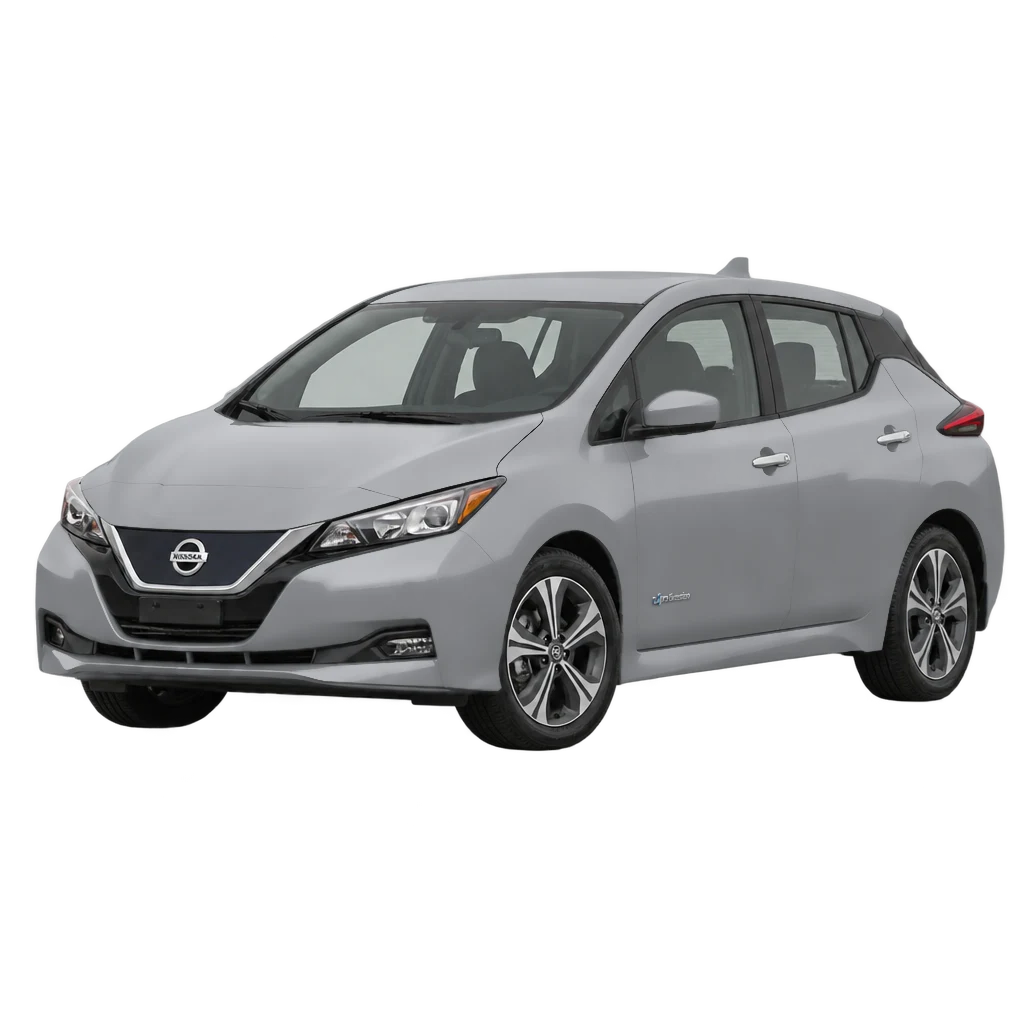
The Nissan LEAF is one of the longest-running mass-market electric vehicles in the United States. Introduced for the 2011 model year, it helped establish electric driving as a practical option for everyday transportation. Over three generations, the LEAF has evolved from a compact electric hatchback with a relatively small battery into a modern electric crossover with substantially greater range and updated charging technology. The first-generation U.S. LEAF, sold for model years 2011 through 2017, used battery capacities that included 24 kWh and, on later versions, 30 kWh. Range and equipment varied by year and configuration. The second-generation LEAF, introduced for 2018 and sold through 2025, offered improved styling, updated driver-assistance features, and larger batteries. Depending on model year, versions included a 40 kWh battery and higher-capacity LEAF PLUS configurations. For 2025, Nissan offered the LEAF S with a 40 kWh battery and 149 miles of EPA-estimated range, and the SV PLUS with a 60 kWh battery and 212 miles of EPA-estimated range. The completely redesigned third-generation 2026 LEAF adopts a crossover-inspired body, updated electric drivetrain, liquid-cooled battery, and built-in North American Charging Standard (NACS) fast-charging connector. Its initial U.S. S+, SV+, and PLATINUM+ configurations use a 75 kWh battery. EPA-estimated range reaches up to 303 miles on the S+, with lower ratings on other configurations. These differences matter for insurance. An older LEAF may have a relatively low current market value but still require expensive high-voltage repairs, while a newer LEAF may have higher replacement value, additional sensors, and more advanced electronic systems. Owners should evaluate insurance based on the exact model year, battery configuration, current vehicle value, and coverage needs.
How Much Does Nissan LEAF Insurance Cost?
Insurance costs for a Nissan LEAF depend on the model year, trim, current market value, driver profile, location, annual mileage, coverage limits, deductible, and insurance company. The LEAF's long production history makes it particularly important to distinguish between older used vehicles and newer models. An early-generation LEAF may have a substantially lower actual cash value than a newly purchased 2026 LEAF. However, lower market value does not necessarily mean every repair is inexpensive. Battery damage, electrical faults following a collision, and specialized replacement parts may still create significant repair expenses. The redesigned 2026 LEAF also introduces newer driver-assistance technology, cameras, electronic displays, and body components that can affect collision repair costs. No single insurance premium applies to every LEAF. Comparing personalized quotes for the exact model year and trim is the most reliable way to evaluate insurance pricing and protection.
What affects insurance cost
Several factors specific to the Nissan LEAF are worth understanding when shopping for insurance.
Model year, generation, and replacement value
The Nissan LEAF has undergone substantial changes since its U.S. introduction for 2011. Older first-generation models, second-generation hatchbacks, and the redesigned third-generation crossover have different market values, equipment, and repair considerations. Insurers evaluate the vehicle's current value, expected repair costs, theft exposure, and other risk factors. Actual cash value generally reflects current market conditions rather than the original purchase price. For older LEAF models, owners should consider whether collision and comprehensive premiums remain appropriate relative to the vehicle's value.
Battery size, condition, and thermal management
Battery technology varies significantly across LEAF generations. Early models used smaller batteries, while later second-generation versions offered 40 kWh and larger PLUS battery configurations. The redesigned 2026 LEAF introduces a 75 kWh liquid-cooled battery on its launched U.S. trims, with a thermal management system designed to regulate battery temperature. Older LEAF generations used different battery thermal-management approaches and should not be described as having the same liquid-cooling architecture. Battery age, condition, and prior exposure to heat can be especially relevant when evaluating used vehicles. Following a collision, battery inspections may require specialized equipment and manufacturer-approved procedures. Battery damage does not automatically mean the vehicle must be declared a total loss.
Charging equipment and connector differences
The LEAF's charging hardware varies substantially by generation. Older U.S. LEAF models generally use J1772-compatible AC charging and, where equipped, CHAdeMO DC fast charging. The 2025 LEAF uses CHAdeMO DC fast charging, with different charging capabilities for the S and SV PLUS versions. The redesigned 2026 LEAF instead uses a J1772 AC charging port and a separate native NACS DC fast-charging port. Damage to a charging inlet, related wiring, or associated electronic components may require specialized repairs. Owners should verify connector compatibility and replacement-part availability for their particular model year.
Driver-assistance technology and sensor repairs
LEAF driver-assistance equipment has changed considerably over time. Later second-generation models offered features such as Nissan Safety Shield 360, ProPILOT Assist, and Intelligent Around View Monitor, depending on trim and year. The redesigned 2026 LEAF introduces updated camera and parking-assistance technology, including available or standard features such as Invisible Hood View and Front Wide View. Repairs involving windshields, bumpers, cameras, radar sensors, or their mounting locations may require calibration or diagnostic verification. Equipment varies by model year and trim. Owners should confirm that their insurer's repair network can perform the required Nissan procedures.
Body construction and replacement parts
The first two LEAF generations use compact hatchback body designs, while the redesigned 2026 model adopts a more crossover-like profile. Body panels, lighting, glass, exterior trim, and electronic components differ between generations. Replacement parts from one generation should not be assumed to fit another. Collision repairs may require model-specific components, diagnostic procedures, and appropriately equipped repair facilities. Parts availability and repair complexity can affect the total repair cost and time required.
Used-EV depreciation and battery health
Many earlier Nissan LEAF vehicles are now part of the used-EV market. For these vehicles, age, mileage, battery condition, repair history, and market depreciation may influence both ownership decisions and insurance coverage choices. A used LEAF's battery condition can affect resale value, but normal battery aging is not the same as physical damage from an insured collision. An insurer's actual-cash-value assessment may consider the vehicle's overall condition and comparable market transactions. Owners should periodically review coverage and deductibles as the vehicle depreciates.
Battery and insurance
Battery specifications vary significantly across the Nissan LEAF's three generations. The original U.S. LEAF used a 24 kWh lithium-ion battery, with 30 kWh versions introduced during the first generation. The second-generation LEAF introduced a 40 kWh battery for 2018. Higher-range LEAF PLUS models subsequently used larger batteries. For example, Nissan specified a 62 kWh battery for the 2022 LEAF PLUS. For the 2025 model year, Nissan listed a 40 kWh battery on the LEAF S and a 60 kWh battery on the SV PLUS. The 2025 LEAF S has an EPA-estimated range of 149 miles, while the SV PLUS is rated at 212 miles. The redesigned 2026 LEAF introduces a liquid-cooled 75 kWh battery on the initial U.S. S+, SV+, and PLATINUM+ configurations. EPA-estimated range varies by trim, with Nissan listing 303 miles for the S+, 288 miles for the SV+, and 259 miles for the PLATINUM+. Charging technology also differs. The 2025 LEAF uses CHAdeMO DC fast charging. Nissan specifies a 50 kW quick-charge port for the S and a higher-output 100 kW CHAdeMO port for the SV PLUS. The redesigned 2026 LEAF uses a native NACS port for DC fast charging and a separate J1772 port for AC charging. Nissan specifies up to 150 kW DC fast charging for the 2026 model, with an estimated 10-to-80-percent charging time of approximately 35 minutes under suitable conditions. The 2026 model also incorporates battery thermal management, unlike the earlier LEAF battery architecture. Owners should verify charging equipment, compatibility, and specifications for their exact vehicle year. Battery warranty coverage is separate from automobile insurance. For example, Nissan's 2024 U.S. LEAF warranty booklet provides lithium-ion battery defect coverage for 8 years or 100,000 miles, whichever occurs first. It also provides qualifying battery-capacity coverage if the battery capacity gauge falls below nine segments during the specified warranty period, subject to the booklet's terms and exclusions. Earlier LEAF model years may have different battery-capacity warranty provisions, so owners should consult the warranty booklet applicable to their vehicle. The redesigned 2026 LEAF also has model-year-specific warranty provisions that should be verified using its official warranty documentation. Manufacturing defects and qualifying capacity losses may be addressed under the manufacturer's warranty. Physical battery damage resulting from a covered collision or comprehensive event may fall under automobile insurance, subject to policy terms and deductibles. Normal battery aging and degradation are generally not covered automobile insurance losses.
Repair considerations
Repairing a Nissan LEAF may require technicians trained in high-voltage electric vehicle systems and Nissan diagnostic procedures. The appropriate repair process depends heavily on the model year and generation. Earlier vehicles have different battery systems, charging equipment, and electrical components than the redesigned 2026 model. Following a collision, repairs may involve inspection of the battery enclosure, high-voltage cables, electric motor, inverter, charging equipment, cooling systems, and surrounding structure. On newer LEAF models, additional repairs may involve battery thermal-management components, electronic modules, cameras, sensors, and driver-assistance systems. Owners should confirm that their insurer provides access to repair facilities qualified for their particular LEAF generation. The availability of model-specific parts can affect repair timelines. Rental reimbursement coverage may be worth considering, particularly when specialized EV repairs require additional time.
Cameras, sensors, glass and technology
Nissan LEAF technology varies substantially by generation and trim. Early LEAF models offered comparatively basic driver-assistance and infotainment systems. Later second-generation models introduced additional safety technology, including available ProPILOT Assist and Intelligent Around View Monitor. The redesigned 2026 LEAF offers more advanced digital displays and camera technology, including Nissan's Intelligent Around View Monitor, Invisible Hood View, and Front Wide View. Equipment and display sizes vary by trim. Repairs involving windshields, cameras, sensors, bumpers, or electronic control systems may require diagnostic verification or calibration. Owners should ask whether their insurance policy covers factory-installed electronics and necessary recalibration following an eligible covered event.
Coverage considerations
Collision coverage generally addresses damage to the insured vehicle resulting from a collision with another vehicle or object, subject to policy terms and deductibles. Comprehensive coverage generally addresses covered non-collision losses such as theft, fire, vandalism, and certain weather-related events. Physical damage to a LEAF's high-voltage battery caused by a covered event may fall under collision or comprehensive coverage depending on the circumstances. Liability insurance addresses covered bodily injury or property damage for which the insured driver is legally responsible, subject to applicable policy limits. For older LEAF vehicles, owners should evaluate whether optional physical-damage coverage remains appropriate relative to the vehicle's current market value. For newer financed or leased vehicles, owners should review lender or leasing-company insurance requirements. Coverage for portable charging cables, home charging equipment, and personal property may vary by insurer and policy. Confirm the applicable coverage directly with the insurance company.
Deductibles
A deductible is the amount the policyholder pays toward an eligible covered claim before the insurer pays the remaining covered amount. For older Nissan LEAF vehicles, the deductible can represent a significant portion of the vehicle's current market value. For newer models, repairs involving the high-voltage battery, sensors, displays, and specialized components may be substantial. A higher deductible may reduce the insurance premium but increases the owner's out-of-pocket responsibility after a covered loss. Compare deductible options against the vehicle's current value and your financial circumstances.
Accidents and total loss
A Nissan LEAF may be declared a total loss when the insurer determines that applicable total-loss criteria have been met under state law and policy provisions. The determination may consider repair expenses, actual cash value, salvage value, and applicable legal thresholds. The LEAF's long production history makes current market value particularly important. A relatively modest repair estimate may represent a large percentage of an older vehicle's value. Damage involving the high-voltage battery, structural components, or specialized electrical systems may also significantly affect repair costs. However, battery damage does not automatically establish a total loss. Actual cash value generally reflects the vehicle's model year, mileage, condition, configuration, and comparable market transactions rather than original MSRP. For financed or leased vehicles, GAP coverage may help address an eligible difference between the insurance settlement and the remaining loan or lease balance, subject to its terms and exclusions.
Questions to ask an insurer
Does your repair network include facilities qualified to service my specific Nissan LEAF generation and battery system?
Does my policy cover high-voltage battery damage caused by an eligible collision or comprehensive event?
How will you determine the actual cash value of my LEAF based on its model year, mileage, condition, and battery configuration?
Are camera, radar, and driver-assistance sensor recalibrations covered following an eligible repair?
Does my policy cover damage to the factory-installed charging port and related electrical equipment?
What rental reimbursement coverage is available if specialized EV repairs take longer than expected?
How should I evaluate collision and comprehensive deductibles relative to my LEAF's current market value?
Ways to shop smarter
Compare personalized insurance quotes from multiple companies using the exact Nissan LEAF model year and trim.
Identify whether the vehicle is a first-generation, second-generation, or redesigned third-generation LEAF.
Verify the battery configuration and charging connector for the specific model year.
Confirm that the insurer's repair network includes facilities qualified for Nissan high-voltage EV systems.
Review coverage for the battery, charging equipment, electronics, cameras, and sensors.
Compare deductibles against the vehicle's current market value, especially for older used LEAF models.
Consider rental reimbursement, roadside assistance, and GAP coverage when appropriate.
Review the applicable Nissan battery warranty and the vehicle's remaining coverage before making ownership decisions.
Frequently asked questions
Which Nissan LEAF model years are covered by this guide?
This guide covers U.S.-market Nissan LEAF vehicles beginning with the 2011 model year, including the first-generation 2011-2017 models, second-generation 2018-2025 models, and redesigned third-generation 2026 model. Specifications for later years should be verified separately.
What is the EPA-estimated range of the Nissan LEAF?
Range varies substantially by generation, battery, and trim. The 2025 LEAF S is rated at 149 miles and the SV PLUS at 212 miles. The redesigned 2026 LEAF has EPA-estimated ranges of 303 miles for S+, 288 miles for SV+, and 259 miles for PLATINUM+. Earlier models have different ratings.
What batteries have been offered in the Nissan LEAF?
U.S. Nissan LEAF models have used multiple lithium-ion battery configurations, including 24 kWh, 30 kWh, 40 kWh, and higher-capacity PLUS batteries. The 2025 LEAF offered 40 kWh and 60 kWh configurations. The initial 2026 U.S. S+, SV+, and PLATINUM+ models use a 75 kWh liquid-cooled battery.
Does the Nissan LEAF use CHAdeMO or NACS charging?
Older U.S. LEAF models generally use CHAdeMO for DC fast charging where equipped. The 2025 LEAF uses CHAdeMO. The redesigned 2026 LEAF instead uses a native NACS DC fast-charging port and a separate J1772 AC charging port. Owners should verify charging hardware for their exact model year.
What is the Nissan LEAF battery warranty?
Warranty coverage depends on model year. Nissan's 2024 U.S. LEAF warranty booklet provides 8-year or 100,000-mile battery defect coverage and qualifying capacity-loss coverage below nine battery-capacity segments, subject to the booklet's terms. Earlier and later model years should be checked against their applicable warranty documentation.
Does automobile insurance cover Nissan LEAF battery replacement?
Physical battery damage resulting from a covered collision or comprehensive event may be covered under the relevant automobile insurance provisions. Normal battery aging and degradation are generally not covered. Manufacturing defects and qualifying capacity loss may instead be addressed under the manufacturer's warranty.
Is an older Nissan LEAF cheaper to insure than a new one?
An older LEAF may have a lower market value, which can influence certain insurance costs. However, driver circumstances, coverage choices, repair expenses, and insurer pricing also matter. A lower vehicle value does not guarantee a lower premium in every case.
What happens if my Nissan LEAF is declared a total loss?
The insurer generally calculates a settlement based on the vehicle's actual cash value, subject to policy terms and applicable state law. Older LEAF models may have substantially different market values from newer vehicles. GAP coverage may help address an eligible difference between the settlement and outstanding loan or lease balance, subject to its terms.
How does the redesigned 2026 Nissan LEAF differ from earlier LEAF models for insurance purposes?
The 2026 LEAF introduces a new crossover-inspired body, updated electrical architecture, a liquid-cooled battery, native NACS DC fast charging, and more advanced camera and electronic systems. These changes create different replacement-part and repair considerations compared with older LEAF hatchbacks. Insurance pricing should be compared for the exact model year and trim.
Related EV insurance topics
Ready to compare?
Compare EV insurance options and find coverage that fits your needs.