










EV Insurance Guide
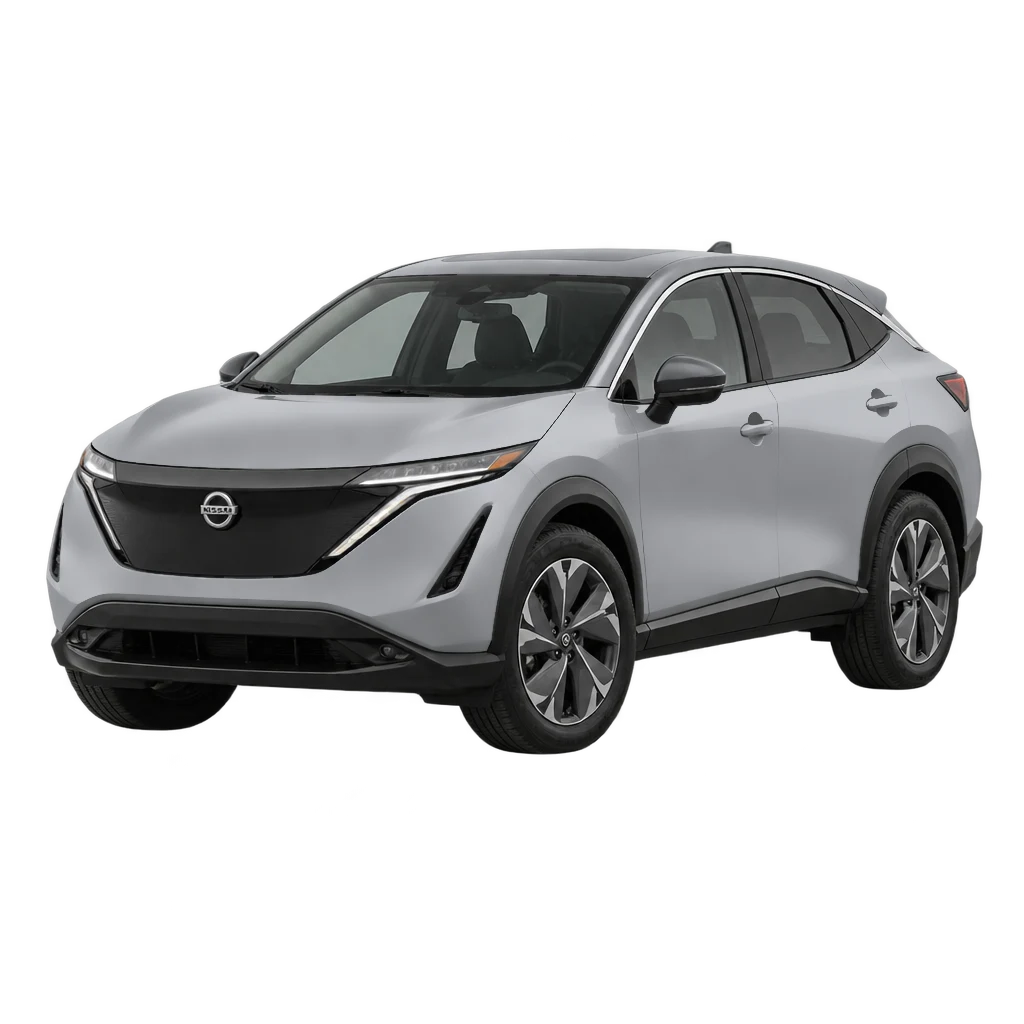
Nissan Ariya
Insurance considerations for the Nissan Ariya all-electric crossover SUV, including front-wheel-drive and e-4ORCE all-wheel-drive models.
Overview
The Nissan Ariya is a fully electric five-passenger crossover SUV introduced in the United States for the 2023 model year. It combines a spacious interior, modern digital technology, and a choice of front-wheel drive or Nissan's dual-motor e-4ORCE all-wheel drive. The U.S.-market Ariya was offered for the 2023 through 2025 model years. Nissan has confirmed that 2025 was its final U.S. production model year. Existing vehicles remain relevant to the used-EV market, where battery condition, replacement value, warranty coverage, and repair costs can influence insurance decisions. The Ariya was offered with two battery capacities. Nissan's 2025 specifications list a 66 kWh gross battery with 63 kWh usable capacity and a 91 kWh gross battery with 87 kWh usable capacity. Both use liquid-cooled lithium-ion technology. Front-wheel-drive versions use a single electric motor, while e-4ORCE versions use two motors to provide all-wheel drive. Power varies by configuration, with certain e-4ORCE models producing up to 389 horsepower and 442 lb-ft of torque. For 2025, EPA-estimated range reaches up to 289 miles in the EVOLVE+ front-wheel-drive configuration. Other configurations have different range ratings. The Ariya also offers dual 12.3-inch displays, available ProPILOT Assist 2.0, and advanced camera and parking technology, depending on trim. Insurance considerations include the vehicle's current market value, high-voltage battery, electric drivetrain, electronic systems, specialized body parts, and the availability of qualified repair facilities.
How Much Does Nissan Ariya Insurance Cost?
Insurance costs for a Nissan Ariya depend on its model year, trim, drivetrain, current market value, driver profile, location, annual mileage, coverage limits, deductible, and insurer. The Ariya's different battery sizes and drivetrain configurations can influence replacement value and potential repair costs. A front-wheel-drive model with the smaller battery has different components and equipment from a higher-trim e-4ORCE all-wheel-drive model. Advanced driver-assistance technology, cameras, sensors, and digital displays may also affect collision repair expenses. Because the Ariya is no longer in U.S. production, owners should pay attention to current used-vehicle values and parts availability. Discontinuation does not automatically make the vehicle uninsurable or mean replacement parts are unavailable. No single premium applies to every Nissan Ariya. Comparing personalized quotes for the exact model year, trim, and drivetrain is the most reliable way to evaluate insurance pricing.
What affects insurance cost
Several factors specific to the Nissan Ariya are worth understanding when shopping for insurance.
Trim, drivetrain, and replacement value
The Nissan Ariya was sold in several configurations with different equipment, battery capacities, and drivetrain systems. Higher-trim versions may include additional cameras, advanced driver-assistance features, premium interior materials, and larger wheels. Insurers consider the vehicle's current value, expected repair expenses, theft exposure, and other risk factors. Actual cash value generally reflects current market conditions rather than the original purchase price. Owners should review coverage and deductibles as used-vehicle values change.
High-voltage battery capacity and protection
The Ariya uses a liquid-cooled lithium-ion battery mounted beneath the passenger compartment. For 2025, Nissan specifies 66 kWh gross and 63 kWh usable capacity for the smaller battery, and 91 kWh gross and 87 kWh usable capacity for the larger battery. Battery inspections following a collision may involve the enclosure, electrical connections, cooling components, and surrounding structure. The battery is a specialized high-voltage component, and repairs must follow appropriate safety procedures. Battery damage can significantly influence repair costs, but it does not automatically require a total loss determination.
Front-wheel drive versus e-4ORCE all-wheel drive
The Ariya was offered with single-motor front-wheel drive and dual-motor e-4ORCE all-wheel drive. The e-4ORCE system manages power delivery between the front and rear motors and uses braking controls to help optimize traction and handling. Certain 2025 e-4ORCE configurations produce up to 389 horsepower and 442 lb-ft of torque. Collision damage involving the electric motors, power electronics, or related drivetrain components may require specialized diagnosis. All-wheel drive does not automatically produce a specific premium increase. Insurers evaluate the complete vehicle and driver profile.
ProPILOT and advanced driver-assistance systems
Depending on trim and model year, the Ariya may include ProPILOT Assist with Navi-link, ProPILOT Assist 2.0, ProPILOT Park, and other driver-assistance features. These systems may rely on cameras, radar, sensors, and electronic control modules. Repairs involving windshields, bumpers, cameras, sensors, or their mounting locations may require calibration or diagnostic verification. Owners should confirm that their insurer's repair network can perform the required Nissan procedures.
Digital displays, glass, and interior electronics
The Ariya features two 12.3-inch displays for driver information and infotainment. Depending on configuration, additional equipment may include a head-up display, premium audio, panoramic moonroof, and electronic convenience features. Damage to displays, glass, wiring, or electronic control systems may require manufacturer-specific replacement parts or programming. Equipment varies by trim. Owners should verify that factory-installed electronics and necessary repairs are covered following an eligible insured event.
Discontinued production and used-vehicle market value
Nissan confirms that 2025 was the final U.S. production model year for the Ariya. As existing vehicles age, mileage, condition, battery health, repair history, and market depreciation become increasingly important. Discontinuation does not automatically establish higher insurance premiums or prevent repairs, but owners may wish to confirm the availability of qualified repair facilities and model-specific replacement parts. A lower used-vehicle value may reduce the amount at risk in a total-loss claim without necessarily reducing every repair expense. Owners should periodically review coverage, deductibles, and current market value.
Battery and insurance
The Nissan Ariya uses a liquid-cooled lithium-ion high-voltage battery. For the 2025 U.S. model, Nissan lists two configurations: 66 kWh gross capacity, with 63 kWh usable; and 91 kWh gross capacity, with 87 kWh usable. EPA-estimated range depends on battery, drivetrain, trim, and wheels. The 2025 EVOLVE+ front-wheel-drive model reaches up to 289 miles. The Ariya uses a J1772-compatible connection for AC charging and a CCS1 connector for DC fast charging. Nissan specifies a 7.2 kW onboard AC charger and DC fast-charging capability of up to 130 kW. The manufacturer's 2025 specifications provide approximate DC charging times of 35 minutes for the smaller battery and 40 minutes for the larger battery under the stated fast-charging test conditions. The applicable starting and ending charge percentages should be checked against the exact Nissan specification for the relevant drivetrain and configuration. Actual charging times depend on charger capability, battery temperature, state of charge, and other conditions. Nissan also introduced access to compatible Tesla Superchargers through a Nissan-approved NACS adapter for eligible Ariya vehicles. This does not mean that the U.S.-market Ariya has a native NACS charging port. Battery warranty coverage is separate from automobile insurance. Nissan's applicable U.S. warranty booklet defines the high-voltage battery warranty period, qualifying defects, exclusions, and conditions. Owners should verify the terms for their specific model year and remaining warranty eligibility. Qualifying manufacturing defects may fall under the manufacturer's warranty. Physical battery damage resulting from a covered collision or comprehensive event may fall under automobile insurance, subject to policy terms and deductibles. Normal battery aging and degradation are generally not covered automobile insurance losses.
Repair considerations
Repairing a Nissan Ariya may require technicians trained in high-voltage electric vehicle systems and Nissan diagnostic procedures. Following a collision, inspections may involve the battery enclosure, high-voltage cables, motor assemblies, power electronics, charging equipment, cooling systems, and body structure. The appropriate procedures may differ between front-wheel-drive and e-4ORCE all-wheel-drive configurations. Advanced driver-assistance systems, cameras, and electronic displays may also require diagnostic checks or calibration. Because the Ariya is no longer in U.S. production, owners should confirm that qualified repair facilities and necessary replacement parts remain accessible. Rental reimbursement coverage may be worth considering if specialized repairs require additional time.
Cameras, sensors, glass and technology
The Ariya includes digital vehicle controls, dual 12.3-inch displays, and available advanced driver-assistance technology. Depending on trim, features may include Intelligent Around View Monitor, ProPILOT Assist with Navi-link, ProPILOT Assist 2.0, and ProPILOT Park. Some configurations also include a panoramic moonroof and head-up display. Windshield replacement or collision repairs involving sensors or mounting locations may require calibration or diagnostic verification. Owners should ask whether their policy covers factory-installed cameras, displays, sensors, glass, and necessary recalibration after an eligible covered event.
Coverage considerations
Collision coverage generally addresses damage to the insured vehicle resulting from a collision with another vehicle or object, subject to policy terms and deductibles. Comprehensive coverage generally addresses covered non-collision events such as theft, fire, vandalism, and certain weather-related losses. High-voltage battery damage caused by a covered event may fall under collision or comprehensive coverage depending on the circumstances. Liability insurance addresses covered bodily injury or property damage for which the insured driver is legally responsible, subject to applicable policy limits. Owners should also consider whether rental reimbursement and roadside assistance coverage are appropriate. Coverage for portable charging equipment, home charging stations, and personal property may vary by policy. Confirm the applicable terms directly with the insurer.
Deductibles
A deductible is the amount the policyholder pays toward an eligible covered claim before the insurer pays the remaining covered amount. For the Nissan Ariya, repairs involving the high-voltage battery, electric motors, displays, cameras, sensors, or body components may be substantial. As the Ariya depreciates in the used-vehicle market, the deductible may represent a larger percentage of its current value. A higher deductible may reduce the insurance premium but increases the owner's out-of-pocket responsibility after a covered loss. Compare deductible options against your financial circumstances and the vehicle's current market value.
Accidents and total loss
A Nissan Ariya may be declared a total loss when the insurer determines that the applicable total-loss criteria have been met under state law and policy provisions. The determination may consider repair expenses, actual cash value, salvage value, and applicable legal thresholds. High-voltage battery damage, structural damage, or extensive electronic repairs may substantially influence repair estimates. However, battery damage does not automatically establish a total loss. Because the Ariya is no longer in U.S. production, current used-vehicle values and comparable market transactions are especially relevant to valuation. Actual cash value generally reflects the vehicle's model year, mileage, condition, trim, drivetrain, and comparable market transactions rather than original MSRP. For financed or leased vehicles, GAP coverage may help address an eligible difference between the insurance settlement and the remaining loan or lease balance, subject to its terms and exclusions.
Questions to ask an insurer
Does your repair network include facilities qualified to service the Nissan Ariya high-voltage battery and electric drivetrain?
Does my policy cover battery damage resulting from an eligible collision or comprehensive event?
Are required camera, radar, and ProPILOT sensor recalibrations covered following an eligible repair?
How will you determine the actual cash value of my Ariya based on its trim, drivetrain, mileage, and condition?
Does my policy cover factory-installed displays, charging equipment, and electronic components following a covered event?
What rental reimbursement coverage is available if specialized EV repairs or replacement parts require additional time?
How should I compare collision and comprehensive deductibles against the Ariya's current market value?
Ways to shop smarter
Compare personalized insurance quotes from multiple companies using the exact Nissan Ariya model year and trim.
Confirm whether the vehicle has front-wheel drive or e-4ORCE all-wheel drive.
Identify the correct battery configuration, 63 kWh usable or 87 kWh usable.
Ask whether the insurer's repair network includes qualified Nissan electric vehicle repair facilities.
Review coverage for the high-voltage battery, charging equipment, electronics, cameras, and sensors.
Consider rental reimbursement and roadside assistance coverage.
Compare deductibles against the vehicle's current market value, particularly as the Ariya depreciates.
Review the applicable battery warranty and verify availability of model-specific repair parts.
Frequently asked questions
Which Nissan Ariya model years were sold in the United States?
The Nissan Ariya entered the U.S. market for the 2023 model year and was offered through 2025. Nissan confirms that 2025 was the final U.S. production model year. The Ariya remains available in the used-vehicle market.
What is the EPA-estimated range of the Nissan Ariya?
EPA-estimated range depends on model year, battery, drivetrain, trim, and wheel configuration. For 2025, the EVOLVE+ front-wheel-drive model offers up to 289 miles of EPA-estimated range. Other configurations have different ratings. Actual range varies with driving conditions.
What battery sizes does the Nissan Ariya use?
The 2025 U.S. Ariya uses either a 66 kWh gross battery with 63 kWh usable capacity or a 91 kWh gross battery with 87 kWh usable capacity. Both are liquid-cooled lithium-ion battery systems.
Does the Nissan Ariya use CCS or NACS charging?
U.S.-market Ariya vehicles use CCS1 for DC fast charging and J1772-compatible AC charging. Eligible vehicles may access certain Tesla Superchargers using a compatible Nissan-approved NACS adapter. The Ariya does not have a factory-installed native NACS port.
What is the Nissan Ariya battery warranty?
Nissan provides high-voltage battery warranty coverage under the applicable U.S. new-vehicle warranty booklet. The exact coverage period, mileage limit, qualifying conditions, and exclusions should be verified for the vehicle's model year. Manufacturer warranty protection and automobile insurance cover different risks.
Does automobile insurance cover Nissan Ariya battery replacement?
Physical battery damage resulting from a covered collision or comprehensive event may be covered under the relevant automobile insurance provisions. Normal battery aging and degradation are generally not covered. Qualifying manufacturing defects may instead fall under the manufacturer's warranty.
Is the Nissan Ariya expensive to insure?
Insurance pricing depends on the driver's circumstances, location, model year, trim, drivetrain, vehicle value, insurer, and coverage selections. Its high-voltage battery, electronic systems, and specialized repairs can influence costs. Comparing personalized quotes is the most reliable approach.
What happens if my Nissan Ariya is declared a total loss?
The insurer generally calculates a settlement based on the vehicle's actual cash value, subject to policy terms and applicable state law. The settlement may differ from the original purchase price. GAP coverage may help address an eligible difference between the settlement and remaining loan or lease balance, subject to its terms.
Does the Nissan Ariya's discontinued production affect insurance?
Discontinued production does not automatically prevent insurance coverage or make the vehicle unrepairable. However, current used-vehicle value, replacement-part availability, and access to qualified repair facilities may become increasingly relevant. Owners should review coverage and deductibles periodically.
Related EV insurance topics
Ready to compare?
Compare EV insurance options and find coverage that fits your needs.