















EV Insurance Guide
Mitsubishi i-MiEV
Mitsubishi i-MiEV insurance guide for the discontinued U.S. electric hatchback offered in 2012, 2014, 2016, and 2017, featuring a 16 kWh battery, short-range driving, CHAdeMO charging, and older-EV repair considerations.
Overview
The Mitsubishi i-MiEV is a four-seat battery-electric hatchback that helped introduce early mass-market electric transportation to American drivers.
Mitsubishi offered the U.S.-specification vehicle for the 2012, 2014, 2016, and 2017 model years. There were no U.S. 2013 or 2015 model-year versions. The model was discontinued in the United States after 2017.
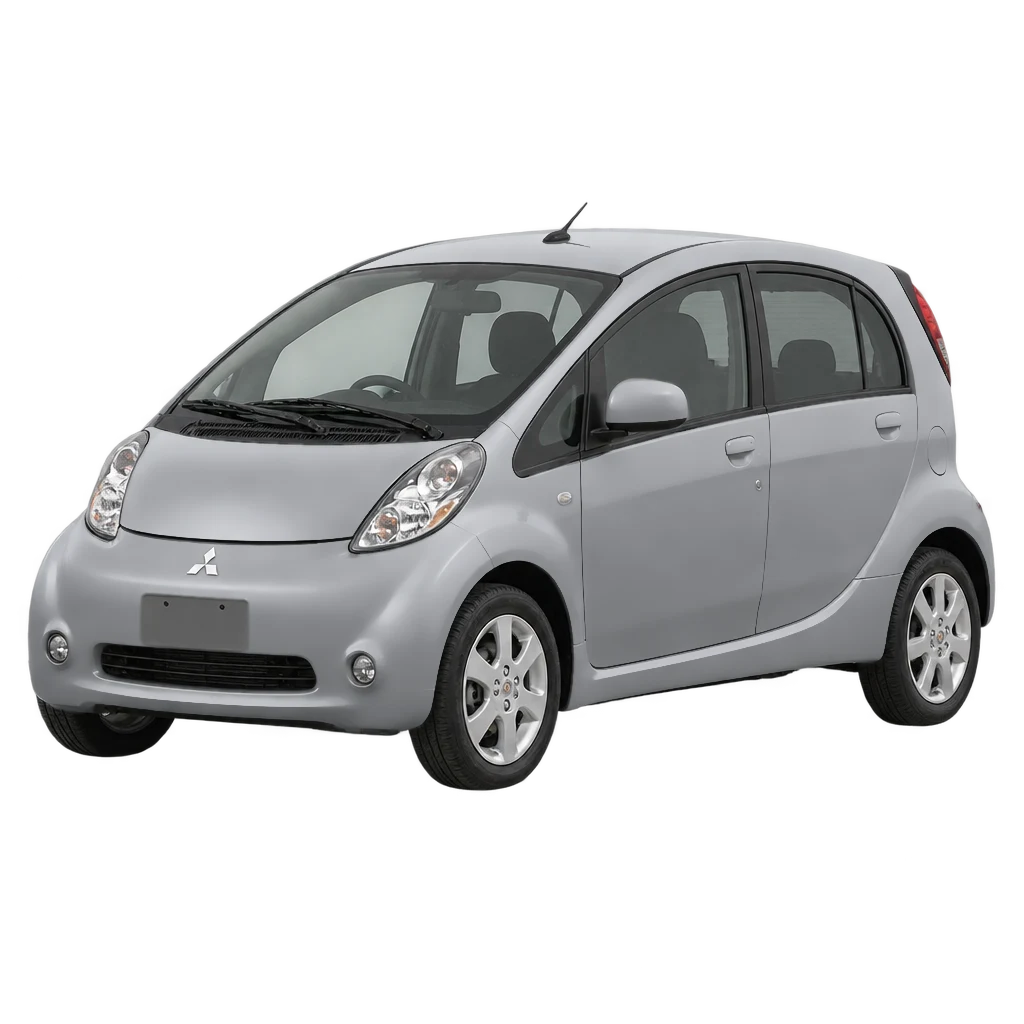
The American i-MiEV is based on Mitsubishi's compact i platform but was adapted for U.S. regulations and customer requirements. It should not automatically be treated as identical to Japanese-market vehicles or European derivatives.
Unlike a gasoline-powered Mitsubishi Mirage or Outlander, the i-MiEV operates entirely on electricity. It has no gasoline engine, fuel tank, or exhaust system.
A single rear-mounted electric motor drives the rear wheels through a fixed-ratio transmission.
Mitsubishi rated the U.S. motor at 66 horsepower and 145 lb-ft of torque. The car emphasizes compact dimensions and economical short-distance driving rather than high performance.
A 16 kWh lithium-ion battery supplies propulsion energy. The original battery system operated at approximately 330 volts.
The 2012 U.S. i-MiEV carried an EPA-estimated driving range of 62 miles. The final 2017 model was rated for 59 miles.
These relatively modest ranges made the i-MiEV best suited to short commutes, local errands, and drivers with reliable charging access.
Today, surviving vehicles are significantly older. Battery aging, temperature, climate-control usage, terrain, and driving habits can materially affect their practical range.
Owners should avoid assuming a used i-MiEV can still travel its original EPA-rated distance.
The U.S. model has a four-door hatchback body, seating for four, a relatively tall cabin, and a compact footprint.
At approximately 144.7 inches long, it is much smaller than most modern electric crossovers.
The small exterior dimensions can make urban parking convenient, although the vehicle has limited passenger and cargo capacity compared with newer family EVs.
Drivers can select different operating positions, including Drive, Eco, and a stronger regenerative-braking setting, to adjust vehicle response and energy recovery.
The i-MiEV supports AC charging through a J1772 connector.
Certain vehicles also have a separate CHAdeMO DC quick-charging port. The port was optional on original 2012 U.S. vehicles and should be verified on each individual car.
Mitsubishi originally estimated approximately seven hours for charging using suitable 240-volt Level 2 equipment and approximately 22.5 hours using the specified 120-volt charging configuration.
For vehicles fitted with CHAdeMO, the manufacturer originally described reaching approximately 80 percent charge in around 30 minutes at suitable quick-charging equipment.
Those estimates reflect original equipment and test conditions. Actual results depend on battery age, temperature, available charging current, charger compatibility, and battery state of charge.
The i-MiEV's CHAdeMO port is not the same as a CCS1 or NACS connector. Public CHAdeMO availability may be limited compared with charging options for newer electric vehicles.
From an insurance perspective, the i-MiEV combines relatively modest current vehicle value with potentially specialized battery, electrical, and discontinued-model repair requirements.
Its rear electric drive layout, compact body parts, older charging equipment, and high-voltage battery can affect repair decisions after qualifying damage.
Owners should also confirm the exact year and original equipment, since features such as quick charging, navigation, and certain cold-weather components varied.
Insurance quotations should reflect the correct Mitsubishi i-MiEV, its present used-market value, and the driver's coverage needs.
How Much Does Mitsubishi i-MiEV Insurance Cost?
Mitsubishi i-MiEV insurance premiums depend on the driver, location, model year, vehicle condition, selected coverage, and insurance provider. There is no reliable universal insurance price that applies to every surviving i-MiEV. The i-MiEV is an older, discontinued electric vehicle. Its current used-market value may be substantially lower than its original purchase price. That value matters when evaluating collision and comprehensive insurance. However, an older vehicle with modest value is not necessarily inexpensive to repair. The i-MiEV's lithium-ion battery, rear electric drive unit, charging equipment, and related high-voltage components may require specialized diagnosis following a covered accident. Some model-specific replacement parts may also be more difficult to obtain because production and U.S. sales ended years ago. The limited population of surviving vehicles may affect the availability of comparable market transactions for an insurance total-loss valuation. Personal factors remain central to pricing, including driving record, claims history, garaging location, annual mileage, and permitted insurer rating information. Coverage choices also matter. Liability limits, collision and comprehensive deductibles, uninsured or underinsured motorist protection, rental reimbursement, and roadside assistance can influence the quote. For owners of an older i-MiEV, an important question is whether the cost of physical-damage protection is appropriate relative to the car's current market value and the owner's ability to replace it. A low premium is not necessarily a good value if the policy provides insufficient protection. Compare personalized quotes using equivalent limits, deductibles, and optional benefits. SureEV does not invent national insurance averages for this model.
What affects insurance cost
Several factors specific to the Mitsubishi i-MiEV are worth understanding when shopping for insurance.
Age, Condition, and Used-Market Value
U.S. i-MiEV model years are 2012, 2014, 2016, and 2017. Current value depends on mileage, condition, battery health, service history, available comparable vehicles, and market demand. The original purchase price does not determine today's actual cash value. Because the car is relatively uncommon, owners should retain records documenting its condition and equipment.
The 16 kWh Lithium-Ion Battery
The i-MiEV uses a 16 kWh lithium-ion traction battery. Its relatively small capacity makes battery aging especially important to practical driving range. Covered damage to the enclosure, wiring, or other high-voltage components may require qualified inspection. Gradual capacity loss and ordinary battery aging are generally not covered by standard automobile physical-damage insurance.
Rear Motor and Electrical Components
A single 66-horsepower electric motor drives the rear wheels. The car also includes power electronics, a DC-to-DC converter, regenerative braking controls, and high-voltage wiring. Covered collision repairs may require specialized component identification and electrical safety procedures. An ordinary electrical failure is not automatically a collision or comprehensive claim.
CHAdeMO Charging Equipment
The i-MiEV uses J1772 for AC charging and CHAdeMO DC fast charging on equipped vehicles. Not every original 2012 U.S. vehicle had a CHAdeMO port. Charging-port damage or nearby body damage may require specific replacement components. Owners should confirm port availability and operating condition when documenting the vehicle's equipment.
Discontinued Body Parts and Repairs
The i-MiEV's compact body, rear-drive arrangement, glazing, and electrical equipment differ from modern Mitsubishi vehicles. Certain replacement components may be harder to source because the model is discontinued. Parts availability can affect repair costs, time, and economic feasibility. The vehicle should not be described as automatically unrepairable; actual options depend on the damaged components and available services.
Driver History and Policy Selection
Driving history, location, previous claims, annual mileage, vehicle use, liability limits, and deductibles influence individual premiums. State insurance rules and regional repair expenses can also matter. Owners should review the current vehicle value when deciding whether collision or comprehensive coverage makes financial sense.
Battery and insurance
The Mitsubishi i-MiEV uses a 16 kWh lithium-ion high-voltage traction battery. Mitsubishi's original U.S. documentation describes an 88-cell battery system operating at approximately 330 volts. The battery is installed beneath the passenger compartment and supplies electricity to the rear-mounted motor. The original 2012 model had an EPA-estimated driving range of 62 miles, while the final 2017 model was rated for 59 miles. An individual used i-MiEV may have considerably less practical range today because of battery condition and operating circumstances. Normal lithium-ion battery aging is not the same as damage from a covered collision or other insured event. Collision insurance may apply to qualifying physical battery damage caused by an insured accident. Comprehensive coverage may apply to certain specified non-collision losses, such as covered fire or flooding. Coverage depends on the actual event, policy language, deductibles, limits, exclusions, and state law. Following a serious collision, underbody impact, or flood exposure, qualified technicians may need to inspect the battery enclosure, high-voltage isolation, connectors, and associated electrical equipment. The need for inspection does not automatically establish that the entire battery must be replaced. Repair feasibility depends on the actual damage, applicable Mitsubishi procedures, availability of components, and qualified personnel. Mitsubishi's original 2012 U.S. documentation listed an eight-year or 100,000-mile traction-battery warranty, subject to written conditions. That historical warranty should not be presented as active protection for every surviving vehicle. Owners should review the exact model-year warranty, original in-service date, mileage, and remaining eligibility. Manufacturer warranties are separate from automobile insurance. Normal capacity degradation, manufacturing defects, or unrelated failures are not automatically collision or comprehensive losses. Charging is another important ownership consideration. The i-MiEV supports AC charging through J1772 and, on equipped vehicles, CHAdeMO DC fast charging. CHAdeMO access may be limited in some areas, and charging-station compatibility must be confirmed. Charging cables, home equipment, electrical wiring, and portable accessories may be insured differently from factory-installed vehicle components. Owners should consult their applicable automobile and property policies.
Repair considerations
The Mitsubishi i-MiEV combines compact hatchback construction with a specialized battery-electric drive system. Its rear-mounted motor, power electronics, traction battery, charging ports, and control systems differ from those of newer Mitsubishi gasoline vehicles. Following significant covered damage, qualified repair personnel may need to inspect the battery enclosure, electrical isolation, rear drive components, charging hardware, and adjacent structural areas. The car uses a single-speed electric drivetrain and regenerative braking. Suspension, brakes, steering, and body components should be evaluated according to the actual damage and applicable service procedures. Because U.S. production and sales ended after 2017, replacement-part availability may vary considerably. Some maintenance and mechanical work may remain straightforward, while battery, charging, body, or electronic repairs may require specialized sourcing. Owners should verify access to properly trained technicians before assuming that every repair facility can service the high-voltage system. Older vehicles can also have age-related electrical or mechanical problems that are separate from insured accidental physical damage. An insurer's decision to repair or total a vehicle should reflect actual claim circumstances, vehicle value, repair costs, and applicable requirements. Rental reimbursement may assist with qualifying transportation expenses during covered repairs, subject to policy limits. Roadside assistance should be reviewed for appropriate EV towing procedures and service destinations.
Cameras, sensors, glass and technology
The U.S. Mitsubishi i-MiEV reflects an earlier generation of electric-car technology. It has a simpler electronic and driver-assistance architecture than many current electric vehicles. Standard equipment includes conventional safety and control systems such as anti-lock braking, electronic stability-related functions, airbags, and electronic vehicle controls. Certain model years and equipment packages offered additional convenience technology. For example, an optional navigation package on later vehicles included a touchscreen and rearview camera. Original 2012 equipment also varied by ES or SE trim and available packages. Owners should not assume every i-MiEV has a factory rearview camera, navigation display, or CHAdeMO fast-charging port. Although the car lacks the complex camera arrays and panoramic display systems found in many modern luxury EVs, covered collision damage may still affect electronic modules, lighting, glass, charging systems, and electrical controls. Replacement parts must match the vehicle's specific model year and original equipment. Ordinary aging electronics, navigation failures, and disconnected services are not automatically covered physical-damage events. An insurance repair should reflect the actual covered damage, available parts, policy terms, and required safety procedures.
Coverage considerations
Choosing insurance for a Mitsubishi i-MiEV involves balancing the protection needed for an older, relatively low-value vehicle against the potentially specialized nature of electric-vehicle repairs. The U.S. i-MiEV was sold for the 2012, 2014, 2016, and 2017 model years. Every surviving example is now an older, discontinued battery-electric hatchback. Its 16 kWh traction battery, rear electric motor, compact body, and charging equipment should be identified correctly when reviewing insurance coverage. Liability insurance generally covers qualifying injuries or property damage for which an insured driver is legally responsible. It does not ordinarily pay to repair the policyholder's own i-MiEV. Drivers should consider appropriate liability limits based on their personal financial exposure and applicable state rules rather than assuming minimum required limits always provide sufficient protection. Collision coverage may help pay for qualifying physical damage when the i-MiEV strikes another vehicle or object. Depending on the event, eligible repairs may involve the compact body, suspension, rear drive unit, battery enclosure, or other factory-installed components. Comprehensive insurance generally applies to specified non-collision events, such as qualifying theft, vandalism, certain fires, hail, falling objects, or flooding. High-voltage equipment and electronic components may be covered when physically damaged by an insured event, subject to the applicable policy. Ordinary battery aging, gradual loss of capacity, manufacturing defects, mechanical wear, and routine maintenance are generally separate from collision and comprehensive claims. Uninsured and underinsured motorist protection may also be important, particularly when another driver has no applicable insurance or insufficient coverage. Available benefits and requirements vary by state. Medical payments coverage and personal injury protection may be offered or required depending on the jurisdiction. Owners should carefully evaluate whether collision and comprehensive protection remain financially appropriate. A used i-MiEV may have a relatively modest current market value, and repair costs can sometimes approach or exceed that value. Dropping physical-damage coverage, however, means the owner generally assumes the financial consequences of damage that would otherwise have been covered. Rental reimbursement may help with eligible transportation expenses following a covered claim, subject to limits. Roadside assistance deserves consideration because the i-MiEV's limited range and older CHAdeMO charging system may complicate certain roadside situations. Coverage should be reviewed for towing eligibility, service distance, and appropriate electric-vehicle handling. Portable charging equipment and home charging installations may require separate consideration under automobile or property insurance. The final protection depends on the actual policy, cause of loss, exclusions, deductibles, limits, and applicable law.
Deductibles
A deductible is the amount the insured owner is responsible for under a qualifying covered claim before the applicable insurance payment is calculated. Collision and comprehensive coverage commonly have separate deductibles. A higher deductible generally reduces the insurance premium but increases out-of-pocket responsibility following an eligible loss. A lower deductible typically raises the premium while reducing that responsibility. For a Mitsubishi i-MiEV, the relationship between deductible and current vehicle value deserves particular attention. The vehicle was discontinued after the 2017 model year, and present market values depend on mileage, condition, battery health, equipment, and available comparable vehicles. A deductible that was appropriate when the vehicle was newer may be less appropriate today. For example, comparing a $500 collision deductible with a $1,500 deductible requires considering the annual premium difference and the possibility of paying an additional $1,000 after a qualifying accident. Owners should also consider the maximum potential insurance settlement if the vehicle is totaled. A low-value vehicle may offer limited financial recovery under collision coverage after the deductible. The i-MiEV can require specialized battery or electric-drive repairs, but that does not automatically justify selecting a low deductible. Deductible choices should reflect current market value, available insurance premiums, personal finances, and the owner's ability to replace the vehicle. There is no universally ideal deductible for every i-MiEV owner.
Accidents and total loss
Following an accident involving a Mitsubishi i-MiEV, occupant safety comes first. Drivers should request emergency assistance when necessary and avoid exposed high-voltage components or damaged battery equipment. The i-MiEV uses a lithium-ion battery beneath the passenger compartment and a rear-mounted electric drive system. Following significant collision, underbody, or flood damage, qualified technicians may need to inspect the battery enclosure, wiring, electrical isolation, rear motor, power electronics, charging equipment, and nearby body structure. The presence of high-voltage components does not automatically mean that every accident requires battery replacement. The actual damage and available manufacturer-approved repair procedures determine what work is appropriate. Because U.S. sales ended after the 2017 model year, certain parts may be harder to source than those for current high-volume vehicles. A repair facility should evaluate actual parts availability rather than assuming discontinued status makes every i-MiEV unrepairable. A total loss may occur when an insurer determines that applicable repair economics, vehicle value, and state-law criteria have been met. Relevant considerations may include repair expenses, salvage value, actual cash value, and jurisdiction-specific rules. There is no universal nationwide percentage that determines when every vehicle must be totaled. Under standard actual cash value coverage, an eligible total-loss settlement generally reflects the i-MiEV's value immediately before the insured loss, subject to the policy and applicable law. That amount does not automatically equal the original MSRP, the amount originally paid, or the cost of replacing the vehicle with a newer EV. An accurate valuation should account for the correct U.S. model year, mileage, physical condition, battery condition where relevant and supportable, equipment, and available used-market evidence. The 2012, 2014, 2016, and 2017 versions should be identified appropriately. International-market versions and unrelated electric vehicles should not automatically be treated as identical comparables. Owners should retain photographs, maintenance records, battery-related documentation, equipment information, and recent vehicle condition reports. If an insurer's valuation appears inaccurate, the owner may request the supporting report and review available valuation-dispute procedures.
Questions to ask an insurer
Does your policy correctly identify my U.S.-market Mitsubishi i-MiEV by VIN, model year, electric drivetrain, factory equipment, and current market value rather than using specifications from an international version?
Does collision or comprehensive coverage apply to qualifying physical damage involving the 16 kWh traction battery, battery enclosure, rear electric motor, high-voltage wiring, and power electronics?
Can your repair network provide access to qualified facilities familiar with the discontinued Mitsubishi i-MiEV and capable of safely inspecting its high-voltage components?
Does the policy cover qualifying physical damage to the vehicle's J1772 charging connection and, where equipped, the CHAdeMO quick-charging port and associated factory equipment?
How does your insurer address replacement-part availability and repair expenses when evaluating whether an older, discontinued i-MiEV should be repaired or declared a total loss?
If my i-MiEV is totaled, how will its actual cash value be determined using the correct U.S. model year, mileage, condition, battery-related documentation, and appropriate market comparisons?
What liability limits, collision and comprehensive deductibles, uninsured or underinsured motorist protection, rental reimbursement, roadside assistance, EV towing provisions, and relevant exclusions are available?
Ways to shop smarter
Confirm the exact U.S. model year. Provide the VIN and correctly identify the vehicle as a 2012, 2014, 2016, or 2017 Mitsubishi i-MiEV. Do not use international-market specifications or nonexistent U.S. model years.
Compare equivalent insurance policies. Request personalized quotes with matching liability limits, deductibles, uninsured or underinsured motorist protection, and selected optional benefits.
Evaluate current vehicle value. Consider today's used-market value when deciding whether collision and comprehensive premiums are worthwhile. Original purchase price does not automatically reflect current value.
Document battery condition. Keep service history, relevant diagnostic records, and other available battery information. Battery condition can affect practical range and may be relevant to valuation.
Verify qualified EV repair options. Ask whether suitable facilities can inspect the high-voltage battery, rear drive unit, charging equipment, and related electrical components.
Confirm charging-port equipment. Record whether the vehicle has a CHAdeMO DC charging port. Original equipment varied, especially on the 2012 U.S. model.
Review roadside and rental benefits. Check EV-appropriate towing, roadside assistance distance limits, and rental reimbursement during qualifying covered repairs.
Reassess coverage at every renewal. Review current market value, annual mileage, premiums, deductibles, liability limits, and available discounts. Older-vehicle coverage decisions may change over time.
Frequently asked questions
Is the Mitsubishi i-MiEV expensive to insure?
Mitsubishi i-MiEV insurance premiums depend on the driver's history, location, annual mileage, vehicle condition, model year, selected coverage, deductibles, and insurer underwriting. The car may have a relatively modest current used-market value, but certain discontinued electric-vehicle repairs can require specialized parts or technicians. No single national premium accurately represents every owner. Compare personalized quotes using equivalent protection.
What years was the Mitsubishi i-MiEV sold in the United States?
The U.S.-market Mitsubishi i-MiEV was offered for the 2012, 2014, 2016, and 2017 model years. There were no U.S. 2013 or 2015 model-year versions. The 2017 vehicle was the final U.S. model year. Other international i-MiEV versions and derivatives may have different specifications.
What battery does the Mitsubishi i-MiEV use?
The U.S. Mitsubishi i-MiEV uses a 16 kWh lithium-ion high-voltage traction battery positioned beneath the passenger compartment. Mitsubishi's original documentation described an 88-cell battery system operating at approximately 330 volts. The battery powers a single rear electric motor rated at 66 horsepower. Battery condition is particularly important for the practical range of these older vehicles.
How far can a Mitsubishi i-MiEV travel on one charge?
The original 2012 U.S. Mitsubishi i-MiEV had an EPA-estimated range of 62 miles, while the 2017 model was rated for 59 miles. These ratings describe the vehicles under the original EPA test procedures when new. Actual range today depends on battery condition, temperature, speed, terrain, climate-control use, and driving habits. A used example may travel substantially less than its original rating.
Does the Mitsubishi i-MiEV use CHAdeMO fast charging?
Mitsubishi i-MiEV vehicles equipped with the factory CHAdeMO quick-charging port can use compatible CHAdeMO DC equipment. The port was optional on original 2012 U.S. vehicles, so owners should verify the equipment installed on their specific car. The i-MiEV uses J1772 for AC charging. It does not have a factory CCS1 or NACS DC charging port.
How long does it take to charge a Mitsubishi i-MiEV?
Mitsubishi originally estimated approximately seven hours using suitable 240-volt Level 2 equipment and about 22.5 hours using the specified 120-volt 8-amp charging configuration. On vehicles equipped with CHAdeMO, original quick-charging estimates were approximately 30 minutes to reach 80 percent under suitable conditions. Actual times vary with charging equipment, battery condition, temperature, and starting charge level.
Does insurance cover the Mitsubishi i-MiEV battery?
Collision insurance may apply to qualifying physical battery damage caused by a covered accident, while comprehensive coverage may apply to certain eligible non-collision events. Coverage depends on the policy, cause of damage, exclusions, limits, deductibles, and applicable law. Normal battery aging, routine capacity reduction, manufacturing defects, and ordinary wear generally are not standard automobile physical-damage claims. Manufacturer warranty coverage is separate.
Can a discontinued Mitsubishi i-MiEV still be repaired?
Some maintenance and repairs may still be performed by qualified facilities, but replacement-part availability varies. The i-MiEV's high-voltage battery, electric drive components, charging equipment, and certain body parts may require specialized sourcing or expertise. Discontinued status does not automatically make every vehicle unrepairable. Owners should verify the actual parts and qualified service resources needed for a particular repair.
How is a Mitsubishi i-MiEV valued after an insurance total loss?
Under standard actual cash value coverage, an eligible total-loss settlement generally reflects the vehicle's market value immediately before the covered loss, subject to policy terms and applicable law. The correct U.S. model year, mileage, condition, equipment, available used-market transactions, and relevant battery documentation matter. The original MSRP is not automatically the settlement amount, and international-market versions should not be treated as identical comparables without appropriate justification.
Related EV insurance topics
Ready to compare?
Compare EV insurance options and find coverage that fits your needs.