










EV Insurance Guide
Mercedes-Benz EQB
Insurance considerations for the Mercedes-Benz EQB electric SUV.
Overview
The Mercedes-Benz EQB is a compact luxury electric SUV that entered the U.S. market for the 2022 model year. It is built on the Mercedes-Benz MFA2 platform, which it shares with the gasoline-powered GLB-Class, and is produced at the Mercedes-Benz plant in Kecskemet, Hungary. The EQB is available in the U.S. in multiple configurations: the EQB 250+ (single front motor, front-wheel drive), the EQB 300 4MATIC (dual motor, all-wheel drive), and the EQB 350 4MATIC (dual motor, all-wheel drive, higher output). All U.S. EQB variants use a 70.5 kWh battery pack. EPA-estimated range varies by configuration: the EQB 250+ is rated at approximately 251 miles, the EQB 300 4MATIC at approximately 205 miles, and the EQB 350 4MATIC at approximately 207 miles for the 2024 model year; verify current ratings at fueleconomy.gov as figures are subject to change by model year. The EQB supports DC fast charging at up to 100 kW and uses a CCS1 connector for DC fast charging in the U.S. Level 2 AC charging is supported at up to 11 kW. The EQB is a seven-passenger capable vehicle with an optional third row. As a compact luxury electric SUV available in the U.S. through at least the 2025 model year, the EQB presents insurance considerations related to its luxury positioning, Mercedes-Benz driver-assistance technology, battery and high-voltage system repairs, and the availability of appropriately qualified repair facilities.
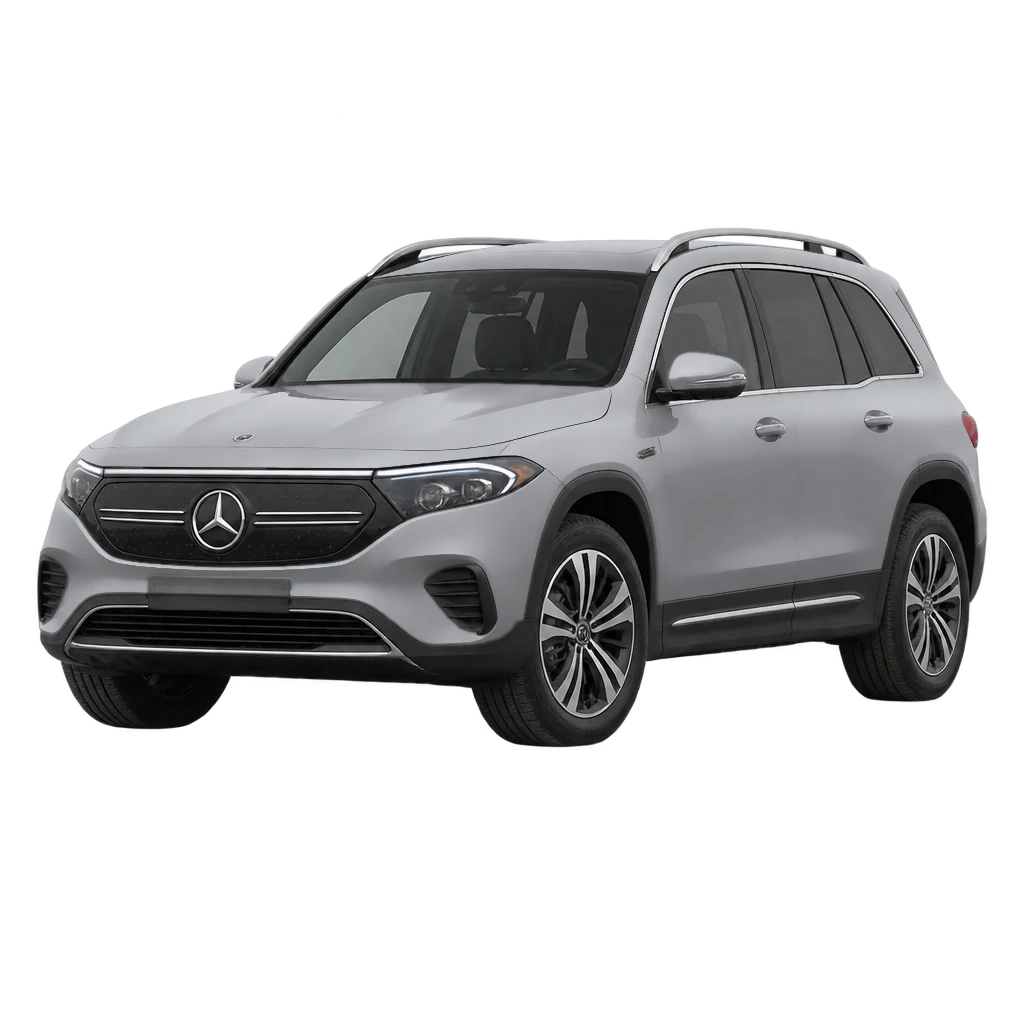
How Much Does Mercedes-Benz EQB Insurance Cost?
Insurance costs for the Mercedes-Benz EQB depend on factors including the vehicle's market value, model year, configuration, your driving history, location, coverage selections, and the insurer. As a compact luxury electric SUV, the EQB's higher replacement value compared to mainstream compact SUVs is one factor that can affect premiums. The EQB's Mercedes-Benz driver-assistance systems, glass and sensor recalibration requirements, and the need for appropriately qualified repair facilities are additional considerations. Vehicle value is one factor that can affect insurance costs. Comparing quotes from multiple insurers is the most reliable way to understand your options for the EQB.
What affects insurance cost
Several factors specific to the Mercedes-Benz EQB are worth understanding when shopping for insurance.
Luxury compact SUV replacement value
The Mercedes-Benz EQB carries a higher original purchase price than mainstream compact SUVs. Insurers use actual cash value when settling claims, and a higher vehicle value is one factor that can affect insurance premiums. Replacement parts and authorized repair labor for a Mercedes-Benz luxury vehicle may carry higher costs than comparable non-luxury vehicles.
High-voltage battery system
The EQB uses a 70.5 kWh battery pack. Battery-related repairs are among the most expensive components of an EV claim. High-voltage repairs require EV-certified technicians with appropriate equipment. Confirm that your preferred repair facility is appropriately qualified for high-voltage work on Mercedes-Benz EQ vehicles.
Mercedes-Benz driver-assistance systems and sensor recalibration
The EQB includes Mercedes-Benz driver-assistance technology incorporating cameras, radar, and ultrasonic sensors. Windshield replacement requires camera recalibration. Sensor repairs and recalibration add to overall claim costs. The specific driver-assistance features vary by trim and model year; confirm the equipment on the vehicle you are insuring.
Qualified repair facilities
Mercedes-Benz recommends repairs at authorized service centers with appropriate EV certification for EQ vehicles. Not all general repair shops are equipped for high-voltage EV work on Mercedes-Benz vehicles. Confirm that your insurer has access to appropriately qualified facilities in your area. Extended repair timelines are possible when specialized parts or technicians are required.
All-wheel-drive drivetrain complexity
The EQB 300 4MATIC and EQB 350 4MATIC use a dual-motor all-wheel-drive configuration. Dual-motor drivetrain repairs add complexity compared to single-motor configurations. The EQB 250+ uses a single front motor and front-wheel drive, which involves a simpler drivetrain. Confirm the configuration of the vehicle you are insuring, as it affects repair complexity and potential claim costs.
Glass and trim replacement costs
The EQB includes a panoramic sunroof on many trims. Glass replacement on a vehicle with integrated sensors and cameras requires recalibration. Luxury interior trim and materials carry higher replacement costs than mainstream vehicles. Confirm with your insurer whether glass and trim replacement costs are covered under your policy.
Battery and insurance
All U.S. Mercedes-Benz EQB variants use a 70.5 kWh battery pack. The EQB uses a 400-volt battery architecture. DC fast charging is supported at up to 100 kW using a CCS1 (Combined Charging System, Type 1) connector. Level 2 AC charging is supported using a J1772-compatible connector; AC charging capacity varies by configuration and model year (for example, the 2025 EQB 250+ supports up to 9.6 kW). Verify the AC charging capability for the specific model year and configuration you are insuring against official Mercedes-Benz USA documentation. EPA-estimated range for the 2024 model year is approximately 251 miles for the EQB 250+, approximately 205 miles for the EQB 300 4MATIC, and approximately 207 miles for the EQB 350 4MATIC. Verify current EPA ratings at fueleconomy.gov for the specific model year and configuration you are insuring, as figures are subject to change. Do not substitute European WLTP range figures for U.S. EPA estimates, as they are measured under different test cycles and are not equivalent. Native NACS integration for the EQB should be verified against current Mercedes-Benz USA documentation, as connector standards in the U.S. market continue to evolve. Mercedes-Benz's U.S. high-voltage battery warranty for the EQB generally covers the battery for 8 years or 100,000 miles, whichever comes first, from the original in-service date, subject to the warranty's terms, exclusions, and the specific model year. Verify current warranty terms, including any capacity-retention provisions, against official Mercedes-Benz USA warranty documentation for the model year you are insuring. The manufacturer battery warranty is separate from automobile insurance and covers different events under different conditions. Battery degradation over time is a normal characteristic of lithium-ion chemistry and is not covered by insurance. Damage to the battery from a covered collision or comprehensive event is typically addressed under those coverages, subject to your deductible and policy terms.
Repair considerations
The Mercedes-Benz EQB requires repair at a facility with high-voltage EV certification appropriate for Mercedes-Benz EQ vehicles. Mercedes-Benz recommends repairs at authorized service centers. Driver-assistance sensor recalibration is required after certain repairs involving cameras, radar, or ultrasonic sensors. Windshield replacement requires camera recalibration. The dual-motor all-wheel-drive configuration on the EQB 300 4MATIC and EQB 350 4MATIC adds complexity to drivetrain repairs compared to the single-motor, front-wheel-drive EQB 250+. Extended repair timelines are possible when specialized parts or technicians are required. Rental reimbursement coverage is worth reviewing given the potential for extended repair times.
Cameras, sensors, glass and technology
The Mercedes-Benz EQB includes the MBUX infotainment system with a central touchscreen display and digital instrument cluster. Driver-assistance technology includes cameras, radar, and ultrasonic sensors supporting features such as active distance assist, active lane keeping assist, and active brake assist. The specific features vary by trim and model year. Damage to MBUX displays or driver-assistance sensors can add to repair costs. Windshield replacement requires camera recalibration. Confirm the specific equipment on the vehicle you are insuring against current Mercedes-Benz USA documentation.
Coverage considerations
Standard auto insurance coverage types apply to the Mercedes-Benz EQB. Collision coverage addresses damage from a collision with another vehicle or object, subject to your deductible. Comprehensive coverage addresses damage from non-collision events such as theft, fire, and weather. Road debris damage may be covered under comprehensive or collision coverage depending on the specific circumstances, how the damage occurred, your policy language, and applicable state law. Battery damage from a covered event is typically addressed under collision or comprehensive coverage depending on the cause. Normal battery degradation is not a covered loss. Liability coverage addresses damage or injury you cause to others. Confirm with your insurer which coverage types apply to specific components, including the battery, charging hardware, and driver-assistance sensors.
Deductibles
Your deductible is the amount you pay out of pocket before insurance covers the remainder of a covered loss. For the Mercedes-Benz EQB, repair costs involving the high-voltage battery, dual-motor drivetrain on 4MATIC variants, driver-assistance sensors, or Mercedes-Benz-specific components can be significant. Choose a deductible based on your financial situation and risk tolerance, and consider how it relates to the vehicle's current market value.
Accidents and total loss
A vehicle is typically declared a total loss when repair costs exceed a threshold relative to its actual cash value, as determined by your insurer and applicable state law. ACV for the Mercedes-Benz EQB reflects current market conditions, mileage, condition, model year, configuration, and comparable used-vehicle sales. ACV is not based on original MSRP. If you financed or leased the vehicle and the ACV settlement is less than the remaining balance, GAP insurance may cover the difference, subject to the GAP policy's own terms and exclusions.
Questions to ask an insurer
Does your insurer have access to Mercedes-Benz authorized repair facilities appropriately qualified for EQ high-voltage work?
Does your policy cover battery damage from a covered collision or comprehensive event?
Does your policy cover camera, radar, and sensor recalibration after a covered repair?
How does your insurer calculate actual cash value for the EQB model year and configuration you own?
What are your rental reimbursement limits during an extended repair at a Mercedes-Benz authorized service center?
Do you have GAP coverage if the vehicle is financed or leased?
Does your policy cover the panoramic sunroof and glass replacement including any required sensor recalibration?
Ways to shop smarter
Compare quotes from multiple insurers, as rates for the Mercedes-Benz EQB can vary significantly by model year, configuration, and insurer.
Confirm that your insurer has access to Mercedes-Benz authorized repair facilities equipped for EQ high-voltage work in your area.
Ask whether your policy covers camera, radar, and sensor recalibration as part of a windshield or glass claim.
Review rental reimbursement coverage limits in case of an extended repair at a Mercedes-Benz service center.
Confirm your coverage limits reflect the EQB's current market value for your specific model year and configuration.
Consider whether GAP insurance is appropriate if you financed or leased the vehicle.
Verify the EPA range rating for your specific EQB configuration at fueleconomy.gov, as range varies between the 250+, 300 4MATIC, and 350 4MATIC.
Frequently asked questions
Which Mercedes-Benz EQB configurations are available in the United States?
The Mercedes-Benz EQB is available in the U.S. in three configurations: the EQB 250+ (single front motor, front-wheel drive), the EQB 300 4MATIC (dual motor, all-wheel drive), and the EQB 350 4MATIC (dual motor, all-wheel drive, higher output). All three use a 70.5 kWh battery pack. The EQB entered the U.S. market for the 2022 model year and has been available through at least the 2025 model year. Consult Mercedes-Benz USA for the most current availability and model-year information.
What is the EPA-estimated range for the Mercedes-Benz EQB?
For the 2024 model year, EPA-estimated range is approximately 251 miles for the EQB 250+, approximately 205 miles for the EQB 300 4MATIC, and approximately 207 miles for the EQB 350 4MATIC. Verify current ratings at fueleconomy.gov for the specific model year and configuration you are insuring, as figures are subject to change. Do not substitute European WLTP figures for U.S. EPA estimates, as they are measured under different test cycles.
What is the Mercedes-Benz EQB battery warranty?
Mercedes-Benz's U.S. high-voltage battery warranty for the EQB generally covers the battery for 8 years or 100,000 miles, whichever comes first, from the original in-service date, subject to the warranty's terms, exclusions, and the specific model year. Verify current warranty terms, including any capacity-retention provisions, against official Mercedes-Benz USA warranty documentation for the model year you are insuring. The manufacturer battery warranty is separate from automobile insurance: it covers manufacturing defects and certain failures under defined conditions, not collision damage, comprehensive losses, or normal degradation.
What charging connector does the Mercedes-Benz EQB use?
The EQB uses a CCS1 (Combined Charging System, Type 1) connector for DC fast charging, supporting up to 100 kW on compatible infrastructure. Level 2 AC charging uses a J1772-compatible connector; AC charging capacity varies by configuration and model year (for example, the 2025 EQB 250+ supports up to 9.6 kW). Verify the AC charging capability for the specific model year and configuration you are insuring against official Mercedes-Benz USA documentation. Verify current connector compatibility and any NACS integration for the specific model year you are insuring against official Mercedes-Benz USA documentation, as connector standards in the U.S. market continue to evolve.
Does auto insurance cover Mercedes-Benz EQB battery damage?
Insurance does not cover battery replacement due to normal aging or degradation. If the battery is damaged in a covered collision or comprehensive event, that damage may be covered under the applicable coverage type, subject to your deductible and policy terms. The manufacturer battery warranty is a separate protection covering manufacturing defects and certain failures under defined conditions; it is not automobile insurance.
Does the EQB 300 4MATIC or 350 4MATIC cost more to insure than the EQB 250+?
The 4MATIC variants use a dual-motor all-wheel-drive configuration, which adds drivetrain complexity compared to the single-motor, front-wheel-drive EQB 250+. More complex drivetrains can affect repair costs and, in turn, insurance premiums, though a specific premium difference is not guaranteed. The 4MATIC variants may also carry a higher purchase price, which is one factor that can affect premiums. Comparing quotes for your specific configuration is the most reliable way to understand the difference.
What happens if a Mercedes-Benz EQB is declared a total loss?
If repair costs exceed the threshold your insurer uses relative to the vehicle's actual cash value, the vehicle may be declared a total loss. The insurer pays the ACV, which reflects current market conditions, mileage, condition, model year, configuration, and comparable sales, not the original purchase price. If the ACV settlement is less than the remaining loan or lease balance, GAP insurance may cover the difference, subject to the GAP policy's own terms and exclusions.
Should Mercedes-Benz EQB owners consider GAP insurance?
GAP insurance covers the difference between an insurer's ACV settlement and the remaining balance on a loan or lease if the vehicle is declared a total loss, subject to the GAP policy's own terms and exclusions. For a new luxury vehicle, the gap between loan balance and ACV can be largest in the early ownership period. Whether GAP is appropriate depends on your loan balance relative to the vehicle's current market value. GAP is not a substitute for adequate collision and comprehensive coverage.
Is the Mercedes-Benz EQB related to the GLB-Class?
Yes. The EQB is built on the Mercedes-Benz MFA2 platform, which it shares with the gasoline-powered GLB-Class. The two vehicles share a similar body structure and interior layout, including the optional third-row seating. The EQB replaces the GLB's combustion drivetrain with an all-electric powertrain. This shared platform means that some body and structural repair procedures may be familiar to Mercedes-Benz authorized technicians who work on both models.
Related EV insurance topics
Ready to compare?
Compare EV insurance options and find coverage that fits your needs.