

















EV Insurance Guide
Mercedes-Benz B-Class Electric Drive
Insurance considerations for the discontinued Mercedes-Benz B-Class Electric Drive.
Overview
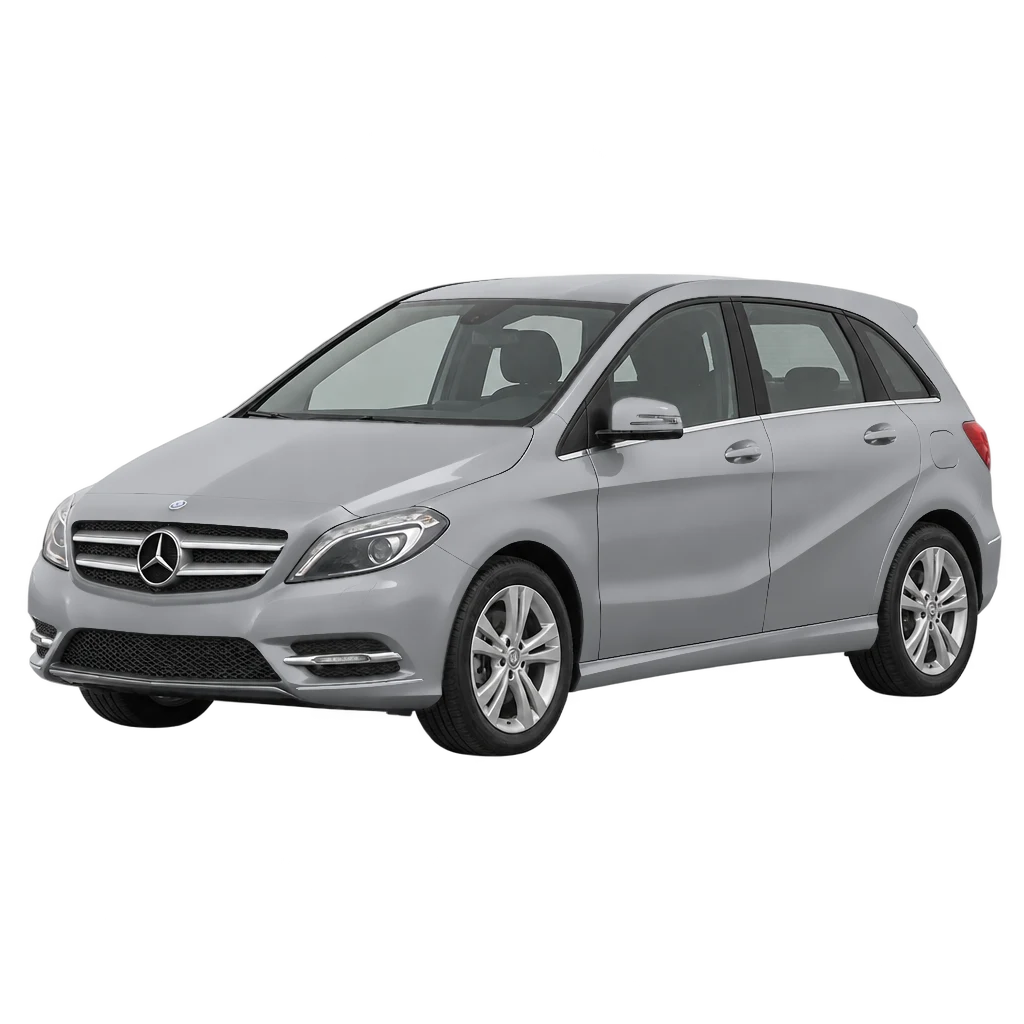
The Mercedes-Benz B-Class Electric Drive was sold in the United States for the 2014, 2015, 2016, and 2017 model years. It was a front-wheel-drive compact electric hatchback built on the B-Class platform and developed in partnership with Tesla, which supplied the battery and electric drivetrain components for the U.S. market version. The B-Class Electric Drive used a lithium-ion battery pack with approximately 36 kWh gross capacity and approximately 28 kWh usable capacity, and a single front-mounted electric motor producing approximately 177 horsepower. EPA-estimated range was approximately 87 miles across all four U.S. model years (2014, 2015, 2016, and 2017). The vehicle supported Level 1 and Level 2 AC charging; DC fast charging was not available on U.S. models. Mercedes-Benz discontinued the B-Class Electric Drive for the U.S. market after the 2017 model year and did not replace it with a direct successor in the compact hatchback segment. Any B-Class Electric Drive on U.S. roads today is a used vehicle that is at least eight years old. Insuring a discontinued EV of this age involves considerations that differ substantially from insuring a current-production electric vehicle, including battery age and capacity retention, parts availability, actual cash value, and the availability of qualified repair facilities.
How Much Does Mercedes-Benz B-Class Electric Drive Insurance Cost?
Insurance costs for the Mercedes-Benz B-Class Electric Drive depend on factors including the vehicle's current actual cash value, model year, your driving history, location, coverage selections, and the insurer. As a discontinued compact EV that is at least eight years old, the B-Class Electric Drive has depreciated significantly from its original purchase price. Its lower current market value means that comprehensive and collision coverage costs are generally lower than for current-production luxury EVs, but the vehicle's age, battery condition, and limited parts availability introduce considerations that owners should understand before selecting coverage. Vehicle value is one factor that can affect insurance costs. Comparing quotes from multiple insurers is the most reliable way to understand your options for this vehicle.
What affects insurance cost
Several factors specific to the Mercedes-Benz B-Class Electric Drive are worth understanding when shopping for insurance.
Depreciated actual cash value
The B-Class Electric Drive has been out of production since the 2017 model year. Its actual cash value reflects significant depreciation from the original purchase price. Insurers use ACV when settling claims, not original MSRP. A lower ACV generally reduces the cost of comprehensive and collision coverage, but it also means a total-loss settlement will be lower than what you originally paid.
Battery age and capacity retention
The B-Class Electric Drive uses a lithium-ion battery pack with approximately 36 kWh gross capacity and approximately 28 kWh usable capacity, and the pack is now at least eight years old. Lithium-ion batteries lose capacity over time as a normal characteristic of the chemistry. A used B-Class Electric Drive may deliver meaningfully less than the original EPA-estimated 87-mile range (consistent across all four U.S. model years) depending on battery condition, usage history, and storage. Battery degradation is not covered by insurance. Most original manufacturer battery warranties for the B-Class Electric Drive have expired or are approaching expiration. Warranty status depends on the vehicle's original in-service date, mileage, and applicable Mercedes-Benz warranty terms.
Parts availability for a discontinued model
Mercedes-Benz discontinued the B-Class Electric Drive for the U.S. market after the 2017 model year. Replacement parts for a discontinued vehicle can become harder to source over time, and some components may only be available as used parts. Extended repair timelines are possible when parts must be located. Confirm with your insurer and repair facility that parts are available for the specific repair before proceeding.
Qualified repair facilities
The B-Class Electric Drive requires repair at a facility with high-voltage EV certification appropriate for its drivetrain. Not all general repair shops are equipped for high-voltage EV work. Mercedes-Benz authorized service centers are the recommended option, though the number of technicians with direct experience on this specific discontinued model may be limited. Confirm that your preferred facility is appropriately qualified before scheduling repairs.
Limited comparable sales for ACV determination
Because the B-Class Electric Drive is a discontinued low-volume model, there may be fewer directly comparable used-vehicle sales available for insurers to reference when determining actual cash value. ACV determinations for discontinued or low-volume EVs can involve more variability than for higher-volume vehicles with active used-car markets.
Battery and insurance
The Mercedes-Benz B-Class Electric Drive uses a lithium-ion battery pack with approximately 36 kWh gross capacity and approximately 28 kWh usable capacity, developed in partnership with Tesla for the U.S. market. The battery is located under the floor of the vehicle. EPA-estimated range was approximately 87 miles across all four U.S. model years (2014, 2015, 2016, and 2017); verify the specific EPA rating for the model year you are insuring against EPA fuel economy data at fueleconomy.gov. U.S. models supported Level 1 (120V) and Level 2 (240V) AC charging only. DC fast charging was not available on U.S. B-Class Electric Drive models. The vehicle used a J1772 connector for AC charging. The original Mercedes-Benz U.S. battery warranty for the B-Class Electric Drive was 10 years or 100,000 miles from the original in-service date. Vehicles from the 2014, 2015, and 2016 model years are past this warranty period. A 2017 model year vehicle first placed in service in late 2016 or 2017 may still be within the 10-year window as of 2026 or 2027, depending on the exact in-service date and mileage. Verify the warranty status of any specific vehicle against official Mercedes-Benz USA documentation and the vehicle's in-service date. Battery degradation is a normal characteristic of lithium-ion chemistry and is not covered by insurance. If the battery is damaged in a covered collision or comprehensive event, that damage may be covered under the applicable coverage type, subject to your deductible and policy terms. Battery replacement for a vehicle of this age may be difficult to source and potentially costly relative to the vehicle's current market value.
Repair considerations
The Mercedes-Benz B-Class Electric Drive requires repair at a facility with high-voltage EV certification. Mercedes-Benz authorized service centers are the recommended option for this vehicle. Because the B-Class Electric Drive is a discontinued model, technician familiarity with this specific vehicle may vary. Parts availability for a discontinued model can be limited, and some components may only be available as used or refurbished parts. Extended repair timelines are possible. Confirm parts availability and technician qualifications before scheduling repairs. For older EVs, repair costs can sometimes approach or exceed the vehicle's current actual cash value, which affects total-loss determinations.
Cameras, sensors, glass and technology
The B-Class Electric Drive includes a basic suite of driver-assistance features consistent with its 2014 to 2017 production years. It does not include the advanced camera, radar, and sensor arrays found in current-production Mercedes-Benz EQ vehicles. Infotainment and display components from this era may be difficult to source as replacement parts. Review the specific equipment on the vehicle you are insuring, as features varied by model year and trim.
Coverage considerations
Standard auto insurance coverage types apply to the Mercedes-Benz B-Class Electric Drive. Collision coverage addresses damage from a collision with another vehicle or object, subject to your deductible. Comprehensive coverage addresses damage from non-collision events such as theft, fire, and weather. Road debris damage may be covered under comprehensive or collision coverage depending on the specific circumstances, how the damage occurred, your policy language, and applicable state law. Battery damage from a covered event may be addressed under collision or comprehensive coverage depending on the cause. Normal battery degradation is not a covered loss. For an older vehicle with a lower actual cash value, carefully consider whether the cost of comprehensive and collision coverage is appropriate relative to the vehicle's current market value. Liability coverage addresses damage or injury you cause to others.
Deductibles
Your deductible is the amount you pay out of pocket before insurance covers the remainder of a covered loss. For the B-Class Electric Drive, the vehicle's current actual cash value is an important factor when choosing a deductible. Because this is an older discontinued vehicle with a lower market value, a high deductible relative to the vehicle's ACV may mean that collision or comprehensive coverage provides limited net benefit after the deductible is applied. Choose a deductible based on your financial situation, risk tolerance, and the vehicle's current market value.
Accidents and total loss
A vehicle is typically declared a total loss when repair costs exceed a threshold relative to its actual cash value, as determined by your insurer and applicable state law. For the B-Class Electric Drive, the vehicle's age and depreciation mean its ACV is substantially lower than its original purchase price. Repair costs involving the battery, high-voltage components, or structural damage can approach or exceed the vehicle's current ACV, making total-loss determinations more likely than for newer vehicles. ACV is not based on original MSRP. As a discontinued low-volume model, ACV determinations may involve fewer directly comparable sales. GAP insurance is generally not relevant for a vehicle that is fully paid off, but if you have an outstanding loan balance that exceeds the vehicle's ACV, GAP coverage may be worth considering, subject to the GAP policy's own terms and exclusions.
Questions to ask an insurer
Does your insurer have experience with discontinued EV models and access to appropriately qualified repair facilities for the B-Class Electric Drive?
How does your insurer determine actual cash value for a discontinued low-volume EV with limited comparable sales?
Does your policy cover battery damage from a covered collision or comprehensive event?
Is the cost of comprehensive and collision coverage appropriate relative to the vehicle's current actual cash value?
What are your rental reimbursement limits if repairs take longer due to parts availability challenges?
Does your insurer have a process for sourcing parts for discontinued EV models?
Ways to shop smarter
Compare quotes from multiple insurers, as rates for older discontinued EVs can vary significantly.
Consider whether the cost of comprehensive and collision coverage is proportionate to the vehicle's current actual cash value before purchasing those coverages.
Confirm that your insurer has access to appropriately qualified repair facilities for high-voltage EV work on this discontinued model.
Ask your insurer how they determine actual cash value for a discontinued low-volume EV with limited comparable sales.
Review rental reimbursement coverage limits in case of extended repairs due to parts availability challenges.
Confirm your liability coverage limits are appropriate regardless of the vehicle's age or current market value.
Frequently asked questions
Which model years of the Mercedes-Benz B-Class Electric Drive were sold in the United States?
The Mercedes-Benz B-Class Electric Drive was sold in the United States for the 2014, 2015, 2016, and 2017 model years. Mercedes-Benz discontinued the model for the U.S. market after the 2017 model year. There is no current-production B-Class Electric Drive available in the United States. Any B-Class Electric Drive on U.S. roads today is a used vehicle.
What are the battery and range specifications for the B-Class Electric Drive?
The U.S. B-Class Electric Drive used a lithium-ion battery pack with approximately 36 kWh gross capacity and approximately 28 kWh usable capacity, developed in partnership with Tesla. EPA-estimated range was approximately 87 miles across all four U.S. model years (2014, 2015, 2016, and 2017). Verify the specific EPA rating for the model year you are insuring at fueleconomy.gov. All U.S. models supported Level 1 and Level 2 AC charging only; DC fast charging was not available. The vehicle used a J1772 connector.
Is the B-Class Electric Drive battery still under warranty?
The original Mercedes-Benz U.S. battery warranty for the B-Class Electric Drive was 10 years or 100,000 miles from the original in-service date. Vehicles from the 2014, 2015, and 2016 model years are past this warranty period. A 2017 model year vehicle first placed in service in late 2016 or 2017 may still be within the 10-year window as of 2026 or 2027, depending on the exact in-service date and mileage. Verify the warranty status of any specific vehicle against official Mercedes-Benz USA documentation and the vehicle's in-service date. Battery degradation is a normal characteristic of lithium-ion chemistry and is not covered by insurance. If you are purchasing a used B-Class Electric Drive, have the battery condition evaluated before purchase.
Does auto insurance cover B-Class Electric Drive battery replacement?
Insurance does not cover battery replacement due to normal aging or degradation. If the battery is damaged in a covered collision or comprehensive event, that damage may be covered under the applicable coverage type, subject to your deductible and policy terms. For an older vehicle, repair costs involving the battery can approach or exceed the vehicle's actual cash value, which may affect total-loss determinations.
Is it difficult to find parts for the B-Class Electric Drive?
Parts availability for a discontinued model can become more limited over time. Some components may only be available as used or refurbished parts. Extended repair timelines are possible when parts must be located. Confirm parts availability with your repair facility before proceeding with repairs. This is a relevant consideration when evaluating whether comprehensive and collision coverage is appropriate for the vehicle.
How is actual cash value determined for a discontinued EV like the B-Class Electric Drive?
Insurers determine ACV based on current market conditions, mileage, condition, model year, and comparable used-vehicle sales. For a discontinued low-volume model, there may be fewer directly comparable sales available, which can introduce more variability into ACV determinations. ACV is not based on the original purchase price. If you disagree with an insurer's ACV determination, you can request documentation of the comparable sales used and, in some cases, negotiate or dispute the valuation.
Should I carry comprehensive and collision coverage on an older B-Class Electric Drive?
Whether comprehensive and collision coverage makes sense depends on the vehicle's current actual cash value, your deductible, and your financial situation. For an older vehicle with a lower ACV, the net benefit of collision or comprehensive coverage after the deductible is applied may be limited. Review the vehicle's current market value and compare it to the cost of those coverages and your deductible before deciding. This is a personal financial decision, and an insurance professional can help you evaluate your options.
Is the B-Class Electric Drive related to the Mercedes-Benz EQ lineup?
No. The B-Class Electric Drive was a separate product developed before Mercedes-Benz launched its EQ electric vehicle lineup. It was built on the B-Class platform and used a drivetrain developed in partnership with Tesla. The EQ lineup, including the EQB, EQE, and EQS, represents a separate generation of Mercedes-Benz electric vehicles built on dedicated EV platforms. The B-Class Electric Drive is not part of the EQ family.
Related EV insurance topics
Ready to compare?
Compare EV insurance options and find coverage that fits your needs.