
























EV Insurance Guide
Kia Soul EV
Kia Soul EV insurance guide for the 2015–2019 U.S. electric hatchback, covering its 27 kWh and 30 kWh batteries, 93- and 111-mile EPA ranges, front-wheel drive, CHAdeMO fast charging, battery condition, older-EV repairs, insurance coverage, and total-loss valuation.
Overview
The Kia Soul EV is a five-passenger electric hatchback introduced in the United States for the 2015 model year. It combines the distinctive upright design of the gasoline-powered Soul with a dedicated electric powertrain, underfloor lithium-ion battery, regenerative braking, and compact dimensions suited to city driving.
Kia sold the original-generation Soul EV in selected U.S. markets through the 2019 model year. It was not available nationwide through every Kia dealership. Availability initially centered on California before expanding into additional states.
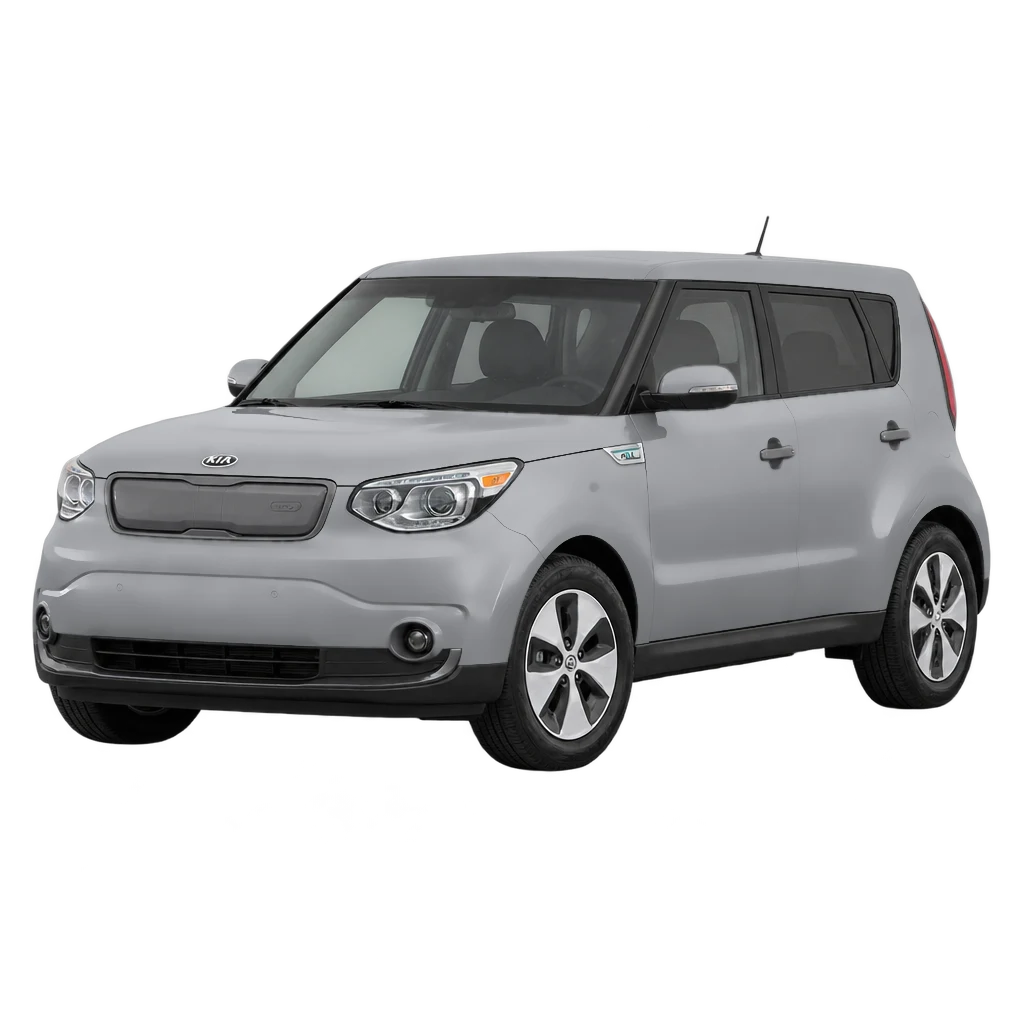
The U.S. model should not be confused with the second-generation Soul EV, also called the e-Soul in some markets. That newer vehicle, offered in countries including Canada and several European markets, introduced substantially larger batteries and longer driving range. Although a U.S. launch was originally planned, the second-generation Soul EV never entered regular U.S. production sales.
The first-generation U.S. Soul EV has two important battery configurations.
The 2015–2017 vehicles use a nominal 27 kWh lithium-ion polymer battery with an EPA-estimated range of 93 miles when new.
For 2018, Kia increased nominal battery capacity to 30 kWh, raising the EPA-estimated range to 111 miles. The 2019 U.S. model continued with the 30 kWh battery and 111-mile rating.
These are original new-vehicle EPA estimates, not promises about the present range of a used Soul EV. Battery age, temperature, driving conditions, equipment, and charging history may affect current usable energy and driving distance.
All documented 2015–2019 U.S. Soul EV models use a single front electric motor producing approximately 109 horsepower and 210 lb-ft of torque. Power reaches the front wheels through a single-speed reduction gear.
The U.S. Soul EV was not offered with factory dual-motor all-wheel drive or a high-performance GT electric drivetrain.
The vehicle's original-generation charging system uses an SAE J1772 connection for Level 1 and Level 2 AC charging and a separate CHAdeMO connector for DC fast charging. Both connections are positioned behind the front-grille charging door.
The Soul EV does not have a factory CCS1 or NACS DC fast-charging connector.
This is especially important for current owners because many newer public charging sites emphasize CCS and NACS connections. Availability of a compatible CHAdeMO charger may be more limited in some locations.
Owners should not assume that an ordinary CCS-to-NACS adapter or common AC adapter permits CHAdeMO DC charging. Equipment and vehicle compatibility must be confirmed.
The Soul EV has a 6.6 kW onboard AC charger. Charging time depends on the power supply, battery state of charge, and conditions.
The original 27 kWh configuration was advertised as capable of charging to approximately 80% in as little as 33 minutes on suitable CHAdeMO equipment under favorable conditions.
The original Soul EV also includes an energy-efficient climate-control system with a heat pump, regenerative braking, and driver-selectable energy-management functions.
Higher equipment packages could include heated or ventilated seats, additional convenience electronics, upgraded upholstery, or a panoramic sunroof, depending on model year.
Although the electric Soul shares recognizable body styling with the gasoline model, the battery, motor, charging equipment, HVAC system, and certain underbody components are EV-specific.
The Soul EV's age now makes battery condition, qualified repair availability, correct replacement parts, current resale value, and insurance deductibles particularly important.
A battery replacement estimate should not automatically be confused with the vehicle's present market value.
Owners shopping for insurance should identify the exact model year, battery version, EV or EV+ trim, factory equipment, mileage, condition, and VIN.
How Much Does Kia Soul EV Insurance Cost?
Insurance premiums for a Kia Soul EV vary by driver, garaging location, driving history, annual mileage, vehicle value, coverage, deductibles, and insurer underwriting. There is no reliable nationwide premium that accurately represents every 2015–2019 Soul EV owner. The Soul EV's compact size and approximately 109-horsepower electric motor do not automatically make insurance inexpensive. Likewise, its electric drivetrain does not establish a universal EV surcharge. Insurers may evaluate vehicle age, claims experience, replacement-part availability, likely repair expenses, and current market value. For the Soul EV, battery capacity is an important distinction. The 2015–2017 vehicles have a nominal 27 kWh battery, while 2018–2019 vehicles have a 30 kWh battery. These should be identified correctly when estimating covered repairs and valuing the vehicle. The vehicle's high-voltage battery, electric motor, onboard charger, CHAdeMO connection, power electronics, and climate-control equipment may require specialized diagnosis following eligible damage. As the model ages, the availability of correct replacement components and appropriately trained repair facilities may affect certain claims. However, older production age alone does not prove that parts are unavailable or that a vehicle is beyond repair. Battery degradation and ordinary mechanical or electrical failure generally are not covered by standard collision or comprehensive insurance. An eligible accident-related battery loss is different from a battery that has gradually lost driving range through age and use. The Soul EV has distinctive body and electrical components, including a front charging door and battery-specific underbody structure. Following certain collisions, eligible repairs may include structural components, high-voltage inspections, charging hardware, electronic systems, or factory-installed interior equipment. Higher-equipped EV+ vehicles may have additional convenience or comfort features that affect replacement expenses. An important consideration for older Soul EV vehicles is whether collision and comprehensive coverage remain appropriate relative to present actual cash value, premium expense, and financial exposure. A vehicle originally purchased at a much higher price may have a considerably lower current market value. Standard actual cash value coverage generally does not reimburse the original purchase price following an eligible total loss. Owners should also consider roadside assistance and towing because the Soul EV's original range is relatively modest and compatible CHAdeMO charging availability varies by location. A policy's towing distance, destination restrictions, and electric-vehicle handling provisions may matter. Compare quotes using equivalent liability limits, collision and comprehensive deductibles, uninsured or underinsured motorist protection, applicable medical coverage, towing, and rental reimbursement. SureEV does not publish invented national Soul EV insurance averages or guarantee that a particular deductible or coverage option is appropriate for every owner.
What affects insurance cost
Several factors specific to the Kia Soul EV are worth understanding when shopping for insurance.
Model Year and Current Market Value
The 2015–2019 Soul EV is an older electric vehicle. Mileage, vehicle condition, battery version, EV or EV+ trim, and current market value can affect insurance classification, repair decisions, and total-loss settlement.
27 kWh or 30 kWh Battery
The 2015–2017 U.S. vehicles use a nominal 27 kWh battery, while 2018–2019 vehicles use 30 kWh. Battery age, condition, replacement compatibility, and eligible accident-related damage are important distinctions.
EV-Specific Parts and Repairs
The electric motor, underbody battery structure, onboard charger, power electronics, heat-pump climate system, and charging equipment may require specialized service after qualifying damage.
CHAdeMO Charging Equipment
The original U.S. Soul EV uses J1772 AC and CHAdeMO DC charging, not CCS1 or native NACS. Charging-port damage, compatibility, and roadside support may create vehicle-specific insurance questions.
Trim, Body, and Technology
EV and EV+ equipment differs by model year. Glass, seats, convenience electronics, the front charging door, cameras, and optional panoramic roof components can affect certain eligible repairs.
Driver, Location, and Coverage
Driving history, garaging location, mileage, selected liability limits, collision and comprehensive coverage, deductibles, and insurer underwriting determine personalized premiums. Compare quotes using the exact VIN and current vehicle value.
Battery and insurance
The original U.S. Kia Soul EV uses a lithium-ion polymer traction battery mounted beneath the passenger compartment. The 2015–2017 version has 27 kWh nominal capacity, while the 2018–2019 version has 30 kWh. Unlike some newer electric vehicles with liquid-cooled traction batteries, the first-generation Soul EV uses an air-cooled battery system. This distinction matters when discussing battery inspection, thermal management, and replacement components. The original EPA ranges were 93 miles for the 27 kWh configuration and 111 miles for the 30 kWh configuration. A used vehicle may deliver less range depending on battery condition, age, temperature, and use. Collision coverage may apply to eligible physical battery damage caused by a covered accident. Comprehensive coverage may address qualifying non-collision events such as certain fires, flooding, or falling objects. Actual coverage depends on policy language, limits, exclusions, deductibles, and the cause of loss. Ordinary battery aging, capacity loss, wear, and unrelated electrical failures generally fall outside standard automobile insurance. Kia's applicable battery warranty is separate from insurance. For an older Soul EV, original warranty eligibility may have expired based on time or mileage. Owners should verify coverage using the VIN and actual warranty documents. After certain collisions, underbody impacts, or flooding, qualified technicians may need to inspect the battery enclosure, electrical isolation, wiring, and associated structures. An inspection requirement does not automatically establish that the whole battery needs replacement. Battery repair or replacement costs should also be evaluated against current vehicle value rather than original MSRP. The Soul EV's original charging equipment uses J1772 AC and CHAdeMO DC connectors. Compatible CHAdeMO stations may be less common than CCS or NACS infrastructure in some areas. The limitation is charging access, not proof of defective vehicle hardware. Factory charging equipment can receive different insurance treatment from separately owned cables, adapters, and residential charging installations. Owners should ask how eligible physical damage to the battery, charging port, onboard charger, and high-voltage components is covered.
Repair considerations
The Kia Soul EV combines the familiar Soul body design with battery-electric components that require specific service knowledge. Its 109-horsepower front electric motor, battery enclosure, charging equipment, power electronics, and heat-pump climate system differ from the gasoline-powered Soul. Repair facilities should identify the correct 27 kWh or 30 kWh battery configuration and verify replacement-part compatibility using the VIN. Following eligible underbody or collision damage, repairs may require manufacturer-specified high-voltage isolation checks, battery enclosure inspections, and diagnosis of the charging or propulsion systems. The first-generation battery's air-cooled design should not be confused with the cooling architecture of newer Kia EVs. The Soul EV's front charging-door assembly houses J1772 and CHAdeMO connectors. Damage to the front fascia or charging area may involve EV-specific wiring, electrical connectors, and body components. Certain repairs may require appropriate parts sourcing, particularly because U.S. Soul EV production sales ended after the 2019 model year. Discontinuation does not automatically establish that every part is unavailable. The EV and EV+ trims may have different seating, interior equipment, glass, and optional panoramic roof features. Body panels and trim components should be matched to the actual model year and factory equipment. Owners should confirm that their insurer's repair network can handle older Kia electric vehicles, obtain compatible parts, and perform appropriate high-voltage safety procedures. Roadside assistance and rental reimbursement may be useful when specialized repairs take longer than ordinary body work.
Cameras, sensors, glass and technology
The first-generation Kia Soul EV includes electronic features appropriate to its 2015–2019 production period, such as navigation, a rearview camera, regenerative braking controls, battery information displays, and an energy-efficient climate system. Technology and convenience equipment differ by model year and EV or EV+ trim. Later production vehicles received updated infotainment equipment, while certain higher trims offered additional comfort features and a panoramic sunroof. The Soul EV should not automatically be described as having the advanced Highway Driving Assist, multi-camera systems, or sophisticated autonomous-driving technologies found on newer Kia EV6 and EV9 models. Owners should verify actual installed equipment before assuming a particular sensor, camera, or driver-assistance feature is present. Certain eligible glass, mirror, bumper, camera, or body repairs may involve diagnosis of factory-connected electronics. The traction-battery monitoring system, onboard charger, motor controller, regenerative braking equipment, and climate electronics also require EV-specific technical knowledge. Factory electronic damage caused by an insured accident may receive different treatment from ordinary software updates, aging equipment, or unrelated mechanical failures. The charging system uses J1772 and CHAdeMO connectors and should not be represented as native CCS1 or NACS. Owners should ask insurers about covered electronic damage, front charging-port repairs, glass protection, and access to qualified service facilities.
Coverage considerations
Kia Soul EV owners should compare liability, collision, comprehensive, uninsured or underinsured motorist protection, and applicable medical coverage. Insurance availability, requirements, and exclusions vary by state, insurer, and policy. Liability insurance generally covers qualifying injuries or property damage for which an insured driver is legally responsible. It ordinarily does not repair the owner's own Soul EV. Collision coverage may apply to eligible accident-related physical damage involving the battery, electric motor, charging equipment, body, and factory-installed electronics. Comprehensive coverage may address qualifying non-collision losses, including theft, certain fires, flooding, hail, and falling objects. Coverage depends on policy terms, deductibles, limits, exclusions, and the actual cause of loss. The original U.S. Soul EV was sold for the 2015–2019 model years. The 2015–2017 models use a nominal 27 kWh battery, while 2018–2019 vehicles use 30 kWh. These vehicles have a single front electric motor and use J1772 AC and CHAdeMO DC charging equipment. The factory charging connections differ from newer Kia EVs equipped with CCS or NACS technology. Damage to the original charging port or high-voltage wiring may be covered following a qualifying insured event. Separately owned adapters, portable charging cables, and residential charging equipment may have different coverage treatment. Ordinary battery aging, reduced driving range, wear, and unrelated electrical or mechanical failures generally fall outside standard automobile insurance. The manufacturer's applicable battery warranty operates separately. Because the Soul EV is now an older electric vehicle, current market value should be considered when deciding whether collision and comprehensive coverage remain appropriate. Owners should also review roadside assistance, towing distance, rental reimbursement, and access to qualified EV repair facilities. Original EPA range was 93 or 111 miles depending on battery version. Actual remaining range may differ, making reliable roadside support particularly relevant.
Deductibles
A deductible is the amount a policyholder pays toward an eligible covered claim before the applicable insurance payment. Collision and comprehensive coverage commonly have separate deductibles. A higher deductible may reduce premiums but increases the owner's out-of-pocket responsibility following a qualifying loss. A lower deductible generally has the opposite effect. For the Kia Soul EV, current market value is especially important because the documented U.S. vehicles are from 2015–2019. A deductible that made sense when the vehicle was new may be less suitable today. The vehicle's 27 kWh or 30 kWh battery, front electric motor, charging components, and electronic equipment may require specialized repair following certain covered accidents. However, an inspection requirement does not automatically establish that an expensive battery replacement is necessary. Owners should compare the current vehicle value, deductible, annual premium, expected financial exposure, and any lender requirements. Glass benefits, roadside assistance, and rental reimbursement may also influence the overall value of a policy. Choose deductible amounts that remain affordable and review them as the vehicle ages.
Accidents and total loss
After an accident involving a Kia Soul EV, prioritize personal safety and obtain emergency assistance when appropriate. Avoid contact with exposed or suspected damaged high-voltage components. Significant collisions, underbody impacts, flooding, or suspected electrical damage may require qualified inspection before the vehicle is operated or charged. Repair estimates should identify the correct model year, 27 kWh or 30 kWh battery, EV or EV+ trim, front-wheel-drive equipment, and factory options. The Soul EV's battery enclosure, electric motor, onboard charger, front charging-port assembly, and high-voltage wiring require model-specific diagnosis when affected. A damaged charging door, electrical warning, or battery inspection requirement does not automatically mean the entire traction battery must be replaced. Repair decisions should reflect actual damage and manufacturer service procedures. The first-generation U.S. Soul EV is discontinued. Some replacement components may require specialized sourcing, but discontinuation alone does not establish that the vehicle is beyond repair. An insurer may declare the Soul EV a total loss when applicable policy and state-law criteria are met. Repair expenses, actual cash value, salvage considerations, and local legal requirements may be relevant. Under standard actual cash value coverage, an eligible total-loss settlement generally reflects the vehicle's value immediately before the covered loss, subject to policy terms and applicable law. The original purchase price does not automatically determine the settlement for a used 2015–2019 electric vehicle. Valuation should consider model year, mileage, condition, battery version, factory trim, relevant equipment, and appropriate Soul EV comparable vehicles. Gasoline-powered Kia Soul models and newer international-market Soul EV versions should not automatically be treated as identical comparables. Battery-condition documentation, service records, photographs, and relevant market listings may help support an accurate valuation review. Optional loan or lease gap coverage may address certain qualifying differences between an eligible total-loss settlement and the outstanding financed or leased balance, subject to the contract.
Questions to ask an insurer
Does your quote correctly identify my 2015–2019 Kia Soul EV VIN, 27 kWh or 30 kWh battery, EV or EV+ trim, mileage, factory equipment, and current market value?
Does collision or comprehensive coverage apply to eligible physical damage involving the traction battery, front electric motor, onboard charger, battery enclosure, high-voltage wiring, and related electronics?
Can I use a repair facility qualified to service the first-generation Kia Soul EV, and how are manufacturer-required battery inspections and specialized replacement parts handled?
How does the policy distinguish insured physical battery damage from ordinary battery degradation, reduced range, warranty repairs, and unrelated electrical failure?
Are repairs to the factory J1772 and CHAdeMO charging ports covered following an eligible event, and how are portable charging cables, adapters, and home charging equipment treated?
If my Soul EV is declared a total loss, will valuation reflect its correct battery version, model year, EV or EV+ trim, mileage, condition, and appropriate Soul EV comparables?
What liability limits, collision and comprehensive deductibles, uninsured or underinsured motorist benefits, glass protection, EV-appropriate towing, rental reimbursement, and optional gap coverage are available?
Ways to shop smarter
Request quotes using the correct Kia Soul EV VIN, model year, 27 kWh or 30 kWh battery, EV or EV+ trim, mileage, location, and driver information.
Compare equivalent liability limits, collision and comprehensive deductibles, uninsured or underinsured motorist protection, and optional benefits.
Verify coverage for eligible physical damage involving the high-voltage battery, front electric motor, charging ports, and other EV-specific components.
Confirm that the insurer's repair network can service the original Soul EV battery and CHAdeMO charging equipment.
Review present actual cash value and evaluate whether collision and comprehensive coverage remain financially appropriate for the older vehicle.
Ask about roadside assistance, towing distances, and repair-facility access, particularly given the original 93- or 111-mile EPA range.
Review glass coverage, charging-port repairs, portable charging accessories, deductibles, rental reimbursement, and applicable warranty distinctions.
Reevaluate current market value, battery condition, annual mileage, coverage, deductibles, available discounts, and competing quotes at renewal.
Frequently asked questions
Is the Kia Soul EV expensive to insure?
Insurance premiums depend on the driver, location, model year, current value, coverage, deductibles, and insurer underwriting. The Soul EV's age and EV-specific repair requirements may influence certain claims, but there is no reliable universal premium. Compare personalized quotes.
Does insurance cover the Kia Soul EV battery?
Collision or comprehensive insurance may cover eligible physical battery damage resulting from an insured event. Ordinary battery aging, gradual capacity loss, wear, and unrelated electrical failure generally fall outside standard auto insurance. Applicable Kia battery warranties operate separately.
What model years was the Kia Soul EV sold in the United States?
The original Kia Soul EV was sold in selected U.S. markets from the 2015 through 2019 model years. The newer second-generation Soul EV offered internationally was not launched as a regular U.S. production model.
What battery sizes did the U.S. Kia Soul EV have?
The 2015–2017 U.S. Soul EV uses a nominal 27 kWh lithium-ion polymer battery. The 2018–2019 version uses a nominal 30 kWh battery. These original-generation vehicles use a single front electric motor producing approximately 109 horsepower.
How far can the Kia Soul EV drive on one charge?
The original EPA-estimated range was 93 miles for 2015–2017 vehicles and 111 miles for 2018–2019 models. These were new-vehicle ratings. Actual range in an older Soul EV depends on battery condition, age, temperature, driving speed, and other factors.
Does the Kia Soul EV use CHAdeMO, CCS, or NACS charging?
The documented 2015–2019 U.S. Soul EV uses J1772 for AC charging and CHAdeMO for DC fast charging. It does not have factory CCS1 or native NACS fast charging. Owners should verify compatible CHAdeMO station availability and not assume ordinary CCS or NACS adapters provide fast-charging compatibility.
Is the Kia Soul EV front-wheel drive or all-wheel drive?
Documented first-generation U.S. Soul EV vehicles use a single electric motor driving the front wheels through a single-speed reduction gear. They produce approximately 109 horsepower and were not offered with factory dual-motor all-wheel drive.
Is it difficult to repair an older Kia Soul EV?
Repair requirements depend on the damage and component availability. Its battery, power electronics, CHAdeMO charging equipment, and electric climate-control system may require specialized technicians. The model's discontinued U.S. sales do not automatically mean every replacement component is unavailable.
How is a Kia Soul EV valued after a total loss?
Under standard actual cash value coverage, an eligible total-loss settlement generally reflects the vehicle's pre-loss market value, subject to policy terms and applicable law. Model year, mileage, condition, battery version, EV or EV+ trim, and appropriate Soul EV comparable vehicles may influence valuation. Original purchase price does not automatically determine the settlement.
Related EV insurance topics
Ready to compare?
Compare EV insurance options and find coverage that fits your needs.