























EV Insurance Guide
Kia EV3
Kia EV3 insurance guide for the 2027 U.S. electric compact SUV, covering 58.3 kWh and 81.4 kWh batteries, front-wheel and all-wheel drive, up to 321 miles of EPA-estimated range, GT performance, native NACS charging, battery protection, advanced safety technology, and total-loss valuation.
Overview
The Kia EV3 is a five-passenger battery-electric compact SUV introduced for the 2027 U.S. model year, with its American market launch planned for late 2026.
Positioned below the Kia EV6 and three-row EV9, the EV3 combines compact dimensions, EV9-inspired styling, dedicated electric architecture, and a choice of standard-range or long-range batteries.
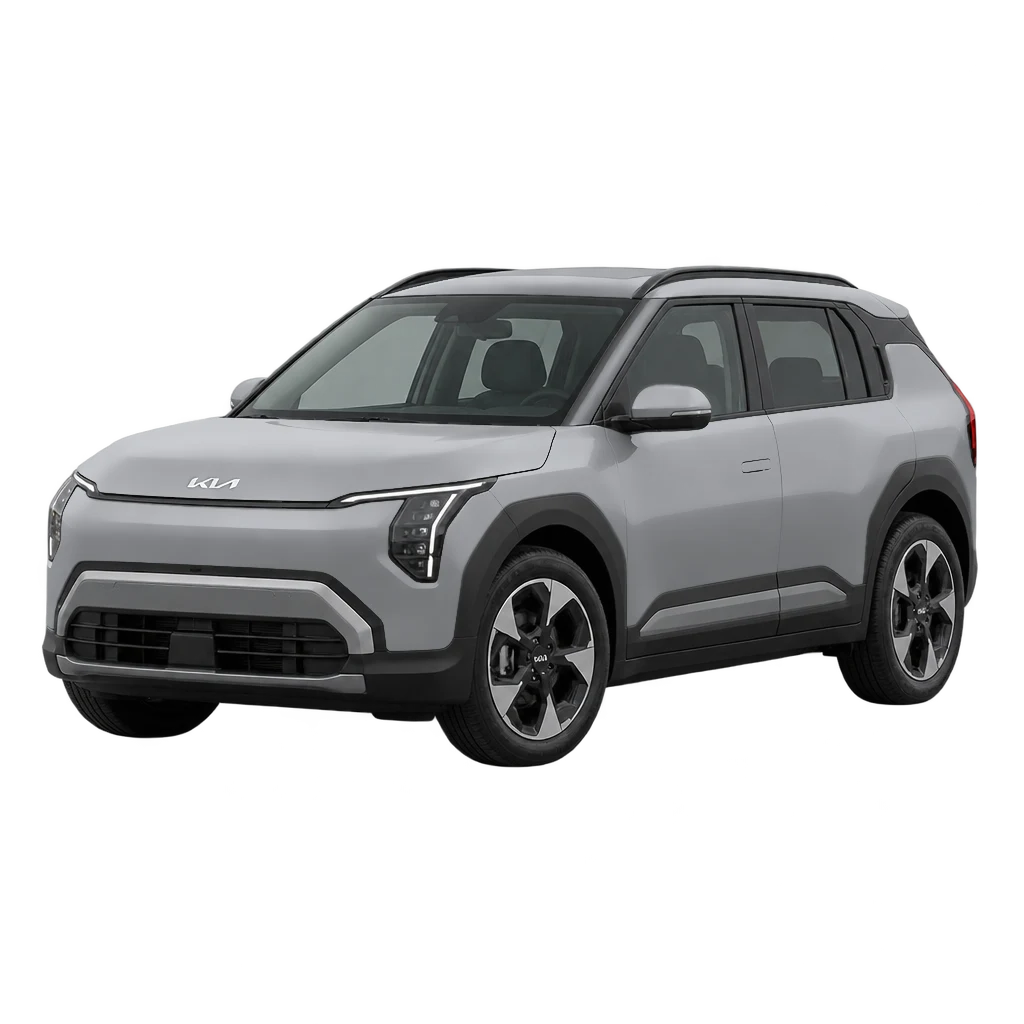
Although the EV3 uses Hyundai Motor Group's Electric-Global Modular Platform, or E-GMP, its electrical architecture differs from the EV6 and EV9.
The EV3 uses a 400-volt-class system rather than the 800-volt-class architecture associated with those larger vehicles.
Their battery packs, charging characteristics, electric motors, body components, and repair procedures should not be assumed interchangeable.
U.S. trims and batteries
The documented 2027 U.S. lineup includes Light, Wind, Land, GT-Line, and GT models.
The Light uses a nominal 58.3 kWh lithium-ion battery with front-wheel drive.
Wind and Land use the larger 81.4 kWh battery and are offered with front-wheel drive or available dual-motor all-wheel drive.
GT-Line and GT use the 81.4 kWh battery and standard all-wheel drive.
The factory battery configuration should be verified through the VIN and applicable model documentation.
Performance
Front-wheel-drive EV3 models produce approximately 201 horsepower.
The ordinary dual-motor AWD versions produce approximately 261 horsepower.
The high-performance EV3 GT produces approximately 288 horsepower and includes model-specific performance equipment.
GT-Line and GT are not interchangeable designations. The GT-Line has sport-oriented equipment and styling, while the GT adds different performance characteristics and associated components.
Depending on trim, factory equipment includes specialized wheels, suspension tuning, seating, and electronic vehicle controls.
EPA-estimated driving range
Kia's published U.S. estimates identify approximately 221 miles for the Light FWD with its 58.3 kWh battery.
Wind FWD and Land FWD models with the larger 81.4 kWh battery have an EPA-estimated range of up to 321 miles.
The AWD configurations have approximately 280 miles of EPA-estimated range.
These figures apply to specific U.S. configurations and should not be confused with earlier manufacturer projections or international-market ratings.
Actual driving range varies with weather, speed, terrain, tires, climate-control use, payload, and battery condition.
Charging
The U.S. Kia EV3 includes a factory North American Charging Standard, or NACS, charging port.
It does not use the factory CCS1 connector found on older U.S. Kia EV6 and EV9 versions.
Compatible Tesla Superchargers and other NACS stations may be accessible when the vehicle and charging network meet applicable requirements.
Charging on certain CCS-equipped stations may require the appropriate approved adapter.
An adapter does not convert the vehicle's original factory port or guarantee universal compatibility.
The EV3 uses a 400-volt-class charging system. Kia advertises approximately 29-minute DC charging from 10% to 80% for the 58.3 kWh Light battery and approximately 31 minutes for the 81.4 kWh versions under suitable conditions.
Actual charging time varies with battery temperature, state of charge, charging-station voltage, available power, and network conditions.
A station advertising 350 kW does not mean the EV3 continuously receives 350 kW.
Technology and comfort
The 2027 EV3 includes Kia's digital cockpit with dual 12.3-inch displays and a separate 5-inch climate-control display, offering nearly 30 inches of combined display area.
Depending on trim, available equipment includes a head-up display, surround-view cameras, blind-spot monitoring, premium seating, a power liftgate, and additional Kia Drive Wise driver-assistance systems.
Kia's i-Pedal 3.0 and regenerative braking functions support electric driving efficiency.
Available Vehicle-to-Load capability can power compatible external equipment through the appropriate factory-supported accessories.
Certain home backup-power functions require separately purchased compatible equipment and professional installation.
These features create insurance distinctions between factory-installed vehicle components and separately owned electrical equipment.
Insurance considerations
Because the U.S. EV3 is newly introduced, owners should avoid assuming an established nationwide EV3-specific insurance premium or repair history.
Relevant coverage questions involve current vehicle value, the correct battery, FWD or AWD drivetrain, GT performance components, charging equipment, advanced electronics, authorized EV repair capability, and total-loss valuation.
Owners should request personalized quotes using the actual VIN, 2027 model year, Light, Wind, Land, GT-Line, or GT trim, installed equipment, coverage limits, and deductibles.
How Much Does Kia EV3 Insurance Cost?
Kia EV3 insurance premiums depend on the driver, location, driving history, annual mileage, vehicle value, chosen coverage, deductibles, and insurer underwriting. There is no trustworthy single national insurance premium representing every 2027 EV3 owner. The U.S. EV3 is a newly introduced model, so long-term domestic claims history and repair experience may be limited. International EV3 insurance prices should not automatically be treated as representative of U.S. underwriting. The EV3 has important trim and drivetrain differences. The 58.3 kWh Light FWD has a different battery, current value, range, and factory configuration from an 81.4 kWh Wind AWD or high-performance GT. The EV3 GT produces approximately 288 horsepower and includes performance-specific equipment. Its insured value, wheel and tire configuration, suspension components, and eligible repair expenses may differ from ordinary EV3 models. However, additional performance capability does not establish a guaranteed premium increase across all insurers. The EV3's high-voltage battery, electric drive motors, charging system, cooling equipment, and power electronics may require specialized diagnosis following qualifying physical damage. Not every collision damages the battery or requires complete battery replacement. The vehicle's modern cameras, radar sensors, displays, lighting, and parking technology can also influence certain eligible repair expenses. Covered windshield, bumper, mirror, or body work may require manufacturer-specified electronic calibration. The 2027 U.S. EV3 includes native NACS charging, unlike certain older Kia electric vehicles. Factory charging hardware may be treated differently from removable CCS adapters, portable charging cables, Vehicle-to-Load accessories, or residential charging installations. Ordinary battery aging, software updates, wear, and unrelated mechanical or electrical failure generally fall outside standard collision and comprehensive coverage. Manufacturer warranties and recalls operate separately from auto insurance. A new vehicle's suggested retail price does not necessarily establish its actual cash value after a loss. Owners should compare equivalent liability limits, collision and comprehensive deductibles, uninsured or underinsured motorist protection, glass benefits, roadside assistance, rental reimbursement, and optional loan or lease gap protection. SureEV does not invent EV3 insurance averages or imply that one insurer offers guaranteed coverage for every electrical component.
What affects insurance cost
Several factors specific to the Kia EV3 are worth understanding when shopping for insurance.
2027 Model Year, Trim, and Value
Light, Wind, Land, GT-Line, and GT models have different batteries, drivetrains, factory equipment, and vehicle values. Accurate VIN identification helps insurers classify the vehicle and evaluate eligible claims.
58.3 kWh or 81.4 kWh Battery
The EV3 offers two battery capacities. Certain covered collisions, underbody impacts, or flooding may require qualified inspection of the battery enclosure, mounting structures, electrical isolation, and high-voltage components.
FWD, AWD, and GT Performance
The EV3 offers approximately 201-horsepower FWD, 261-horsepower AWD, and 288-horsepower GT configurations. Propulsion equipment, wheels, performance components, and current vehicle value may affect certain eligible repairs.
Cameras, Glass, and Technology
Available surround-view cameras, driver-assistance sensors, head-up display, premium seating, and digital controls may require specific replacement parts or electronic calibration following covered damage.
Native NACS and Charging Equipment
The 2027 U.S. EV3 has a factory NACS port and 400-volt-class electrical architecture. Eligible charging-port damage, power-electronics repairs, adapters, and external electrical accessories involve different coverage considerations.
Driver, Coverage, and Deductibles
Driving history, garaging location, annual mileage, selected liability limits, collision and comprehensive deductibles, and insurer underwriting influence personalized premiums. Compare equivalent policy terms.
Battery and insurance
The 2027 U.S. Kia EV3 uses a lithium-ion traction battery integrated into a 400-volt-class E-GMP platform. Light FWD has a nominal 58.3 kWh battery. Wind, Land, GT-Line, and GT versions use the larger 81.4 kWh battery. These battery systems and their associated equipment should be identified accurately when obtaining coverage or arranging repairs. Collision coverage may apply to eligible physical battery damage caused by a covered accident. Comprehensive coverage may address qualifying non-collision events, including certain fires, flooding, hail, or falling objects. The actual cause of loss, policy language, exclusions, limits, and deductibles determine coverage. Ordinary battery degradation, wear, gradual capacity loss, and unrelated electrical or mechanical failures generally fall outside standard automobile insurance. Kia's applicable high-voltage battery warranty operates separately. Following significant covered collisions, severe underbody impacts, or flooding, qualified technicians may need to inspect the battery enclosure, cooling equipment, protective structures, wiring, and electrical isolation. A required inspection does not automatically mean the complete battery needs replacement. The EV3's factory NACS charging system supports compatible DC charging networks and suitable AC charging equipment. It is not the same charging hardware used by older U.S. Kia models with CCS1 ports. The smaller EV3 battery has an advertised 10%-to-80% DC charging estimate of approximately 29 minutes, while larger-battery configurations are estimated at approximately 31 minutes under suitable conditions. These manufacturer estimates are not guarantees at every charging station. Available Vehicle-to-Load functionality and certain supported home backup-power systems may require additional accessories or permanently installed electrical equipment. An auto insurance policy should not automatically be assumed to cover the home's electrical installation, connected appliances, or separately owned accessories. Owners should ask insurers about eligible battery damage, qualified EV repair facilities, required safety testing, factory charging equipment, and relevant exclusions.
Repair considerations
Repairing a Kia EV3 requires knowledge of its 400-volt-class electric platform, traction battery, electric motors, charging equipment, body structure, and advanced safety systems. The EV3 has different battery and electrical characteristics from Kia's larger 800-volt-class EV6 and EV9. Its components should not automatically be treated as interchangeable with other E-GMP vehicles. The 58.3 kWh Light battery differs from the 81.4 kWh battery used on other configurations. Front-wheel-drive and all-wheel-drive models also have different electric propulsion equipment. The GT adds specialized performance components. Repair estimates should identify the actual VIN, battery, drivetrain, trim, wheels, and factory options. Certain covered collisions may require manufacturer-specified battery inspection, electrical isolation testing, cooling-system diagnosis, or charging-equipment checks. Not every impact causes high-voltage damage. Depending on configuration, body repairs may involve distinctive exterior panels, modern lighting, premium glass, sensors, or cameras. Certain covered windshield, bumper, mirror, or body repairs may require calibration or electronic programming. Because the EV3 is new to the U.S. market, owners should confirm that their insurer's repair network can obtain correct parts and follow Kia's applicable EV service procedures. The model's newness does not prove that repairs will be unusually expensive or that parts are unavailable. Roadside assistance and rental reimbursement may help following eligible covered losses.
Cameras, sensors, glass and technology
The Kia EV3 combines connected digital technology, driver-assistance systems, regenerative braking, and advanced electronic controls. The 2027 U.S. vehicle includes dual 12.3-inch displays and a separate 5-inch climate-control display. Depending on trim, available technology includes Highway Driving Assist, forward collision avoidance, adaptive cruise control, surround-view cameras, blind-spot view monitoring, parking assistance, and a head-up display. Driver-assistance systems do not make the EV3 fully autonomous. The driver remains responsible for safe operation. Certain covered glass, bumper, mirror, or body repairs may require Kia-specified camera or radar inspection, calibration, or electronic testing. An electronic warning does not automatically establish that every sensor needs replacement. The EV3 also uses battery-management electronics, regenerative braking controls, charging communication equipment, and electric motor management systems. The GT has additional performance-related electronic control features. Factory electronics may qualify for collision or comprehensive protection when physically damaged by a covered event, subject to policy terms. Ordinary software updates, subscriptions, wear, and unrelated electronics failures generally are not covered physical damage. Owners should ask about factory displays, driver-assistance calibration, charging hardware, authorized EV repairs, and coverage for removable accessories.
Coverage considerations
Kia EV3 owners should compare liability, collision, comprehensive, uninsured or underinsured motorist protection, and applicable medical coverage. Insurance requirements, availability, and exclusions vary by state, insurer, and policy. Liability insurance generally covers qualifying injuries or property damage for which an insured driver is legally responsible. It generally does not pay to repair the owner's EV3. Collision coverage may apply to eligible accident-related physical damage involving the traction battery, electric motors, charging equipment, body structures, suspension, and factory electronics. Comprehensive coverage may address qualifying non-collision losses, including theft, certain fires, flooding, hail, and falling objects. Coverage depends on the actual cause of loss, policy language, limits, exclusions, and deductibles. The 2027 U.S. EV3 offers two battery configurations. The Light uses a nominal 58.3 kWh battery and front-wheel drive. Wind and Land models use the larger 81.4 kWh battery with front-wheel drive or available all-wheel drive. GT-Line and GT versions use the 81.4 kWh battery with standard AWD. These configurations have different motors, factory equipment, and vehicle values. Owners should verify that insurance quotes correctly identify the VIN, 2027 model year, battery, FWD or AWD drivetrain, Light, Wind, Land, GT-Line, or GT trim, and installed options. Certain covered collisions, severe underbody impacts, or flooding may require qualified high-voltage battery inspections or electrical isolation testing. An inspection requirement does not automatically establish that the entire traction battery must be replaced. Ordinary battery degradation, capacity loss, wear, and unrelated mechanical or electrical failure generally fall outside standard automobile insurance. Kia's applicable high-voltage battery warranty operates separately. The EV3 uses a 400-volt-class electric architecture and has a factory NACS charging port for the U.S. market. Factory charging hardware may receive different insurance treatment from removable CCS adapters, portable charging cables, Vehicle-to-Load accessories, and separately installed home electrical equipment. Depending on trim, the EV3 may include advanced cameras, radar sensors, digital displays, premium lighting, a head-up display, and electronic driver-assistance equipment. Certain covered glass, bumper, mirror, or body repairs may require Kia-specified camera or radar calibration. The GT has performance-specific drivetrain and chassis equipment. Owners should review policy exclusions for racing, organized competition, track driving, or other specialized performance activities. Factory performance capability does not guarantee coverage for every activity. Roadside assistance, towing, rental reimbursement, glass protection, and optional loan or lease gap coverage may also be important. Compare equivalent coverage limits, deductibles, and optional benefits rather than selecting an insurer solely by price.
Deductibles
A deductible is the amount a policyholder pays toward an eligible covered claim before the applicable insurance payment. Collision and comprehensive coverage commonly have separate deductibles. A higher deductible may reduce the premium but increases the owner's out-of-pocket responsibility following a qualifying loss. A lower deductible generally has the opposite effect. Kia EV3 owners should select deductibles based on current vehicle value, battery configuration, drivetrain, factory trim, financial circumstances, and coverage needs. A 58.3 kWh Light FWD may have different repair and valuation considerations from an 81.4 kWh GT AWD. Certain covered accidents may require high-voltage battery inspection, electrical isolation testing, charging-system diagnosis, or specialized body repairs. However, not every accident damages the battery or requires expensive electrical work. The EV3's available cameras, radar sensors, digital displays, premium lighting, and parking systems can also affect eligible repair expenses. Certain covered windshield or body repairs may require Kia-specified calibration. Glass benefits and deductibles vary by insurer and state. Factory NACS charging equipment can have different coverage treatment from portable adapters, cables, and residential charging installations. Financed or leased vehicles may have lender requirements concerning physical damage protection or deductible limits. Compare equivalent liability coverage, collision and comprehensive deductibles, glass benefits, and optional protection. Choose a deductible that remains financially manageable after an eligible covered loss.
Accidents and total loss
Following an accident involving a Kia EV3, personal safety comes first. Request emergency assistance when appropriate. Avoid exposed or suspected damaged high-voltage components. Significant collisions, flooding, or severe underbody impacts may require qualified inspection before the EV3 is driven or charged. Repair estimates should identify the correct 2027 EV3 VIN, 58.3 kWh or 81.4 kWh battery, FWD or AWD drivetrain, factory trim, wheels, and installed equipment. The Light, Wind, Land, GT-Line, and GT have different battery, drivetrain, comfort, or performance characteristics. Replacement components should match the actual vehicle rather than be assumed interchangeable. Certain eligible covered repairs may involve the battery enclosure, cooling system, electric motors, high-voltage wiring, factory NACS port, suspension, body panels, glass, cameras, or radar sensors. The EV3 uses a 400-volt-class architecture, which differs from Kia's larger 800-volt-class EV6 and EV9 platforms. Repair facilities should follow the correct EV3 service procedures. A battery warning, required electrical inspection, or damaged underbody component does not automatically mean the complete battery must be replaced. Qualified diagnosis and manufacturer instructions should determine the required work. An insurer may declare an EV3 a total loss when applicable policy and state-law criteria are satisfied. Repair expenses, actual cash value, salvage considerations, and jurisdiction-specific requirements may be relevant. Under standard actual cash value coverage, an eligible total-loss settlement generally reflects the vehicle's value immediately before the covered loss, subject to policy terms and applicable law. Original purchase price does not automatically determine the settlement. Valuation should consider model year, Light, Wind, Land, GT-Line, or GT trim, 58.3 kWh or 81.4 kWh battery, drivetrain, factory options, mileage, condition, and appropriate EV3 comparable vehicles. A Light FWD should not automatically be valued as an AWD GT with a larger battery and performance-specific equipment. The Kia Niro EV, EV6, and EV9 should not automatically be treated as identical comparable vehicles. Because the U.S. EV3 is newly introduced, appropriate comparable transactions may initially be limited. A shortage of comparable listings does not authorize unsupported valuation assumptions. Owners should review valuation reports for incorrect battery, trim, drivetrain, mileage, condition, or factory equipment. Window stickers, purchase documents, photographs, and relevant EV3 market listings may help support a valuation review. Optional loan or lease gap coverage may address certain qualifying differences between an eligible total-loss settlement and an outstanding loan or lease balance, subject to contract terms.
Questions to ask an insurer
Does your quote correctly identify my 2027 Kia EV3 VIN, 58.3 kWh or 81.4 kWh battery, FWD or AWD drivetrain, Light, Wind, Land, GT-Line, or GT trim, factory equipment, and current vehicle value?
Does collision or comprehensive coverage apply to eligible physical damage involving the traction battery, electric motors, cooling equipment, factory NACS charging port, high-voltage wiring, and related electronics?
Can I use a Kia-qualified repair facility familiar with the EV3's 400-volt-class E-GMP platform, and how does the insurer handle manufacturer-required battery inspections, electrical isolation testing, and correct replacement parts?
How does the policy distinguish covered accident-related battery damage from ordinary battery degradation, unrelated electrical failure, warranty work, or manufacturer recall remedies?
Are Kia-specified windshield camera calibration, radar testing, premium glass, head-up display components, parking technology, and driver-assistance repairs covered following an eligible insured event?
If my EV3 is declared a total loss, will valuation reflect the correct 2027 model, battery, drivetrain, trim, GT equipment where applicable, mileage, condition, and appropriate EV3 comparable vehicles?
What liability limits, collision and comprehensive deductibles, uninsured or underinsured motorist protection, glass benefits, factory charging-equipment protection, towing, rental reimbursement, optional gap coverage, and GT performance-use exclusions apply?
Ways to shop smarter
Request personalized quotes using the actual Kia EV3 VIN, 2027 model year, battery capacity, FWD or AWD drivetrain, factory trim, garaging location, annual mileage, and driver information.
Compare equivalent liability limits, collision and comprehensive deductibles, uninsured or underinsured motorist protection, and optional benefits.
Verify how eligible physical damage involving the 58.3 kWh or 81.4 kWh battery, electric motors, charging equipment, and high-voltage electronics is covered.
Confirm that the insurer's repair network can service the EV3's 400-volt-class electric architecture, complete manufacturer-required safety checks, and obtain suitable replacement components.
Review covered glass repairs, camera and radar calibration, premium displays, factory lighting, and advanced parking equipment.
Ask how factory NACS charging hardware, removable CCS adapters, portable cables, Vehicle-to-Load equipment, and separate residential charging installations are treated.
For GT models, review specialized performance-component repairs and restrictions affecting racing, competition, track driving, or vehicle modifications.
Reevaluate market value, factory equipment, annual mileage, coverage limits, deductibles, applicable discounts, and competing insurance quotes at renewal.
Frequently asked questions
Is the Kia EV3 expensive to insure?
Insurance premiums depend on the driver, location, 2027 model year, battery, drivetrain, trim, vehicle value, coverage limits, deductibles, and insurer underwriting. The EV3 is newly introduced in the United States, so extensive domestic model-specific claims history may be limited. Compare personalized quotes rather than rely on invented national averages.
Does insurance cover the Kia EV3 battery?
Collision or comprehensive coverage may apply to eligible physical damage to the 58.3 kWh or 81.4 kWh traction battery caused by a covered event, subject to policy terms and deductibles. Ordinary battery degradation, gradual capacity loss, wear, and unrelated mechanical or electrical failure generally fall outside standard automobile insurance. Kia's battery warranty operates separately.
What model year is the Kia EV3 available in the United States?
Kia officially announced the EV3 for the 2027 U.S. model year, with the American launch planned for late calendar year 2026. Earlier international EV3 versions should not be presented as 2025 or 2026 U.S. production models. Availability should be verified through Kia's official U.S. information.
What batteries and drivetrains does the Kia EV3 offer?
The 2027 U.S. Light uses a nominal 58.3 kWh battery with front-wheel drive. Wind and Land use the larger 81.4 kWh battery with FWD or available AWD. GT-Line and GT use the 81.4 kWh battery with standard AWD. The GT has performance-specific equipment.
How far can the Kia EV3 travel on a full charge?
Kia lists EPA-estimated range of approximately 221 miles for the 58.3 kWh Light FWD, up to 321 miles for applicable 81.4 kWh FWD models, and approximately 280 miles for certain AWD configurations. Actual range varies with temperature, speed, tires, terrain, climate use, and driving conditions.
Does the Kia EV3 use CCS or NACS charging?
The documented 2027 U.S. Kia EV3 has a native NACS charging port. Compatible charging stations and networks may require appropriate vehicle support or adapters. Its 400-volt-class architecture differs from the 800-volt-class EV6 and EV9, so charging speeds should not be assumed identical.
What is the difference between the Kia EV3 GT-Line and GT?
The GT-Line combines sport-oriented equipment and styling with an 81.4 kWh battery and AWD. The GT is the higher-performance model, producing approximately 288 horsepower and adding specialized performance characteristics. The GT-Line should not automatically be described as a GT.
Is the Kia EV3 all-wheel drive?
The 2027 U.S. EV3 is available with front-wheel or all-wheel drive, depending on trim. Light has FWD. Wind and Land offer FWD or available AWD, while GT-Line and GT have standard AWD. The ordinary AWD version produces approximately 261 horsepower, with the GT producing approximately 288 horsepower.
How is a Kia EV3 valued after a total loss?
Under standard actual cash value coverage, an eligible total-loss settlement generally reflects the vehicle's pre-loss market value, subject to policy terms and applicable law. Model year, battery, FWD or AWD drivetrain, trim, factory equipment, mileage, condition, and appropriate EV3 comparables may influence valuation. Original purchase price does not automatically determine the settlement.
Related EV insurance topics
Ready to compare?
Compare EV insurance options and find coverage that fits your needs.