
















EV Insurance Guide
Ford F-150 Lightning
Ford F-150 Lightning insurance considerations for the 2022–2025 all-electric pickup, including Pro, XLT, Flash, Lariat and Platinum configurations, standard- and extended-range batteries, towing, commercial use, Pro Power Onboard, high-voltage repairs, and total-loss valuation.
Overview
The Ford F-150 Lightning is a fully electric, five-passenger, full-size pickup introduced in the United States for the 2022 model year. It combines a SuperCrew four-door cab and 5.5-foot cargo bed with dual electric motors, four-wheel drive, a large high-voltage battery, and truck-specific technology.
Ford ended production of this generation in December 2025. This guide covers the original 2022–2025 battery-electric Lightning, not the gasoline-powered F-150, hybrid PowerBoost, or Ford's announced future extended-range electric Lightning with a gasoline generator.
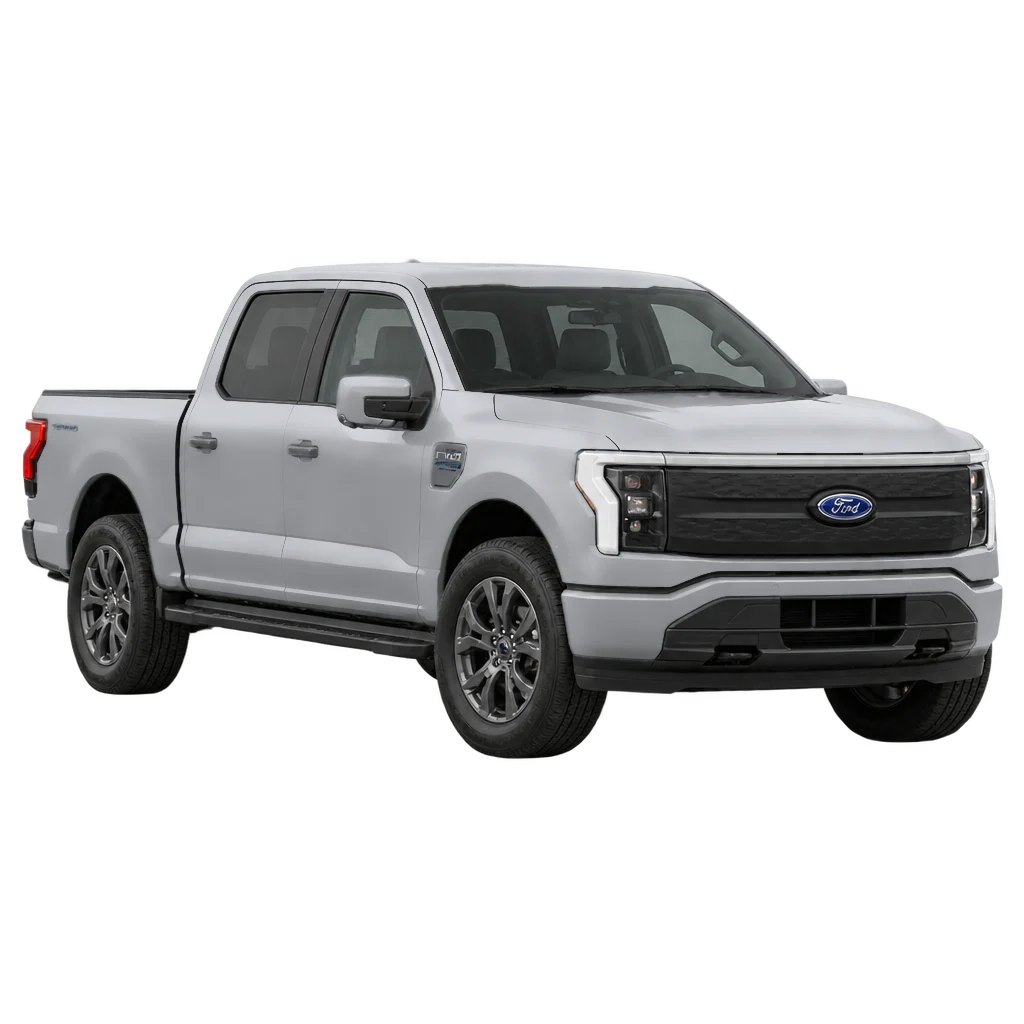
The lineup includes Pro, XLT, Lariat, Platinum, and the Flash trim introduced for 2024. Trim availability and equipment vary by model year. The Pro was particularly relevant to commercial and fleet buyers, although actual insurance requirements depend on vehicle use rather than the trim name.
Earlier standard-range Lightning models used a 98 kWh usable lithium-ion battery, while the original extended-range battery offered 131 kWh usable capacity. Ford subsequently introduced additional battery configurations, including a 123 kWh usable pack in certain later versions. Battery size and classification should be verified using the specific model year and VIN.
All original F-150 Lightning models use dual electric motors and four-wheel drive. Ford initially rated standard-range versions at up to 452 horsepower and extended-range versions at up to 580 horsepower, with approximately 775 lb-ft of torque.
EPA-estimated driving range varies by year, battery, trim, and wheels. The original 2022 models offered approximately 230 miles with Standard Range and up to 320 miles with Extended Range on certain trims. Later models have different ratings, including up to approximately 320 miles on select 2025 configurations.
The Lightning uses CCS1 charging and can access compatible NACS-equipped Tesla Superchargers using an approved adapter. It also offers regenerative braking, a large front trunk, available Pro Power Onboard electrical outlets, and optional home backup power functionality requiring compatible equipment.
Depending on configuration, the truck may include towing technology, advanced cameras, Ford BlueCruise, a large center touchscreen, and specialized trailer-assistance systems.
Insurance considerations include personal versus commercial usage, battery configuration, towing, trailers, work equipment, vehicle value, replacement-part availability, and qualified EV repair requirements.
Owners should identify the VIN, model year, trim, battery, factory options, actual usage, towing activities, current market value, coverage limits, and deductibles when comparing insurance.
How Much Does Ford F-150 Lightning Insurance Cost?
Ford F-150 Lightning insurance premiums depend on the individual driver, truck configuration, garaging location, vehicle usage, coverage selections, and insurer underwriting. There is no reliable single nationwide premium representing every Lightning owner. Insurers may consider driving history, claims experience, annual mileage, garaging location, liability limits, deductibles, and other legally permitted underwriting factors. The Lightning is available in different trim and battery configurations. A Pro used for business deliveries or fleet operations may have different insurance needs from a personally driven Lariat, Flash, or Platinum. Commercial activity is especially important. Contracting, business deliveries, fleet operations, and other work-related use may require commercial auto insurance or specific policy arrangements. Owners should describe actual vehicle usage accurately. Personal automobile coverage should not be assumed to cover every business activity. Battery configuration may influence current vehicle value, weight, and certain physical damage repair considerations. Standard-range and extended-range vehicles use different battery packs and associated equipment. Significant covered collisions or underbody impacts may require qualified inspection of battery protective structures, cooling equipment, high-voltage connections, and supporting components. A required battery inspection does not automatically mean the entire pack must be replaced. The Lightning's dual electric drive units, advanced charging equipment, independent rear suspension, and aluminum-intensive body construction may affect particular covered repair estimates. Trim-specific equipment also matters. Platinum models may include premium wheels and interior components, while Lariat and Flash vehicles can have additional electronics and technology packages. Available BlueCruise, trailer cameras, parking sensors, and driver-assistance systems may require diagnosis or calibration after certain covered repairs. Truck accessories deserve separate review. Bed equipment, aftermarket storage systems, tools, cargo, trailers, and charging accessories may not receive the same coverage as factory-installed vehicle components. The Lightning's available Pro Power Onboard system provides electrical power for tools and other equipment. Physical damage to installed vehicle components should be distinguished from loss involving connected or separately owned property. Towing can also create insurance questions. Liability coverage associated with an attached trailer does not necessarily cover physical damage to the trailer or its contents. The vehicle's current actual cash value matters when considering collision and comprehensive protection, especially because Ford has ended production of this Lightning generation. Discontinued production does not automatically mean Ford has stopped supporting existing vehicles or that all parts are unavailable. Owners should compare equivalent liability limits, collision and comprehensive deductibles, uninsured or underinsured motorist protection, appropriate commercial coverage, towing, rental reimbursement, and optional loan or lease gap protection. SureEV does not invent nationwide Lightning premium averages, guarantee EV discounts, or promise coverage for every type of business activity.
What affects insurance cost
Several factors specific to the Ford F-150 Lightning are worth understanding when shopping for insurance.
Model Year, Trim, Battery, and Value
The 2022–2025 Lightning includes Pro, XLT, Flash, Lariat, and Platinum configurations with different factory equipment and battery options. Current market value, mileage, condition, and installed features may affect insurance classification, covered repairs, and total-loss valuation.
Personal, Commercial, and Fleet Use
A Lightning used for contracting, business deliveries, commercial hauling, or fleet operations may require different insurance from a personally used pickup. Owners should disclose actual usage and confirm coverage eligibility rather than rely on the Pro, XLT, or other trim designation.
High-Voltage Battery and Electric Drivetrain
Standard- and extended-range Lightning configurations have different large lithium-ion batteries and supporting equipment. Certain covered collisions may require qualified high-voltage inspection or specialized repairs. The truck's dual electric drive units and charging hardware should also be identified correctly.
Towing, Trailers, and Work Equipment
Towing technology, trailer usage, cargo, bed accessories, tools, and available Pro Power Onboard equipment create distinct insurance considerations. Trailer physical damage, business property, and separately owned equipment may require protection beyond the truck's standard auto coverage.
Cameras, BlueCruise, and Body Repairs
The Lightning's aluminum-intensive body, advanced cameras, available BlueCruise, towing sensors, glass, lighting, and electronic modules may affect certain covered repairs. Calibration and replacement requirements depend on model year, trim, and installed equipment.
Driver Profile, Deductibles, and Parts Availability
Driving history, garaging location, annual mileage, coverage limits, deductibles, and insurer underwriting affect personalized premiums. Because production ended in 2025, owners should also consider current vehicle value and access to qualified repairs without assuming that Ford support has ended.
Battery and insurance
The Ford F-150 Lightning uses a large high-voltage lithium-ion battery to power its front and rear electric drive units. Battery capacity varies by model year and configuration. The original 2022 standard-range battery offered 98 kWh usable energy, while the extended-range battery provided 131 kWh usable capacity. Ford subsequently offered other battery configurations, including a 123 kWh usable pack in certain later models. Battery capacity, associated components, and applicable repair procedures should always be verified using the specific truck's VIN and Ford service information. Collision insurance may apply to eligible physical battery damage resulting from an insured accident. Comprehensive insurance may address qualifying non-collision events, including certain fires, flooding, hail-related damage, and falling objects. Coverage depends on policy terms, the cause of loss, exclusions, and deductibles. Ordinary battery degradation, gradual capacity loss, age-related wear, and unrelated mechanical or electrical failure generally fall outside standard automobile insurance. Ford's applicable electric-vehicle battery warranty is separate from collision and comprehensive coverage. Ending vehicle production does not automatically cancel remaining valid manufacturer warranty protection. Significant collisions, underbody impacts, or flooding may require qualified inspection of battery protective structures, cooling lines, mounting points, high-voltage connections, and electrical isolation systems. A required battery inspection does not automatically mean complete battery replacement is necessary. Repair decisions should follow actual damage and Ford-approved procedures. The Lightning is designed for truck activities including towing, hauling, and operation at work sites. Heavy loads and difficult operating conditions can affect energy consumption but do not automatically establish insured physical damage. Owners should confirm insurance treatment of business activity, vehicle modifications, towing arrangements, and off-road use. The truck's available Pro Power Onboard system can provide electricity through factory-installed outlets for tools or other equipment. Certain extended-range configurations also support Intelligent Backup Power with compatible home charging and electrical equipment. Physical damage to factory-installed electrical components may be evaluated under the vehicle's policy when caused by an eligible insured event. Home electrical installations, portable charging accessories, adapters, tools, and connected property may involve separate coverage or exclusions. The Lightning uses CCS1 charging hardware and can access compatible NACS-equipped fast chargers with an approved adapter. Owners should distinguish permanently installed charging equipment from removable accessories. Qualified facilities should assess high-voltage equipment after relevant damage. Owners should never attempt to open, disconnect, charge, or repair suspected damaged battery components. When comparing insurance, ask about eligible battery damage, approved repairs, specialized labor, safe towing, manufacturer-required inspections, and applicable exclusions.
Repair considerations
Repairing a Ford F-150 Lightning requires understanding its all-electric drivetrain, battery configuration, pickup body, and factory equipment. The Lightning shares certain design characteristics with the conventional F-150, but its electric propulsion system, battery packaging, frame-related equipment, independent rear suspension, and high-voltage components require model-specific service procedures. Parts should not be assumed interchangeable with gasoline-powered or hybrid F-150 trucks simply because the models share a name. Qualified repair facilities may require Ford EV service information, high-voltage safety equipment, specialized diagnostic tools, and appropriate replacement components. After significant collisions or underbody impacts, technicians may need to inspect battery protection structures, cooling equipment, high-voltage wiring, electrical drive units, and surrounding components. Not every accident involves the battery or requires extensive electrical repairs. Necessary inspections should follow the actual damage and manufacturer instructions. The Lightning uses a high-strength steel frame with an aluminum-alloy body and cargo bed. Covered repairs may involve body panels, front trunk structures, doors, cargo-bed components, tailgate equipment, lighting, and exterior glass. The front trunk, often called the Mega Power Frunk, includes powered or electronic components on certain configurations. Repair estimates should account for actual factory equipment. The truck's independent rear suspension differs from the conventional F-150's traditional rear suspension arrangement. Impact repairs should use the correct parts and alignment requirements. Pro, XLT, Flash, Lariat, and Platinum vehicles may have different wheels, exterior trim, lighting, interior components, and technology packages. Certain configurations include towing equipment, Pro Power Onboard outlets, advanced trailer controls, and other systems that may require specialized diagnosis after relevant physical damage. The Lightning's dual electric drive units, power electronics, high-voltage cooling equipment, and CCS1 charging system may require qualified electrical repairs. The vehicle also includes cameras, parking sensors, driver-assistance electronics, and available BlueCruise equipment that may need manufacturer-specified calibration after certain windshield or collision repairs. Ford ended production of the original Lightning generation in 2025. That development makes ongoing parts availability and specialized service access worth monitoring, but it does not establish that replacement components are unavailable. Owners should ask whether the insurer's repair network can handle the exact Lightning configuration, including aluminum body repairs, high-voltage work, and manufacturer-required calibration. Towing and rental reimbursement may be useful during eligible repairs. Owners should check whether policy limits accommodate the costs and transportation needs associated with a full-size electric pickup.
Cameras, sensors, glass and technology
The Ford F-150 Lightning includes electronic safety, driver-assistance, towing, and power-management technology that differs by model year and trim. Depending on configuration, the truck features SYNC infotainment with either a 12-inch or 15.5-inch center touchscreen, a digital instrument display, connected vehicle functions, and electronic truck controls. Ford Co-Pilot360 technologies may include automatic emergency braking, lane-keeping assistance, blind-spot monitoring, adaptive cruise control, parking assistance, and camera-based systems. Available Ford BlueCruise provides hands-free highway driving assistance on compatible roads under specified conditions. It requires an attentive driver and does not make the Lightning autonomous. BlueCruise availability depends on model year, trim, factory equipment, activation, and applicable subscription arrangements. Truck-specific technology also includes available trailer backup assistance, hitch guidance, integrated trailer controls, and camera systems that support towing and maneuvering. The Lightning's Mega Power Frunk, Pro Power Onboard outlets, available Intelligent Backup Power capability, and related electrical equipment introduce systems not found on every passenger EV. Not all trucks include the same electrical power output, towing technology, or driver-assistance packages. Cameras, radar sensors, windshield-mounted equipment, lighting, electronic modules, and supporting components may require inspection or manufacturer-specified calibration after certain covered repairs. Towing-related sensors or camera components may also need inspection when physically damaged. The Lightning's regenerative braking, traction controls, four-wheel-drive electronics, battery management, and charging systems use electronic modules that can require specialized diagnosis. Certain eligible repairs may involve diagnostic scans, software programming, electrical safety testing, or manufacturer-specified calibration. Physical damage to factory-installed electronics caused by an eligible insured event may qualify under applicable collision or comprehensive coverage, subject to policy terms. Ordinary software updates, BlueCruise subscriptions, wear, and unrelated electrical malfunction generally do not constitute insured physical damage. An electronic warning does not automatically mean a camera, module, or sensor needs replacement. Qualified diagnosis should determine the necessary repair. Owners should ask how their insurers handle required diagnostics, BlueCruise calibration, trailer-related electronics, factory power equipment, specialized parts, and qualified repair labor.
Coverage considerations
Ford F-150 Lightning owners should compare liability, collision, comprehensive, uninsured or underinsured motorist protection, and applicable medical coverage. Requirements, available benefits, and eligibility vary by state, insurer, and vehicle usage. Liability insurance generally addresses qualifying injuries or property damage for which the insured driver is legally responsible. It generally does not pay to repair the owner's own F-150 Lightning. Collision coverage may apply to eligible accident-related damage involving the high-voltage battery, dual electric drive units, vehicle structure, charging equipment, glass, or factory-installed electronics. Comprehensive coverage generally addresses qualifying non-collision losses, including theft, certain fires, flooding, hail, and falling objects. Coverage depends on policy terms, exclusions, deductibles, and the cause of loss. The Lightning's full-size pickup design introduces important considerations involving personal versus commercial usage, towing, cargo, trailers, and electrical power equipment. A Lightning used for contracting, deliveries, fleet operations, or other business activities may require commercial auto insurance or a specific policy endorsement. The vehicle's trim designation alone does not establish coverage eligibility. Owners should accurately describe their actual usage and confirm that the insurer provides appropriate protection. Towing liability and trailer physical damage may be treated differently. Coverage for an attached trailer does not automatically mean its physical damage, tools, cargo, or other contents are insured. Factory-installed Pro Power Onboard components, available Intelligent Backup Power equipment, and separately purchased tools or home electrical systems may also have different coverage treatment. Significant covered collisions, underbody impacts, or flooding may require manufacturer-specified battery inspections or high-voltage safety procedures. A required inspection does not automatically mean complete battery replacement is necessary. Ordinary battery degradation, gradual capacity loss, wear, and unrelated mechanical or electrical failure generally fall outside standard auto insurance. Manufacturer warranties and recalls operate separately. Pro, XLT, Flash, Lariat, and Platinum models may have different equipment, values, wheels, interior components, and electronic features. Available BlueCruise, advanced trailer technology, and camera or radar systems may require qualified diagnosis or calibration after certain covered repairs. Ford ended production of this original Lightning generation in 2025, but owners should not assume that discontinuation eliminates factory support or automatically changes existing insurance coverage. Optional towing, roadside assistance, rental reimbursement, and loan or lease gap protection may be useful depending on eligibility, policy limits, and individual needs. Compare personalized quotes using consistent liability limits, physical damage deductibles, optional benefits, and declared vehicle use.
Deductibles
A deductible is the amount an insured owner is responsible for paying toward an eligible covered claim before the applicable insurer payment. Collision and comprehensive insurance commonly have separate deductibles. Choosing a higher deductible may reduce premiums but increases out-of-pocket expenses after an eligible covered loss. A lower deductible generally has the opposite effect. F-150 Lightning owners should evaluate deductibles in relation to current vehicle value, model year, trim, battery configuration, selected coverage, truck usage, and personal financial circumstances. A Pro used for commercial operations may have different policy and deductible requirements from a personally insured Flash, Lariat, or Platinum. Commercial and personal policies may also treat certain losses and deductibles differently. Owners should compare amounts within the correct coverage arrangement. The Lightning's large battery, dual electric drive units, charging equipment, electrical power systems, and aluminum-intensive body construction may affect some covered repair estimates. However, not every collision involves the battery or requires extensive specialized repairs. Trim-specific wheels, glass, towing components, trailer-related electronics, and available driver-assistance equipment can also affect particular claims. Windshield repairs may require camera or sensor inspection and calibration on appropriately equipped vehicles. Glass benefits and deductibles vary by insurer and state. Owners should verify how factory-installed components, aftermarket equipment, separately purchased tools, and cargo are treated under applicable policies. Financed or leased trucks may have insurance and deductible requirements imposed by a lender or lessor. Compare quotes using equivalent liability limits, collision and comprehensive deductibles, and optional benefits. Choose deductible amounts that remain financially manageable rather than assuming one amount is appropriate for every F-150 Lightning owner. Review coverage and deductibles as vehicle value, mileage, business usage, or financing circumstances change.
Accidents and total loss
Following an accident involving a Ford F-150 Lightning, personal safety comes first. Request emergency assistance when appropriate and avoid contact with suspected damaged high-voltage equipment. Significant collisions, underbody impacts, or flooding may require qualified inspection before the truck is operated, charged, used for towing, or returned to work. Repair estimates should identify the correct model year, Pro, XLT, Flash, Lariat, or Platinum trim, battery configuration, factory options, and actual damaged components. The Lightning's high-voltage battery, dual electric drive units, cooling systems, electrical connections, charging hardware, and underbody protective structures may require specialized examination when affected. Other covered repairs may involve the truck's aluminum-alloy body, front trunk, cargo bed, tailgate, glass, lighting, wheels, suspension, or towing equipment. The independent rear suspension differs from the conventional F-150 arrangement and should be identified accurately when estimating eligible repairs. Vehicles equipped with BlueCruise, trailer cameras, or other advanced electronics may require manufacturer-specified diagnostics or calibration after certain covered repairs. A battery inspection requirement, electronic warning, or damaged protective component does not automatically establish that complete battery replacement is necessary or that the truck is a total loss. An insurer may declare an F-150 Lightning a total loss when applicable policy and state-law criteria are satisfied. Repair expenses, actual cash value, salvage value, and jurisdiction-specific requirements may be relevant. Under standard actual cash value coverage, an eligible total-loss settlement generally reflects the truck's value immediately before the covered loss, subject to policy terms and applicable law. The original purchase price does not automatically establish current market value. Accurate valuation should consider model year, trim, mileage, condition, battery capacity, factory options, installed equipment, and appropriate comparable electric F-150 Lightning vehicles. A gasoline-powered or hybrid F-150 should not automatically be used as an identical comparable vehicle because the propulsion systems, battery equipment, structures, and market characteristics differ. Similarly, an F-150 Lightning Pro Standard Range should not automatically be valued as equivalent to a Platinum or Lariat Extended Range with different factory equipment. Owners should review valuation reports for incorrect battery identification, missing factory options, inaccurate trim classification, mileage errors, condition discrepancies, or unsuitable comparable vehicles. Window stickers, service records, factory-equipment documentation, photographs, and relevant market listings may support a valuation review. Trailers, cargo, tools, and other business property may require separate insurance protection and should not automatically be treated as part of the truck's own total-loss settlement. Optional loan or lease gap protection may address certain qualifying differences between an eligible settlement and an outstanding balance, subject to contract terms and exclusions. Owners who disagree with a valuation should follow applicable policy procedures and state requirements.
Questions to ask an insurer
Does your quote correctly identify my Ford F-150 Lightning VIN, model year, Pro, XLT, Flash, Lariat, or Platinum trim, battery configuration, factory equipment, actual vehicle usage, and current market value?
Does my use of the Lightning qualify for personal automobile insurance, or do contracting, deliveries, fleet operations, or other business activities require commercial coverage or specific endorsements?
Does collision or comprehensive coverage apply to eligible physical damage involving the traction battery, dual electric drive units, CCS1 charging equipment, and related high-voltage systems, and what exclusions apply?
How does the policy handle covered damage involving towing equipment, trailers, cargo, tools, Pro Power Onboard, factory accessories, and separately purchased equipment?
Can I use a qualified Ford EV repair facility, and how are manufacturer-required battery inspections, aluminum body repairs, BlueCruise calibration, trailer-related electronics, and specialized labor handled?
If my Lightning is declared a total loss, will its valuation reflect the correct model year, trim, battery configuration, mileage, condition, factory options, and comparable electric F-150 Lightning trucks?
What liability limits, collision and comprehensive deductibles, uninsured or underinsured motorist coverage, towing, roadside assistance, rental reimbursement, optional gap protection, and relevant commercial-use benefits are available?
Ways to shop smarter
Request personalized quotes using the correct Ford F-150 Lightning VIN, model year, trim, battery configuration, factory options, garaging location, annual mileage, driver information, and actual vehicle usage.
Confirm whether personal automobile insurance is appropriate or whether contracting, business deliveries, fleet operations, or other commercial activities require separate coverage.
Compare equivalent liability limits, collision and comprehensive deductibles, uninsured or underinsured motorist coverage, and optional benefits.
Verify how eligible physical damage to the high-voltage battery, dual electric drive units, charging equipment, cooling systems, and related electrical components is covered.
Ask whether the insurer's repair network can handle Lightning-specific battery inspections, aluminum body repairs, independent rear suspension, towing systems, and manufacturer-required electronic calibration.
Review coverage for factory-installed truck equipment, Pro Power Onboard, trailers, bed accessories, tools, cargo, and separately purchased charging or home backup power equipment.
Evaluate towing, roadside assistance, rental reimbursement, glass coverage, BlueCruise-related calibration, and optional loan or lease gap protection, including applicable limits and exclusions.
Reevaluate current vehicle value, battery configuration, truck usage, factory options, coverage limits, deductibles, available discounts, and competing insurance quotes at renewal.
Frequently asked questions
Is the Ford F-150 Lightning expensive to insure?
F-150 Lightning premiums depend on driving history, location, truck usage, model year, trim, battery configuration, vehicle value, coverage limits, deductibles, and insurer underwriting. Commercial activities, towing, and specialized equipment may affect eligibility or pricing. Personalized quotes are more reliable than unsupported nationwide averages.
Does insurance cover the Ford F-150 Lightning battery?
Collision or comprehensive insurance may cover eligible physical damage to the traction battery caused by an insured event, subject to policy terms and deductibles. Ordinary battery degradation, gradual capacity loss, wear, and unrelated mechanical or electrical failure generally are not covered by standard auto insurance. Manufacturer warranties operate separately.
What model years were available for the original Ford F-150 Lightning?
Ford sold the original fully battery-electric F-150 Lightning for the 2022 through 2025 model years and ended production in December 2025. Ford has announced a future extended-range electric version with a gasoline generator, which is distinct from the original battery-electric model covered in this guide.
Is the Ford F-150 Lightning four-wheel drive?
Yes. The original battery-electric F-150 Lightning uses front and rear electric drive units to provide standard four-wheel drive. Battery capacity, output, and equipment vary by model year and configuration.
What is the driving range of the Ford F-150 Lightning?
EPA-estimated range varies by model year, battery configuration, trim, and wheels. Original 2022 Standard Range models were rated around 230 miles, while certain Extended Range models offered up to 320 miles. Later model-year ratings differ. Actual range depends on driving conditions, temperature, battery condition, payload, and towing.
Does the Ford F-150 Lightning require commercial insurance?
Not every Lightning requires commercial insurance. A personally used truck may qualify for personal automobile insurance, while contracting, business deliveries, fleet operations, or other commercial activities may require commercial insurance or specific endorsements. Owners should disclose actual usage and confirm eligibility with the insurer.
Does the Ford F-150 Lightning support DC fast charging?
Yes. The original Lightning uses CCS1 DC fast charging. Compatible NACS-equipped Tesla Superchargers may be accessible with an approved Ford adapter. Charging performance depends on model year, battery, charger capacity, temperature, and operating conditions.
Are trailers, tools, and Pro Power Onboard equipment covered by Lightning insurance?
Coverage depends on the policy and type of property. Factory-installed vehicle equipment may be treated differently from separately purchased tools, trailers, cargo, portable chargers, or home electrical installations. Trailer liability does not automatically include trailer physical damage. Owners should verify coverage and exclusions.
How is a Ford F-150 Lightning valued after a total loss?
Under standard actual cash value coverage, settlement generally reflects the truck's value immediately before an eligible covered loss, subject to policy terms and applicable law. Model year, trim, battery configuration, mileage, condition, factory equipment, and suitable electric Lightning comparables may affect valuation.
Related EV insurance topics
Ready to compare?
Compare EV insurance options and find coverage that fits your needs.