















EV Insurance Guide
Dodge Charger Daytona
Dodge Charger Daytona insurance considerations for the 2024-2026 electric muscle car, including R/T and Scat Pack configurations, dual-motor all-wheel drive, performance equipment, high-voltage battery coverage, CCS fast charging, specialized collision repairs, and total-loss valuation.
Overview
The Dodge Charger Daytona is a fully electric American muscle car introduced for the 2024 model year. Built on Stellantis' STLA Large platform, it combines high-performance electric propulsion with distinctive Charger styling, advanced electronics, and specialized insurance considerations.
The electric Charger Daytona should not be confused with gasoline-powered Dodge Charger models, including the newer SIXPACK-powered Charger R/T and Scat Pack. These vehicles have different propulsion systems, battery and fuel equipment, performance characteristics, and repair requirements.
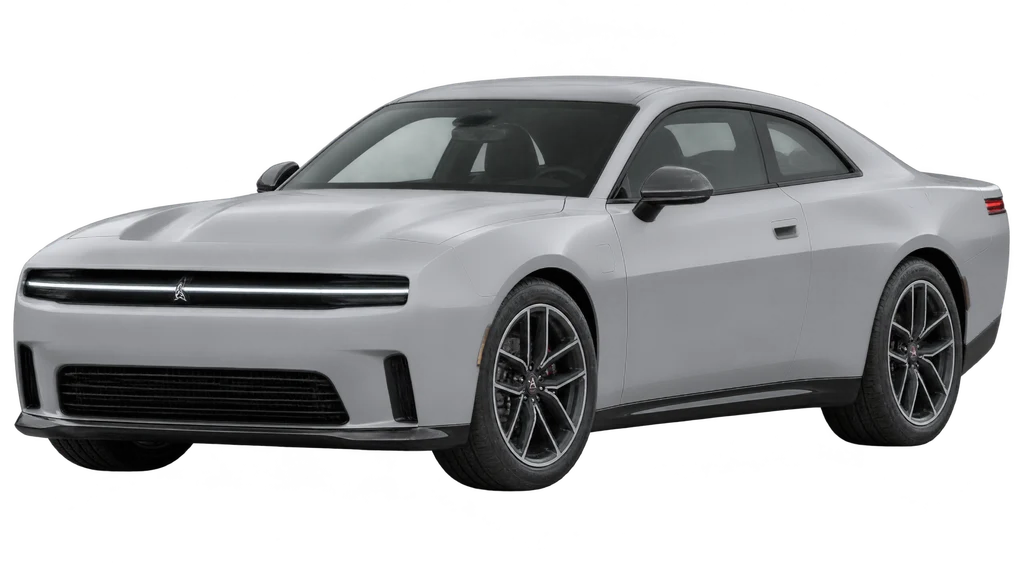
The initial electric Charger Daytona lineup included R/T and Scat Pack configurations. The R/T delivers up to 496 horsepower with its included performance upgrade, while the Scat Pack delivers up to 670 horsepower and 627 lb-ft of torque. Both use dual electric motors and all-wheel drive.
For 2026, Dodge focuses the electric Daytona lineup on the Scat Pack, offering both two-door and four-door body styles. The 2026 Daytona Scat Pack can accelerate from 0 to 60 mph in a manufacturer-claimed 3.3 seconds. Owners should distinguish these electric models from similarly named gasoline Chargers.
The Daytona uses a 400-volt electrical architecture and a large lithium-ion traction battery with approximately 100.5 kWh of installed capacity. Its battery supports substantial power output but requires specialized inspection and repair procedures following certain covered accidents.
Driving range differs by year and configuration. Dodge lists approximately 308 miles for the original R/T and 241 miles for the original Scat Pack, with certain performance packages affecting range. For 2026, Dodge advertises more than 265 miles for the Daytona Scat Pack. These figures should not be treated as interchangeable across model years.
The Charger Daytona uses CCS1 charging equipment and supports compatible Tesla Supercharger access with an approved NACS adapter on eligible vehicles.
Distinctive features include its R-Wing front aerodynamic design, widebody construction, available performance suspension and braking systems, Fratzonic Chambered Exhaust sound system, digital displays, and advanced driver-assistance technology.
For insurance comparisons, owners should identify the exact model year, electric trim, two-door or four-door body style, performance packages, factory equipment, current market value, annual mileage, coverage limits, and deductibles.
How Much Does Dodge Charger Daytona Insurance Cost?
Dodge Charger Daytona insurance premiums depend on the driver, vehicle configuration, location, coverage selections, and insurer underwriting. There is no reliable single nationwide insurance premium that represents every Charger Daytona owner. Insurers may evaluate driving history, claims experience, annual mileage, garaging location, usage, coverage limits, deductibles, and other legally permitted underwriting factors. The Charger Daytona is a high-performance electric vehicle. Its substantial horsepower, acceleration capability, current market value, and specialized equipment may influence insurer classification or physical damage exposure. However, performance figures do not automatically establish a particular premium, and owners should compare personalized quotes rather than assume that every insurer treats the vehicle identically. Model year and trim are important. The original Daytona R/T and Scat Pack differ in output, performance equipment, and factory specifications. The 2026 lineup emphasizes the electric Scat Pack, with two-door and four-door configurations. A two-door Daytona Scat Pack with performance equipment may have different body components and repair considerations from a four-door version with other factory options. The high-voltage lithium-ion battery, dual electric motors, power electronics, cooling system, and charging hardware may require specialized inspections following certain insured accidents. A necessary battery inspection does not automatically mean complete battery replacement. Performance equipment also matters. Depending on configuration, the Daytona may feature Brembo braking components, adaptive suspension, specialized wheels and tires, performance electronics, and other equipment that can influence covered repair estimates. The front R-Wing design, wide body, exterior lighting, large glass areas, and factory electronics may require model-specific replacement parts. Available Track Pack equipment and driving modes should be identified accurately. Track or competition usage requires separate attention because ordinary personal automobile policies may exclude certain racing, timed events, or organized track activities. The Charger Daytona's Fratzonic Chambered Exhaust is an electronically generated exterior sound system, not a conventional gasoline exhaust system. Physical damage to its installed components should be evaluated according to the applicable policy and cause of loss. The vehicle's current actual cash value matters for collision and comprehensive protection. Original purchase price does not automatically determine an eligible total-loss settlement. Owners should compare equivalent liability limits, physical damage deductibles, uninsured or underinsured motorist protection, applicable medical benefits, towing, rental reimbursement, and optional loan or lease gap coverage. SureEV does not invent insurance premiums, promise high-performance discounts, or guarantee coverage for racing or track use.
What affects insurance cost
Several factors specific to the Dodge Charger Daytona are worth understanding when shopping for insurance.
Model Year, R/T or Scat Pack, and Vehicle Value
The 2024-2026 electric Charger Daytona lineup includes model-year-specific R/T and Scat Pack configurations. Horsepower, body style, performance packages, factory equipment, and current market value may affect insurance classification, repair estimates, and total-loss valuation.
High-Performance Electric Drivetrain
The Charger Daytona uses dual electric drive motors and all-wheel drive. The Scat Pack produces up to 670 horsepower, with acceleration and performance equipment that may affect insurer underwriting and covered repair exposure. Performance does not establish a guaranteed premium.
Battery and High-Voltage Components
The Daytona's approximately 100.5 kWh lithium-ion battery, cooling equipment, electrical connections, and power electronics may require qualified inspection after certain collisions or underbody impacts. Ordinary battery degradation is generally separate from automobile insurance.
Performance Brakes, Suspension, and Wheels
Available Track Pack equipment, upgraded brakes, specialized suspension, performance wheels, and tires may affect certain covered repair estimates. Factory-installed equipment and any modifications should be identified accurately.
Body Style, Electronics, and Charging
Two-door and four-door Daytona versions have different body components. The R-Wing, exterior lighting, digital displays, cameras, sensors, CCS1 charging hardware, and Fratzonic sound equipment may create model-specific repair considerations.
Driver Profile, Usage, and Coverage
Driving record, garaging location, annual mileage, deductibles, coverage limits, and insurer underwriting affect personalized premiums. Owners should disclose relevant modifications and verify restrictions involving racing, track events, or other specialized vehicle use.
Battery and insurance
The Dodge Charger Daytona uses a high-voltage lithium-ion battery designed to deliver the substantial electrical power required by its dual-motor performance drivetrain. Dodge specifies approximately 100.5 kWh of installed battery capacity and a 400-volt propulsion system. Its nickel-rich lithium-ion chemistry and thermal management equipment support sustained power delivery under applicable operating conditions. Battery equipment and service procedures should be identified using the actual vehicle VIN and model year. Collision coverage may apply to eligible physical battery damage caused by an insured accident. Comprehensive coverage may address qualifying non-collision losses, including certain fires, flooding, or falling-object damage. Coverage depends on the policy, exclusions, deductibles, and circumstances of the loss. Ordinary battery degradation, gradual capacity loss, wear, and unrelated mechanical or electrical failure generally fall outside standard automobile insurance. Manufacturer battery warranty protection operates separately. Significant collisions, underbody impacts, or flooding may require qualified inspection of the battery enclosure, protective structures, cooling systems, high-voltage connections, and electrical isolation equipment. A required inspection does not automatically establish that the complete battery must be replaced. Qualified technicians should follow applicable Dodge and Stellantis service instructions and assess the actual damage. The Charger Daytona's performance-oriented systems can draw substantial power during hard acceleration. Normal battery temperature management and ordinary maintenance should not be confused with physical damage from an insured accident. Specialized performance equipment or track usage also does not automatically establish insurance coverage. Owners should review policy exclusions and disclose intended use accurately. The battery supports the vehicle's electric propulsion, regenerative braking, charging, and associated electronic systems. Physical damage to the CCS1 charging port, charging electronics, or high-voltage wiring may require qualified diagnosis and replacement components. Portable charging accessories, NACS adapters, and home charging equipment may have different insurance treatment from the vehicle's permanently installed systems. Owners should never attempt to open, disconnect, charge, or repair suspected damaged high-voltage equipment. When comparing insurance, ask about eligible battery damage, manufacturer-specified inspections, qualified electrical labor, towing requirements, and relevant exclusions.
Repair considerations
Repairing a Dodge Charger Daytona requires correct identification of its all-electric propulsion system, performance configuration, body style, and installed factory equipment. The Daytona is different from gasoline-powered Charger vehicles, including models sharing the R/T or Scat Pack names. Body components, high-voltage systems, propulsion equipment, and repair procedures must not be assumed interchangeable. Qualified repair facilities may require Stellantis service information, specialized diagnostic equipment, electrical safety tools, and compatible replacement parts. Certain collisions or underbody impacts may require inspection of the large battery enclosure, cooling equipment, electrical connections, electric drive units, and surrounding structures. Not every accident involves the high-voltage system. Necessary work depends on actual damage and manufacturer repair requirements. The Daytona features a distinctive widebody design, R-Wing front aerodynamic structure, specialized front and rear lighting, and a rear hatch. Two-door and four-door versions have different doors, glass, side-body structures, and related replacement components. Estimates should identify the correct body configuration. The high-performance Scat Pack may have upgraded brakes, suspension, wheels, tires, and electronic performance equipment. Certain configurations include Track Pack features, including performance-oriented braking and suspension systems. Damaged components should be replaced or repaired according to the actual factory specification. Electronic systems may include launch-control functions, selectable driving modes, regenerative braking controls, and Fratzonic sound equipment. Repairs involving these systems may require manufacturer-specific electronic diagnosis or programming after eligible physical damage. Certain windshield, bumper, camera, and sensor repairs may require inspection or calibration of installed driver-assistance equipment. The vehicle's battery and power electronics should be inspected by appropriately trained technicians when the circumstances of a collision require it. Owners should verify that the insurer's repair network can handle a high-performance electric Dodge rather than assume all conventional Charger repair facilities have identical capabilities. Towing and rental reimbursement may be useful during eligible specialized repairs, subject to policy limits and conditions.
Cameras, sensors, glass and technology
The Dodge Charger Daytona includes modern electronic safety systems, infotainment equipment, and performance technology. The 2026 Daytona Scat Pack features a 12.3-inch Uconnect touchscreen, a 16-inch digital instrument cluster, and electronic performance information displays. Factory equipment varies by model year, trim, and options. Drivers should not assume every earlier Daytona has the same displays or electronics. Available features include performance pages, customizable drive modes, advanced parking assistance, digital vehicle controls, and driver-support systems. Depending on equipment, safety systems may include automatic emergency braking, lane-keeping assistance, blind-spot monitoring, traffic sign recognition, driver-attention monitoring, and parking sensors. The Charger Daytona does not use Cadillac's Super Cruise system. Its actual Dodge driver-assistance equipment should be identified using the VIN and factory configuration. Cameras, radar sensors, electronic modules, and supporting components may require inspection or manufacturer-specified calibration after certain windshield, bumper, mirror, or collision repairs. The front R-Wing structure, distinctive lighting, rear glass, widebody panels, and electronic features can influence certain covered repairs. Performance systems also deserve attention. Launch Control, PowerShot, selectable driving modes, and regenerative braking controls use electronic components that may require specialized diagnosis when affected by covered damage. The Fratzonic Chambered Exhaust generates artificial performance sound through dedicated audio equipment. It should not be treated as a conventional internal-combustion exhaust system. Physical damage to installed electronic equipment caused by an eligible insured event may be covered under applicable collision or comprehensive provisions. Ordinary software problems, subscription costs, wear, and unrelated electronic malfunctions generally do not constitute insured physical damage. An electronic warning does not automatically require component replacement. Qualified diagnosis should determine the appropriate work. Owners should ask how insurers handle necessary electronic diagnostics, safety-system calibration, factory performance components, and specialized labor following eligible covered losses.
Coverage considerations
Dodge Charger Daytona owners should review liability, collision, comprehensive, uninsured or underinsured motorist protection, and applicable medical coverage. Insurance requirements, available benefits, and eligibility vary by state and insurer. Liability insurance generally addresses qualifying injuries or property damage for which an insured driver is legally responsible. It generally does not pay to repair the owner's own Charger Daytona. Collision coverage may apply to eligible accident-related damage involving the high-voltage battery, electric drive units, body structure, charging equipment, glass, or factory-installed electronics. Comprehensive coverage generally addresses qualifying non-collision losses, including theft, certain fires, flooding, hail, and falling objects. Coverage depends on policy terms, exclusions, deductibles, and the cause of loss. The Charger Daytona's performance is an important insurance consideration. Original R/T and Scat Pack configurations offer different power outputs and equipment, while the 2026 electric lineup emphasizes the Scat Pack. Insurers should identify the exact electric Charger Daytona rather than a gasoline-powered Charger with a similar trim name. Certain covered collisions may require specialized battery inspections, high-voltage electrical diagnostics, or manufacturer-specified repair procedures. A required inspection does not automatically mean the entire battery must be replaced. Ordinary battery degradation, gradual capacity loss, wear, and unrelated electrical or mechanical failure generally fall outside standard auto insurance. Manufacturer warranties operate separately. Performance components, including upgraded brakes, suspension, wheels, tires, and available Track Pack equipment, should be identified accurately when evaluating covered repairs. Owners should confirm how the insurer treats performance modifications, racing, competitive driving, and organized track events. Standard personal auto policies may exclude certain activities even when the vehicle is otherwise insured for normal road use. Two-door and four-door Daytona configurations may have different body components, glass, and replacement parts. The vehicle's CCS1 charging equipment and installed electronic systems may qualify for physical damage coverage when affected by an eligible insured event. Portable charging equipment, adapters, and home installations may be treated differently. Optional towing, roadside assistance, rental reimbursement, and loan or lease gap protection should also be reviewed according to applicable coverage terms and limits. Compare personalized quotes using equivalent liability limits, deductibles, and optional benefits.
Deductibles
A deductible is the amount an insured owner is responsible for paying toward an eligible covered claim before the applicable insurer payment. Collision and comprehensive coverage commonly have separate deductibles. Higher deductibles may reduce premiums but increase out-of-pocket expenses after an eligible covered loss. Lower deductibles generally have the opposite effect. Charger Daytona deductible decisions should reflect the vehicle's current market value, model year, trim, performance equipment, selected coverage, and the owner's financial circumstances. The high-voltage battery, dual electric motors, power electronics, specialized braking equipment, and model-specific body components may affect certain covered repair estimates. However, not every accident involves these systems, and a high-performance vehicle does not automatically require a particular deductible. A Daytona Scat Pack with Track Pack equipment may have different replacement components and repair requirements from an original Daytona R/T. Large performance wheels, specialized tires, Brembo brakes, suspension equipment, and electronic systems should be reflected in estimates when physically damaged. Glass coverage deserves attention because some windshield repairs may require camera or driver-assistance system inspection or calibration. Applicable deductibles and glass benefits vary by state and insurer. Owners should also review how their policies treat factory equipment compared with aftermarket modifications. For financed or leased vehicles, lenders or lessors may impose insurance coverage and deductible requirements. Compare policies using consistent deductibles and coverage limits, then evaluate the relationship between premiums and possible out-of-pocket claims expenses. Owners should select deductibles they can reasonably afford and review their choices as the vehicle's value or financial circumstances change.
Accidents and total loss
Following an accident involving a Dodge Charger Daytona, personal safety comes first. Request emergency assistance when appropriate and avoid contact with suspected damaged high-voltage equipment. Significant collisions, underbody impacts, or flooding may require qualified inspection before the vehicle is driven or charged. Repair estimates should identify the correct model year, electric R/T or Scat Pack configuration, two-door or four-door body style, factory performance packages, and actual damaged components. Certain repairs may involve the large lithium-ion battery, front or rear electric drive units, cooling systems, high-voltage connections, or charging equipment. Other covered damage may affect the Daytona's widebody panels, R-Wing structure, rear hatch, glass, lighting, performance brakes, suspension, wheels, or electronic equipment. Vehicles equipped with advanced driver-assistance technology may require manufacturer-specified diagnostics or calibration following certain covered repairs. A battery inspection requirement, electronic warning, or damaged protective component does not automatically establish that complete battery replacement is necessary. An insurer may declare a Charger Daytona a total loss when applicable policy and state-law criteria are satisfied. Relevant considerations may include repair expenses, actual cash value, salvage value, and jurisdiction-specific requirements. Under standard actual cash value coverage, an eligible total-loss settlement generally reflects the vehicle's market value immediately before the covered loss, subject to policy terms and applicable law. The original purchase price does not automatically determine the vehicle's current insured value. Accurate valuation should consider model year, R/T or Scat Pack trim, body style, mileage, condition, performance equipment, factory options, and suitable comparable electric Charger Daytona vehicles. A gasoline-powered Charger R/T or Scat Pack should not automatically be treated as an identical comparable vehicle because its propulsion system and equipment differ. Similarly, an original Daytona R/T should not automatically be valued as equivalent to a higher-performance Scat Pack. Owners should review valuation reports for incorrect vehicle identification, missing Track Pack equipment, body-style differences, mileage errors, inaccurate condition descriptions, or unsuitable comparable vehicles. Window stickers, factory equipment records, service documentation, photographs, and relevant market listings may help support an accurate valuation review. Optional loan or lease gap protection may address certain qualifying differences between an eligible total-loss settlement and an outstanding balance, subject to contract terms, exclusions, and limits. Owners who disagree with a valuation should follow applicable policy dispute procedures and state requirements.
Questions to ask an insurer
Does your quote correctly identify my electric Dodge Charger Daytona model year, VIN, R/T or Scat Pack trim, two-door or four-door body style, factory performance packages, and current vehicle value?
Does collision or comprehensive coverage apply to eligible physical damage involving the Charger Daytona's traction battery, dual electric drive units, CCS1 charging equipment, and related high-voltage systems, and what exclusions apply?
Can I use a repair facility qualified to service the electric Charger Daytona, including its high-voltage battery, electric drivetrain, performance systems, and manufacturer-required safety inspections?
How does your insurer handle eligible repairs involving Track Pack equipment, Brembo brakes, performance suspension, specialized wheels, tires, and other factory-installed components?
Does my policy have exclusions or limitations involving organized track events, racing, timed competition, performance modifications, or other specialized driving activities?
If my Charger Daytona is declared a total loss, will its valuation reflect the correct electric trim, body style, factory performance equipment, mileage, condition, and comparable electric Daytona vehicles?
What liability limits, collision and comprehensive deductibles, uninsured or underinsured motorist coverage, towing, rental reimbursement, and optional loan or lease gap benefits are available?
Ways to shop smarter
Request personalized quotes using the correct electric Charger Daytona VIN, model year, R/T or Scat Pack trim, body style, factory performance equipment, garaging location, annual mileage, and driver information.
Compare equivalent liability limits, collision and comprehensive deductibles, uninsured or underinsured motorist protection, and optional benefits.
Verify how eligible physical damage to the high-voltage battery, electric motors, thermal management equipment, CCS1 charging hardware, and related components is covered.
Confirm that the insurer's repair network can service the electric Charger Daytona and perform or arrange qualified high-voltage and performance-system repairs.
Identify Track Pack equipment, Brembo brakes, specialized suspension, factory wheels, performance electronics, and other components that may influence covered repair estimates.
Ask about racing, organized track-event, timed-competition, or performance-modification exclusions, particularly if you intend to use the Daytona beyond ordinary public-road driving.
Review glass coverage, safety-system calibration, towing, roadside assistance, rental reimbursement, and optional loan or lease gap protection, including applicable limits and exclusions.
Reevaluate vehicle market value, coverage limits, deductibles, factory equipment, driving usage, available discounts, and competing insurance quotes at renewal.
Frequently asked questions
Is the Dodge Charger Daytona expensive to insure?
Charger Daytona premiums depend on driver history, location, vehicle value, model year, performance configuration, coverage limits, deductibles, and insurer underwriting. The high-performance Scat Pack may present different insurance considerations from the original R/T. Personalized quotes provide a more reliable comparison than unsupported nationwide averages.
Does insurance cover the Dodge Charger Daytona battery?
Collision or comprehensive insurance may apply to battery damage caused by an eligible insured event, subject to policy terms and deductibles. Ordinary battery degradation, capacity loss, wear, and unrelated mechanical or electrical failure generally are not covered by standard auto insurance. Manufacturer warranty protection operates separately.
Is the Dodge Charger Daytona fully electric?
Yes. The 2024-2026 Charger Daytona models covered in this guide use high-voltage batteries and electric motors. They are distinct from gasoline-powered Dodge Charger models, including newer SIXPACK-powered R/T and Scat Pack configurations.
Is the electric Dodge Charger Daytona all-wheel drive?
Yes. The original electric Charger Daytona R/T and Scat Pack use dual electric motors and all-wheel drive. The 2026 electric Daytona Scat Pack also uses a dual-motor all-wheel-drive system. Equipment and performance vary by model year.
How much horsepower does the Dodge Charger Daytona Scat Pack produce?
The electric Daytona Scat Pack delivers up to 670 horsepower and 627 lb-ft of torque, with manufacturer-claimed 0-60 mph acceleration of approximately 3.3 seconds for the 2026 model. These specifications should not be confused with gasoline-powered Charger Scat Pack models.
Does the Dodge Charger Daytona support DC fast charging?
Yes. The electric Charger Daytona uses a CCS1 charging port and supports DC fast charging. Compatible NACS-equipped Tesla Superchargers may be accessible using an approved adapter, subject to vehicle, network, and equipment compatibility.
Are racing or track events covered by Dodge Charger Daytona insurance?
Coverage depends on policy wording, insurer, event type, and applicable exclusions. Standard personal auto insurance may exclude organized racing, timed competition, or certain track activities. Owners should obtain written clarification from their insurer before participating.
How is a Dodge Charger Daytona valued after a total loss?
Under standard actual cash value coverage, settlement generally reflects the electric Daytona's value immediately before an eligible covered loss, subject to policy terms and law. Model year, electric trim, body style, mileage, condition, and factory performance equipment may affect valuation.
Can I compare Dodge Charger Daytona insurance quotes online?
Yes. Insurance comparison services may help Charger Daytona owners explore available quotes depending on insurer participation, state availability, vehicle eligibility, and underwriting. Compare equivalent coverage limits, deductibles, and optional benefits.
Related EV insurance topics
Ready to compare?
Compare EV insurance options and find coverage that fits your needs.