

















EV Insurance Guide
Cadillac LYRIQ
Cadillac LYRIQ insurance considerations for the all-electric luxury SUV, including rear-wheel drive, all-wheel drive, LYRIQ-V performance equipment, high-voltage battery coverage, Super Cruise, specialized collision repairs, and total-loss valuation.
Overview
The Cadillac LYRIQ is a fully electric, five-passenger luxury SUV introduced to U.S. buyers for the 2023 model year. It combines Cadillac's distinctive exterior design, a spacious two-row interior, advanced digital technology, and electric propulsion. Insurance considerations include its high-voltage battery, electric drivetrain, premium body components, driver-assistance systems, and current market value.
The LYRIQ has been offered with single-motor rear-wheel drive (RWD) and dual-motor all-wheel drive (AWD), depending on model year and trim. These configurations have different propulsion components and potentially different repair requirements. Insurance quotes should identify the exact vehicle rather than treating every LYRIQ as mechanically identical.
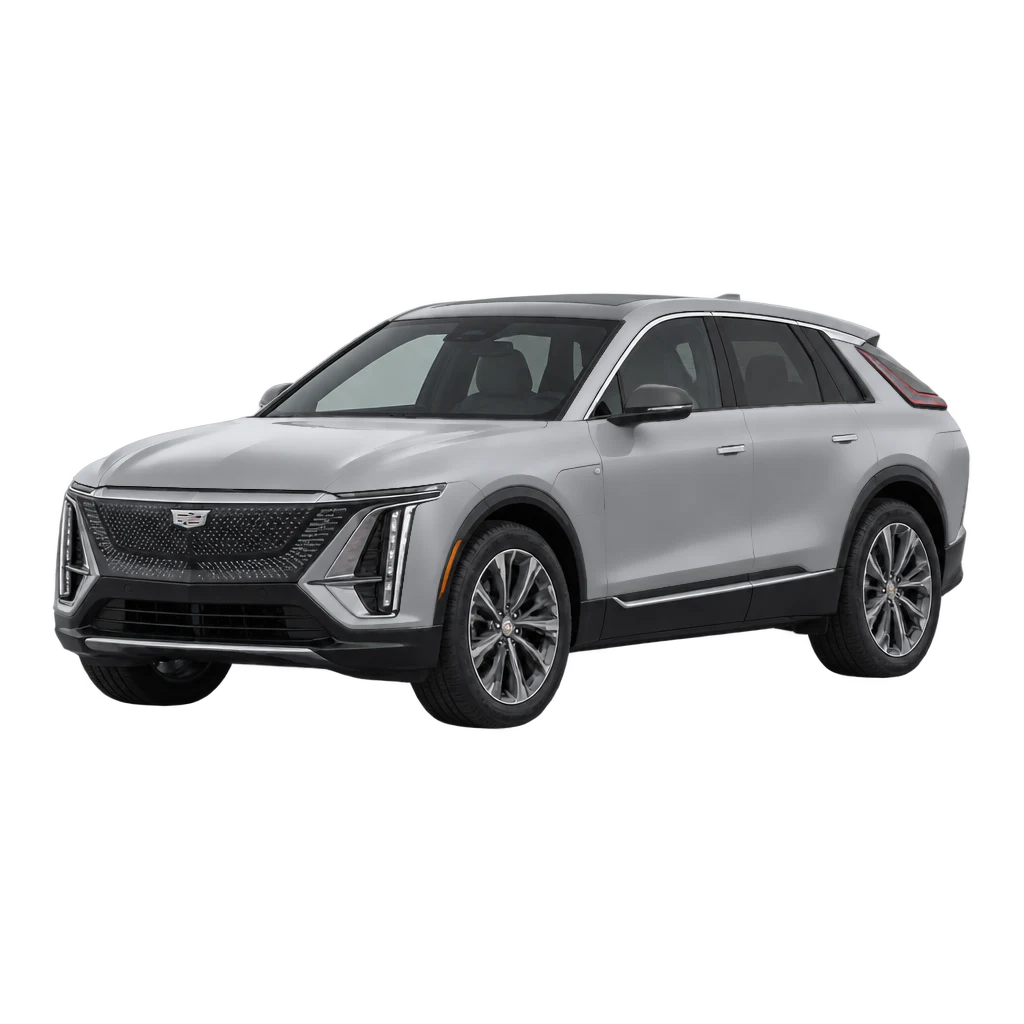
The Cadillac LYRIQ-V, introduced for the 2026 model year, adds high-performance dual-motor AWD, specialized performance calibration, and model-specific equipment. Cadillac rates the 2027 LYRIQ-V at an estimated 615 horsepower in Velocity Max. It is a distinct V-Series performance model, not simply a standard LYRIQ with a Sport appearance package. Its drivetrain, brakes, suspension-related equipment, wheels, tires, and replacement components may require different repair considerations.
Cadillac also offers a confirmed 2027 LYRIQ. The 2027 model uses a native North American Charging System (NACS/J3400) charging port, whereas earlier LYRIQ models generally use CCS1 charging hardware. Owners should verify their actual charging connector and compatible equipment. Connector type can affect replacement parts and charging compatibility but does not independently determine insurance coverage.
The LYRIQ uses a high-voltage lithium-ion traction battery supported by battery management, thermal management, charging electronics, electric drive units, and electrical safety systems. Certain collisions, underbody impacts, or flooding events may require qualified high-voltage inspections before repairs can proceed. A required inspection does not automatically mean the battery must be replaced.
The SUV's distinctive lighting, rear liftgate, glass, exterior panels, large digital display, and available premium equipment may also influence covered repair costs. Depending on the model year and installed features, repairs involving windshields, bumpers, mirrors, cameras, or sensors may require diagnostics or calibration.
Super Cruise hands-free driver assistance is included on certain LYRIQ configurations, including standard equipment on the 2027 LYRIQ. It operates under defined conditions and requires an attentive driver. Super Cruise is not autonomous driving, and its presence does not guarantee lower insurance premiums.
The LYRIQ should not be confused with Cadillac's smaller OPTIQ, three-row VISTIQ, full-size ESCALADE IQ, or ultra-luxury CELESTIQ. Their vehicle dimensions, equipment, values, and repair requirements differ.
Cadillac provides an applicable eight-year/100,000-mile limited EV battery warranty, subject to warranty terms. This warranty is separate from auto insurance. Standard auto insurance generally does not pay for ordinary battery aging, gradual capacity loss, wear, or unrelated mechanical failure.
For insurance shopping, the most important starting points are the correct VIN, model year, RWD or AWD drivetrain, LYRIQ-V designation where applicable, factory equipment, current market value, driver profile, coverage limits, and deductibles.
How Much Does Cadillac LYRIQ Insurance Cost?
There is no single insurance premium that accurately represents every Cadillac LYRIQ owner. Insurance prices depend on driver history, age where permitted, garaging location, annual mileage, vehicle usage, model year, vehicle value, coverage limits, deductibles, and the insurer's underwriting methods. The LYRIQ is a luxury electric SUV, and certain covered repairs may involve specialized components. Its high-voltage battery, electric drive units, advanced lighting, premium glass, electronic modules, and driver-assistance equipment can affect repair estimates when damaged. However, not every accident involves these systems, and their presence does not automatically make every claim unusually expensive. Vehicle configuration matters. A single-motor RWD LYRIQ, dual-motor AWD LYRIQ, and LYRIQ-V can have different propulsion and performance equipment. The LYRIQ-V's specialized components may also affect vehicle valuation and certain repair estimates. Insurers should identify the correct model instead of applying assumptions based on an ordinary LYRIQ Sport trim. Model year matters as well. Earlier LYRIQ vehicles may have different charging connectors, factory equipment, and market values compared with newer models. Optional wheels, roof equipment, lighting, technology packages, and driver-assistance features can also vary. Collision coverage generally addresses eligible accident-related damage to the insured vehicle, while comprehensive coverage generally addresses qualifying non-collision events. These coverages are subject to deductibles, policy conditions, exclusions, and applicable state requirements. When comparing quotes, owners should use equivalent liability limits, collision and comprehensive deductibles, uninsured or underinsured motorist protection, and optional benefits. A lower price may reflect less coverage rather than a better overall insurance offer. For financed or leased LYRIQ vehicles, owners should also consider whether available loan or lease gap protection is appropriate. The vehicle's original purchase price may be higher than its actual cash value when a total loss occurs. The most reliable way to assess Cadillac LYRIQ insurance costs is to obtain personalized quotes using the vehicle's exact identification and consistent coverage selections. SureEV does not publish an unsupported nationwide average premium as though it applies to every owner.
What affects insurance cost
Several factors specific to the Cadillac LYRIQ are worth understanding when shopping for insurance.
Model Year, Drivetrain, and LYRIQ-V Configuration
The LYRIQ has been offered with single-motor RWD and dual-motor AWD. The LYRIQ-V is a separate high-performance AWD variant introduced for 2026. Model year, propulsion components, factory options, performance equipment, and vehicle value can affect insurance classification and certain covered repair estimates.
High-Voltage Battery and EV Components
The LYRIQ's lithium-ion traction battery works with high-voltage cables, power electronics, charging equipment, and thermal management systems. Certain accidents or underbody impacts may require manufacturer-specified inspections and qualified high-voltage diagnostics. Repair requirements depend on actual damage.
Luxury Body Panels, Lighting, and Glass
The LYRIQ features a distinctive front lighting design, rear liftgate, large glass areas, and model-specific exterior components. Covered repairs involving these parts may require specialized replacement components or labor. Repair costs depend on damage location and equipment.
Super Cruise, Cameras, and Sensors
Depending on model year and equipment, the LYRIQ may include Super Cruise, cameras, radar sensors, and parking assistance. Certain windshield, bumper, mirror, or collision repairs may require inspections or calibrations. Driver-assistance features do not guarantee lower insurance rates.
Charging Hardware and Model-Year Differences
Earlier LYRIQ vehicles generally use CCS1 charging hardware, while the confirmed 2027 model has a native NACS/J3400 port. Covered charging-system repairs should use components appropriate for the actual vehicle. Charging connector type alone does not determine premiums or coverage.
Vehicle Value, Location, and Coverage Choices
Current market value, model year, mileage, garaging ZIP code, driver record, annual mileage, policy limits, and deductibles influence premiums. Total-loss valuation should account for the correct drivetrain, LYRIQ-V equipment where applicable, factory options, condition, and comparable market vehicles.
Battery and insurance
The Cadillac LYRIQ uses a high-voltage lithium-ion traction battery to power its electric propulsion system. Its battery operates with thermal management equipment, charging electronics, high-voltage connections, and electronic safety controls. Battery specifications and related components vary by model year and configuration. Collision coverage may apply to physical battery damage resulting from an eligible accident. Comprehensive coverage may apply to qualifying non-collision events, such as certain fires, flooding, or falling-object damage. Actual coverage depends on the cause of loss, policy wording, exclusions, and deductibles. Ordinary capacity degradation, battery aging, wear, and unrelated mechanical or electrical failures generally are not covered by standard auto insurance. Cadillac's applicable eight-year/100,000-mile EV battery limited warranty is separate from insurance and has its own conditions and exclusions. Following a significant underbody impact, collision, or suspected high-voltage damage, qualified personnel may need to examine the battery enclosure, mounting points, nearby structural areas, connectors, and electrical isolation. Owners should not attempt high-voltage inspections or repairs themselves. A damaged protective component or required diagnostic procedure does not automatically mean the entire traction battery must be replaced. The appropriate repair depends on manufacturer procedures, the nature of the damage, component availability, and qualified inspection findings. The LYRIQ's single-motor and dual-motor configurations also have different electric propulsion arrangements. Damage involving electric drive units, power electronics, or associated high-voltage systems should be evaluated using the exact vehicle's specifications. A charging inlet or onboard charging component may be covered when physically damaged by an eligible insured event. Separately owned portable charging equipment, adapters, and permanently installed home charging stations may be subject to different insurance policies or coverage provisions. Owners should ask insurers how eligible battery damage, required safety inspections, specialized diagnostics, towing, and qualified repair labor are handled. Coverage should never be assumed solely because a component is part of the vehicle's electric drivetrain.
Repair considerations
Cadillac LYRIQ collision repairs should reflect the vehicle's actual model year, drivetrain, body configuration, and installed technology. Qualified facilities may need access to Cadillac or General Motors repair procedures, diagnostic systems, specialized tools, and high-voltage safety equipment. The LYRIQ's electric propulsion layout differs between RWD and AWD models. Certain collisions may involve electric drive units, power electronics, reduction gearing, or high-voltage connections. The LYRIQ-V adds performance-specific equipment that should not automatically be treated as interchangeable with ordinary LYRIQ components. The battery enclosure, underbody structure, and nearby mounting areas may require inspection following certain impacts. Manufacturer-specified safety checks can be necessary even when exterior damage appears limited. The exact procedures depend on the affected systems and severity of the loss. Exterior repair considerations include the LYRIQ's distinctive front fascia, illuminated lighting components, large body panels, rear liftgate, rear glass, and premium exterior finishes. Replacement-part availability and manufacturer repair requirements may affect repair timelines. Depending on installed equipment, glass or collision repairs can also involve cameras, radar sensors, parking assistance, electronic controls, and Super Cruise-related hardware. Required calibrations should follow applicable Cadillac or General Motors procedures. LYRIQ-V repairs may involve performance-specific brakes, suspension components, tires, wheels, and drivetrain equipment. Repair estimates should identify the actual V-Series model rather than substitute ordinary Sport-trim specifications. Not every covered repair requires high-voltage work or advanced sensor calibration. The appropriate repair process is determined by the actual damage and affected equipment. Owners should ask whether their insurer's preferred repair network can perform or arrange qualified Cadillac EV repairs and whether necessary manufacturer-specified procedures are addressed in the claims process. Rental reimbursement and towing coverage may help with eligible repair-related transportation expenses, subject to policy limitations.
Cameras, sensors, glass and technology
The Cadillac LYRIQ combines digital vehicle controls, a large integrated display, advanced lighting, and available driver-assistance technology. Equipment varies by model year and trim, so owners should verify the systems installed on their vehicle. Super Cruise is Cadillac's hands-free driver-assistance system. The technology operates under specified conditions and requires an attentive driver. It is not autonomous driving, does not remove driver responsibility, and should not be assumed to qualify a vehicle for an automatic insurance discount. Certain LYRIQ configurations include multiple cameras, radar sensors, parking assistance features, and electronically controlled systems. Windshield replacement, bumper damage, mirror replacement, or collision repair may require inspections, diagnostics, and calibration of affected components. The LYRIQ's distinctive exterior lighting, rear liftgate, glass, and electronic equipment can also require model-specific replacement components. Optional premium equipment should be considered only when actually installed. A covered repair involving driver-assistance hardware should follow applicable manufacturer procedures. Required calibration and diagnostic charges may be included in eligible covered repairs, depending on the insurance policy and claim circumstances. Advanced technology does not automatically make every claim expensive. Owners should focus on whether damaged equipment is correctly identified, appropriate procedures are followed, and eligible repair costs are handled according to their coverage.
Coverage considerations
Cadillac LYRIQ owners should compare liability, collision, comprehensive, uninsured or underinsured motorist coverage, and applicable medical coverage. Insurance requirements and available options vary by state and insurer. The appropriate policy depends on the driver's circumstances, vehicle value, financial exposure, and coverage preferences. Liability insurance generally addresses qualifying injuries or property damage for which the insured driver is legally responsible, subject to policy terms and limits. It generally does not pay to repair the insured driver's own Cadillac LYRIQ. Collision coverage generally applies to eligible accident-related vehicle damage, including qualifying physical damage to the high-voltage battery, electric propulsion components, body structure, lighting, or other covered equipment. Comprehensive coverage generally addresses eligible non-collision losses such as theft, fire, falling objects, and certain weather-related events. Neither coverage should be assumed to pay for ordinary battery aging, gradual capacity loss, wear, or unrelated mechanical and electrical failure. Cadillac's battery warranty is separate from auto insurance. Vehicle configuration should be identified accurately. RWD and AWD LYRIQ versions use different propulsion arrangements, while the LYRIQ-V has performance-specific equipment. These differences can matter when an insurer evaluates replacement parts, repair procedures, and vehicle value. Depending on the actual equipment and loss, covered repairs may require high-voltage safety checks, qualified diagnostics, or camera and sensor calibration. Owners should ask whether necessary manufacturer-specified procedures are addressed in the claim. The LYRIQ's glass, advanced lighting, rear liftgate, exterior panels, and premium electronic equipment can also affect certain covered repair estimates. Coverage for optional accessories, custom equipment, and aftermarket modifications should be confirmed when applicable. Physical damage to the vehicle's charging inlet or onboard charging hardware may be covered following an eligible insured event. Coverage for portable chargers, adapters, or a permanently installed home charging station may require separate policy review. Owners should evaluate collision and comprehensive deductibles, liability limits, uninsured or underinsured motorist coverage, and available rental reimbursement or towing benefits. For financed or leased vehicles, optional loan or lease gap protection may be relevant if an eligible total-loss settlement is less than the outstanding balance. Compare policies using equivalent limits, deductibles, and optional benefits. The lowest premium does not necessarily provide the most suitable protection.
Deductibles
A deductible is the amount the policyholder is responsible for paying toward an eligible covered claim before the applicable insurance payment. Collision and comprehensive coverage commonly have separate deductibles. Selecting a higher deductible may reduce the premium but increases the owner's out-of-pocket expense after a covered loss. A lower deductible generally increases the premium while reducing the amount paid toward an eligible claim. For a Cadillac LYRIQ, deductible decisions should reflect the vehicle's current value, the owner's financial circumstances, and the possibility of repairs involving premium body components, glass, lighting, high-voltage equipment, or driver-assistance systems. Certain collisions may require specialized diagnostics or manufacturer-specified repair procedures. However, the presence of a high-voltage battery or advanced technology does not mean every claim will involve unusually expensive repairs. The LYRIQ-V's performance-specific equipment and the differences between RWD and AWD configurations should be considered when evaluating vehicle-specific repair exposure. Glass coverage and applicable deductibles vary by policy and state. Owners should review whether windshield replacement and any required camera or sensor calibration are addressed under their selected coverage. A deductible should be financially manageable if an unexpected claim occurs. Compare personalized quotes using the same collision and comprehensive deductibles, equivalent liability limits, and comparable optional benefits. Review deductibles periodically as the LYRIQ's market value, financing situation, and coverage needs change.
Accidents and total loss
Following an accident involving a Cadillac LYRIQ, personal safety comes first. Request emergency assistance when necessary and avoid contact with potentially damaged high-voltage components. Do not attempt to inspect, disconnect, charge, or repair high-voltage equipment when unsafe damage is suspected. A significant collision, underbody impact, flooding event, or other potentially hazardous incident may require qualified inspection before the vehicle can be operated or repaired. Follow emergency personnel guidance and applicable Cadillac safety procedures. Repair estimates should reflect the exact LYRIQ model year, drivetrain, installed equipment, and actual damage. Depending on the loss, an estimate may include body repairs, lighting, glass, electric drivetrain components, high-voltage inspections, diagnostics, or driver-assistance calibration. The LYRIQ-V must be identified as a separate performance model where applicable. Its propulsion, braking, suspension-related, wheel, tire, and other performance equipment may differ from standard LYRIQ components. A damaged battery enclosure or required high-voltage inspection does not automatically establish that the battery must be replaced or the vehicle declared a total loss. Qualified repair decisions depend on actual damage, applicable manufacturer procedures, safety requirements, and replacement-part availability. A Cadillac LYRIQ may be declared a total loss when applicable insurer and state-law criteria are met. The specific determination depends on repair costs, vehicle value, salvage considerations where applicable, and jurisdictional rules. Standard auto insurance generally evaluates a total-loss settlement using the vehicle's actual cash value, subject to policy terms and applicable law. Original purchase price does not necessarily equal current actual cash value. An accurate valuation should account for the LYRIQ's model year, mileage, condition, RWD or AWD drivetrain, LYRIQ-V designation where applicable, factory options, and relevant market comparables. Owners should review the insurer's valuation report carefully. A LYRIQ-V should not automatically be valued as an ordinary LYRIQ Sport. Similarly, a vehicle with substantially different drivetrain, mileage, equipment, or condition should not be treated as an identical comparable without appropriate consideration. Owners who disagree with a settlement should review the applicable policy and state dispute procedures. Relevant supporting materials may include the original window sticker, factory equipment information, condition records, and comparable vehicle listings. For financed or leased LYRIQ vehicles, optional loan or lease gap protection may help address certain differences between an eligible total-loss settlement and the remaining balance. Coverage limits, exclusions, and eligibility depend on the agreement.
Questions to ask an insurer
Does your quote correctly identify my Cadillac LYRIQ model year, RWD or AWD drivetrain, LYRIQ-V designation where applicable, factory equipment, and installed driver-assistance systems?
Does collision or comprehensive coverage include physical damage to the LYRIQ's high-voltage battery caused by an eligible insured event, and how are ordinary battery degradation and unrelated mechanical failure excluded?
Can I use a qualified repair facility experienced with Cadillac LYRIQ high-voltage safety procedures, electric propulsion systems, charging equipment, and manufacturer-specified collision repairs?
How does your claims process handle model-specific LYRIQ body panels, lighting, rear liftgate, glass, charging components, and LYRIQ-V performance equipment when damaged in an eligible covered loss?
Are required camera, radar sensor, parking sensor, and Super Cruise-related inspections or calibrations covered when necessary as part of an eligible windshield, bumper, glass, or collision repair?
If my Cadillac LYRIQ is declared a total loss, will the valuation reflect the correct model year, drivetrain, LYRIQ-V equipment where applicable, factory options, mileage, condition, and relevant market comparables?
What rental reimbursement, towing, uninsured or underinsured motorist, and optional loan or lease gap benefits are available, and what limits or exclusions apply?
Ways to shop smarter
Use the exact Cadillac LYRIQ VIN, model year, RWD or AWD configuration, LYRIQ-V designation where applicable, factory options, garaging location, annual mileage, and intended use when requesting quotes.
Compare equivalent liability limits, collision and comprehensive deductibles, uninsured or underinsured motorist coverage, and optional benefits. A lower premium may reflect less protection.
Verify how collision and comprehensive coverage address physical damage to the high-voltage battery, charging equipment, and electric drivetrain following eligible insured events. Ordinary degradation and mechanical failure generally are not covered by standard auto insurance.
Ask whether qualified Cadillac EV repair facilities are available and how the insurer handles manufacturer-specified high-voltage inspections, diagnostics, replacement components, and labor.
Confirm how required camera, radar sensor, parking sensor, and Super Cruise-related calibration procedures are addressed when associated with an eligible covered repair.
Check that repair estimates accurately reflect your LYRIQ's drivetrain, charging hardware, factory options, luxury body equipment, and LYRIQ-V performance components where applicable.
Review optional rental reimbursement, towing, roadside assistance, and loan or lease gap benefits. Compare coverage limitations rather than assuming every insurer provides the same features.
Reevaluate the LYRIQ's current market value, coverage limits, deductibles, financing balance, available discounts, and insurance options at renewal.
Frequently asked questions
Is the Cadillac LYRIQ expensive to insure?
Cadillac LYRIQ premiums depend on driver history, location, vehicle value, model year, annual mileage, coverage, deductibles, and insurer. The vehicle's electric drivetrain, luxury equipment, and technology can influence certain repair estimates. Compare personalized quotes rather than relying on a single nationwide average.
Does insurance cover the Cadillac LYRIQ battery?
Collision or comprehensive coverage may apply to physical battery damage caused by an eligible insured event, subject to policy terms and deductibles. Ordinary degradation, gradual capacity loss, wear, and unrelated mechanical or electrical failure generally fall outside standard auto insurance. Cadillac's applicable battery warranty is separate.
Is the Cadillac LYRIQ rear-wheel drive or all-wheel drive?
The Cadillac LYRIQ has been offered with single-motor rear-wheel drive and dual-motor all-wheel drive, depending on model year and configuration. The LYRIQ-V is a separate high-performance AWD variant. Quotes and repair estimates should use the correct vehicle identification.
What is the difference between the Cadillac LYRIQ and LYRIQ-V?
The LYRIQ-V, introduced for the 2026 model year, is a higher-performance dual-motor AWD version with specialized propulsion calibration and performance-oriented equipment. An ordinary LYRIQ Sport trim is not the same vehicle as a LYRIQ-V. Accurate identification matters for repairs, insurance classification, and valuation.
Does the Cadillac LYRIQ have Super Cruise?
Super Cruise is available on appropriately equipped LYRIQ models and is standard on the 2027 LYRIQ. It supports hands-free driving under specified conditions while requiring an attentive driver. It is not autonomous driving and does not guarantee a lower insurance premium.
Does the Cadillac LYRIQ use NACS or CCS charging?
Earlier Cadillac LYRIQ vehicles generally use CCS1 charging hardware. The confirmed 2027 LYRIQ uses a native NACS/J3400 charging port. Owners should verify their exact vehicle and any compatible charging adapters. Connector differences alone do not determine insurance coverage.
Does the Cadillac LYRIQ require specialized collision repairs?
Certain covered repairs may require qualified high-voltage inspections, electric drivetrain diagnostics, model-specific replacement parts, or camera and sensor calibration. Actual procedures depend on the affected equipment, damage, model year, and applicable Cadillac or General Motors repair requirements.
How is a Cadillac LYRIQ valued after a total loss?
Standard auto insurance generally uses actual cash value, subject to policy terms and applicable law. Valuation should consider the correct model year, mileage, condition, drivetrain, factory equipment, LYRIQ-V designation where applicable, and relevant market comparables. Original purchase price does not automatically determine the settlement.
Can I compare Cadillac LYRIQ insurance quotes online?
Yes. Insurance comparison services may help LYRIQ owners explore available quotes, subject to insurer participation, state availability, and underwriting requirements. Use the exact vehicle identification and compare equivalent coverage limits, deductibles, and optional benefits. Quote availability is not guaranteed for every configuration.
Related EV insurance topics
Ready to compare?
Compare EV insurance options and find coverage that fits your needs.