




















EV Insurance Guide
BMW i3
BMW i3 insurance considerations for the original electric hatchback, including its carbon-fiber passenger cell, rear-wheel-drive electric motor, high-voltage battery, optional range extender, specialized repairs, technology, and total-loss valuation.
Overview
The original BMW i3 is a compact electric hatchback designed around lightweight construction, efficient urban driving, and an unconventional electric vehicle layout.
Introduced to U.S. buyers for the 2014 model year, the original i3 remained part of BMW's American electric vehicle lineup through the 2021 model year.
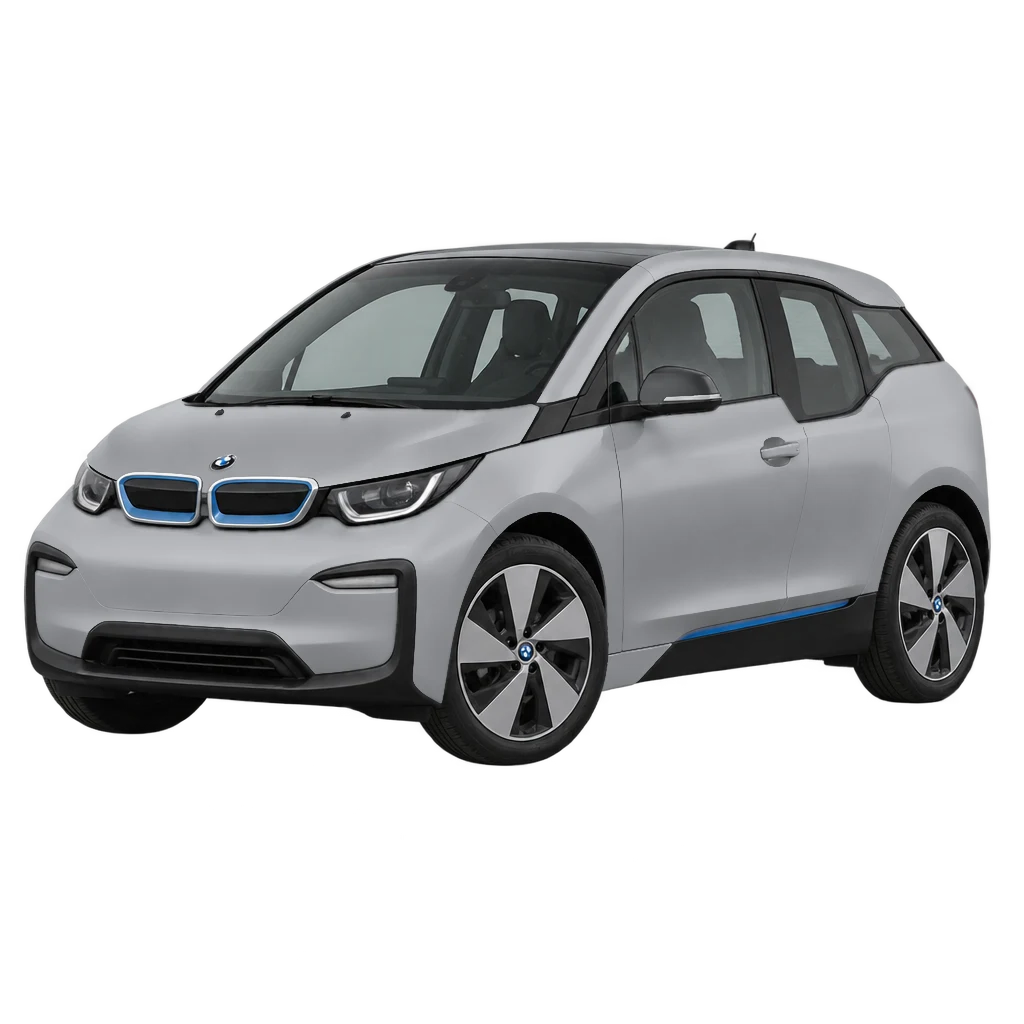
The original i3 should not be confused with the newer BMW i3 Neue Klasse electric sedan, which is a separate vehicle with a different body, platform, drivetrain architecture, and technology.
The original i3's most distinctive feature is its lightweight construction.
Its passenger compartment uses a carbon-fiber-reinforced plastic structure, commonly associated with BMW's LifeDrive vehicle architecture.
An aluminum drive module supports major drivetrain and chassis components.
This construction differs from the conventional steel-intensive unibody designs used by many passenger vehicles.
The original BMW i3 uses a rear-mounted electric motor driving the rear wheels.
It does not use the dual-motor all-wheel-drive configuration found in many newer electric vehicles.
The i3's compact proportions, relatively narrow body, tall passenger compartment, and distinctive rear-hinged rear access doors make it different from a conventional compact hatchback.
Its body design, door arrangement, carbon-fiber passenger cell, and specialized structural components may influence certain collision repair procedures.
The i3 was available in battery-electric configurations and, for applicable model years, versions with a gasoline-powered range extender.
The range-extender model, commonly called the i3 REx, uses a small gasoline engine to generate electricity when needed.
The gasoline engine does not directly drive the wheels through a conventional mechanical drivetrain.
Because the i3 REx includes a gasoline engine and fuel system, it is not identical to the fully battery-electric i3.
Insurance quotes and repair estimates should identify the correct powertrain configuration.
The sportier BMW i3s variant also belongs to the original i3 family.
Depending on model year and equipment, the i3s may have different suspension tuning, wheels, tires, exterior details, and performance characteristics.
The original i3 was sold with different high-voltage battery capacities during its production life.
Battery size, driving range, charging performance, and equipment vary by model year and configuration.
Owners should identify their exact vehicle rather than assuming all BMW i3 models have identical specifications.
The i3's high-voltage battery, electric motor, power electronics, charging components, and thermal management equipment may require specialized diagnostics after certain covered losses.
Its carbon-fiber passenger cell and aluminum drive module may also require repair facilities familiar with BMW-approved structural repair methods.
Not every collision involves structural damage or high-voltage components.
However, the vehicle's distinctive construction makes qualified repair procedures an important consideration when comparing insurance coverage.
Depending on model year and equipment, the original i3 may include parking sensors, cameras, driver-assistance technology, digital displays, and other integrated electronic systems.
Certain glass, bumper, body, or collision repairs may require inspection or calibration of affected systems.
Insurance premiums depend on driver history, location, annual mileage, current vehicle value, coverage limits, deductibles, and insurer underwriting methods.
The original i3's age, condition, battery configuration, powertrain type, and availability of appropriate replacement components may also be relevant when evaluating repair options and total-loss settlements.
The vehicle's manufacturer warranty and any applicable battery warranty are separate from insurance coverage.
Standard auto insurance generally does not cover ordinary battery degradation, gradual wear, or unrelated mechanical failure.
For insurance purposes, owners should consider the i3's exact model year, fully electric or REx configuration, carbon-fiber passenger structure, aluminum drive module, rear-wheel-drive electric drivetrain, high-voltage battery, specialized repair requirements, installed technology, and current market value.
How Much Does BMW i3 Insurance Cost?
BMW i3 insurance premiums depend on the driver's history, location, annual mileage, model year, vehicle value, powertrain configuration, coverage limits, deductibles, and insurer. There is no single insurance premium that accurately represents every BMW i3 owner. The original BMW i3 is a compact electric hatchback with a distinctive lightweight vehicle structure. Its carbon-fiber-reinforced passenger cell, aluminum drive module, rear-mounted electric motor, high-voltage battery, and specialized body construction may influence certain repair estimates following eligible covered losses. Carbon-fiber-reinforced structural components may require manufacturer-approved repair methods and qualified facilities when damaged. Unlike some conventional metal body structures, certain carbon-fiber components may have different inspection, repair, or replacement requirements. Repairability depends on the location and extent of the damage and applicable BMW repair procedures. The aluminum drive module and associated structural components may also require specialized inspection following certain collisions. The i3's rear-mounted electric drivetrain includes an electric motor, power electronics, reduction gearing, and associated electrical systems. Certain collisions may require inspection of these components. The i3's high-voltage battery and associated equipment may require qualified technicians, electrical safety procedures, and specialized diagnostics after certain collisions or underbody impacts. Battery enclosure damage or a required battery inspection does not automatically mean the entire battery must be replaced. The original i3 was offered with different battery capacities during its production life. The exact battery configuration and model year may affect vehicle valuation and replacement-component requirements. Certain original i3 models include the optional gasoline-powered range extender. REx-equipped vehicles also have a gasoline engine, generator-related equipment, fuel system, and associated controls. These components may be relevant to certain covered collision repairs. The fully electric i3 and i3 REx should not automatically be treated as identical vehicles for insurance quoting or repair estimates. The sportier i3s variant may have different wheels, tires, suspension components, and exterior equipment. The exact variant and factory configuration should be reflected in the insurance quote. The original i3's distinctive rear-hinged rear access doors, compact body panels, glass, and integrated electronic equipment may require model-specific replacement parts following certain covered losses. Depending on equipment, some repairs may also require parking sensor, camera, or driver-assistance system inspection or calibration. Vehicle age is another consideration. The original BMW i3 is no longer produced, so owners should consider current market value, appropriate replacement-part availability, and qualified repair access when selecting physical damage coverage. A vehicle's original purchase price does not establish its present actual cash value. The i3's insurance premium is also influenced by the driver's claims history, garaging location, annual mileage, coverage selections, deductibles, and insurer underwriting methods. Some insurers may evaluate the original i3 differently from newer electric vehicles. Owners should compare personalized quotes using the correct model year, battery configuration, fully electric or REx powertrain, i3 or i3s variant, and equivalent coverage selections.
What affects insurance cost
Several factors specific to the BMW i3 are worth understanding when shopping for insurance.
Carbon-Fiber Passenger Cell and Aluminum Structure
The original BMW i3 uses a carbon-fiber-reinforced plastic passenger cell and an aluminum drive module. Certain collision repairs may require specialized structural inspections, BMW-approved repair procedures, qualified facilities, and appropriate replacement components.
High-Voltage Battery and Electric Drivetrain
The original i3 uses a high-voltage lithium-ion battery and rear-mounted electric motor. Certain collisions or underbody impacts may require battery enclosure inspection, electrical isolation checks, specialized diagnostics, and qualified high-voltage repair procedures. Battery specifications vary by model year.
Battery-Electric Versus Range-Extender Configuration
The original BMW i3 was offered as a fully electric vehicle and, in applicable model years, as the i3 REx with a small gasoline-powered generator. The REx version includes additional engine, fuel, and generator-related components that should be identified correctly in insurance quotes and covered repair estimates.
Model Year, i3s Equipment, and Replacement Parts
Battery capacity, equipment, wheels, tires, suspension components, and body details vary across original BMW i3 model years and the i3s variant. The vehicle is no longer produced, so appropriate replacement-component availability and qualified repair access may be relevant after certain covered losses.
Body Panels, Doors, Glass, and Technology
The original i3 has a distinctive compact body, rear-hinged rear access doors, specialized exterior components, and available electronic assistance systems. Certain covered repairs may require model-specific body or glass components and inspection or calibration of installed sensors or cameras.
Current Market Value and Coverage Choices
BMW i3 insurance premiums depend on driver characteristics, location, annual mileage, vehicle age, current value, coverage limits, deductibles, and insurer. Total-loss valuation should reflect the correct model year, battery configuration, fully electric or REx powertrain, i3 or i3s variant, mileage, condition, and relevant market comparables.
Battery and insurance
The original BMW i3 uses a high-voltage lithium-ion traction battery that supplies energy to its rear-mounted electric motor. Battery capacity changed during the original i3's production life. Different model years and configurations may have different battery specifications, charging capabilities, and driving ranges. Owners should verify the exact battery configuration using their vehicle's model year, factory records, and applicable identification information. The original i3 battery should not be confused with the sixth-generation BMW eDrive battery system used by the newer Neue Klasse i3 sedan. The original i3 uses a different electric vehicle architecture and does not share the new sedan's approximately 800-volt-class charging platform. The original i3's high-voltage battery operates with battery management electronics, charging equipment, power electronics, thermal management components, and electrical safety controls. Certain collisions, road-debris strikes, or underbody impacts may require inspection of the battery enclosure, mounting areas, nearby structural components, electrical connections, and associated equipment. Qualified technicians may need to perform electrical isolation checks, specialized diagnostics, and BMW-specified safety procedures before repairs proceed. Collision coverage may apply to physical battery damage caused by an eligible accident. Comprehensive coverage may apply to qualifying non-collision events such as certain fires, flooding, theft-related damage, or falling objects. Actual coverage depends on policy terms, exclusions, deductibles, and the circumstances of the loss. Ordinary battery aging, gradual capacity loss, and unrelated mechanical or electrical failure generally fall outside standard auto insurance coverage. BMW's applicable high-voltage battery warranty is separate from insurance and has its own terms, eligibility requirements, and limitations. Because original BMW i3 vehicles are older, owners should verify whether any manufacturer warranty protection remains applicable to their specific vehicle. A battery warning, reduced driving range, damaged enclosure component, or required inspection does not automatically mean that the entire battery must be replaced. The cause of the issue matters. Ordinary battery degradation is different from sudden physical damage caused by an eligible insured event. Repair decisions depend on actual damage, manufacturer procedures, component availability, and qualified technician assessments. The original i3 uses a rear-mounted electric motor, with associated power electronics and drivetrain components. Certain rear-end collisions or other impacts may require inspection of electric drive equipment and nearby high-voltage systems. Some original BMW i3 vehicles have a gasoline-powered range extender. The REx engine acts as an onboard electricity generator and does not mechanically drive the wheels. Its gasoline engine, fuel system, generator-related equipment, and associated controls are additional components that may require inspection following certain covered losses. A fully electric i3 does not have those gasoline range-extender components. The original i3's carbon-fiber passenger cell and aluminum drive module may also be relevant to the assessment of battery-related collision damage. Structural damage, battery damage, and electric drivetrain damage should be evaluated according to the actual affected components and applicable BMW repair procedures. Damage to the vehicle's charging inlet or charging electronics may be covered when caused by an eligible insured event. Coverage for a separately owned charging cable, portable charger, or permanently installed home charging station should be verified independently. Owners should ask insurers how necessary high-voltage inspections, specialized labor, replacement components, towing, and transportation expenses are handled following an eligible covered loss.
Repair considerations
The original BMW i3 has an unusual vehicle structure compared with many conventional passenger cars. Its carbon-fiber-reinforced plastic passenger cell and aluminum drive module form part of BMW's lightweight LifeDrive construction approach. These materials and structural arrangements may require specialized inspection, repair techniques, and replacement procedures following certain collisions. Damage to carbon-fiber-reinforced structural components should be evaluated using applicable BMW repair instructions. Certain damaged components may require replacement rather than conventional repair techniques. Repairability depends on the affected component, damage severity, and manufacturer procedures. The aluminum drive module may also require qualified structural inspection following certain collisions. Owners should not assume that every general collision repair facility has the equipment or experience required for every original BMW i3 structural repair. The vehicle's rear-mounted electric motor, reduction gearing, power electronics, high-voltage battery, charging systems, and associated electrical equipment may require qualified technicians and specialized diagnostic equipment. Certain collisions or underbody impacts may require high-voltage electrical isolation checks, battery enclosure inspection, and other safety procedures. The original i3's high-voltage architecture should not be confused with the newer Neue Klasse i3 sedan's sixth-generation electric drivetrain and approximately 800-volt-class system. Repair procedures and replacement components should match the original i3's exact model year and configuration. The original BMW i3 was sold with different battery capacities. Battery and charging components should be identified according to the actual vehicle rather than assuming that all original i3 models use identical parts. The fully electric i3 and i3 REx have different powertrain configurations. REx-equipped vehicles include a gasoline-powered generator, fuel system, and associated components. Certain collision repairs may require additional inspections or replacement parts related to this equipment. The original BMW i3s may have different suspension tuning, wheels, tires, and exterior components compared with the standard i3. Repair estimates should reflect the exact variant and factory equipment. The original i3's distinctive body includes compact exterior panels, rear-hinged rear access doors, specialized glass, and unusual structural interfaces. Certain side-impact, rear-impact, door, or body repairs may require model-specific replacement components and BMW-specified procedures. Depending on model year and installed equipment, the vehicle may include parking sensors, cameras, driver-assistance systems, and integrated electronic controls. Certain windshield, bumper, mirror, or collision repairs may require inspection, diagnostics, or calibration of affected systems. The original i3 is no longer in production. Owners should ask whether appropriate replacement components remain available and whether the insurer's repair network can perform or arrange specialized BMW i3 repairs. Parts availability should not be assumed to be universally problematic, but it may affect the timing or feasibility of individual repairs. Not every collision involves the carbon-fiber passenger cell, aluminum drive module, or high-voltage battery. Repair requirements depend on the location and severity of the actual damage. Owners should ask insurers how qualified repair access, manufacturer procedures, replacement components, high-voltage diagnostics, towing, and rental reimbursement are handled after an eligible covered loss.
Cameras, sensors, glass and technology
The original BMW i3 combines compact electric vehicle packaging with digital instrumentation, integrated vehicle controls, and available driver-assistance technology. Technology and safety equipment vary by model year, trim, and factory options. Depending on configuration, an original i3 may include parking sensors, a rearview camera, driver-assistance functions, navigation, digital displays, and other electronic systems. Owners should verify the equipment installed on their actual vehicle rather than assuming every i3 has identical technology. Certain windshield replacements, bumper repairs, mirror replacements, or collision repairs may require inspection, diagnostics, or calibration of affected cameras and sensors. Required procedures depend on the installed equipment, affected component, damage location, and applicable BMW repair instructions. The original i3 has a distinctive body design with a tall passenger compartment, compact exterior dimensions, rear-hinged rear access doors, and specialized glass and body components. Certain door, glass, roof, bumper, or body repairs may require parts appropriate for the exact model year and configuration. The vehicle's carbon-fiber-reinforced passenger cell and aluminum drive module should be considered when assessing certain structural or body-related collision damage. However, not every glass or body repair involves structural carbon-fiber components. The i3's electronic instrumentation and infotainment equipment may require diagnostics following certain electrical or collision-related damage. Its rear-mounted electric motor, charging systems, battery management equipment, and power electronics also rely on integrated electronic controls. Certain covered accidents may require inspection of affected wiring, electrical modules, sensors, or related components. The original i3 REx includes additional electronic controls associated with its gasoline-powered generator and fuel system. These components are not present in the same configuration on the fully battery-electric i3. The i3s variant may also have different factory equipment, wheels, tires, suspension components, or exterior details. Owners should confirm the exact variant when requesting insurance quotes or evaluating repair estimates. The original BMW i3 should not be confused with the newer BMW i3 Neue Klasse sedan. The newer sedan uses a different platform, body structure, drivetrain technology, and driver-assistance architecture. Its specifications should not be applied to the original i3 hatchback. Driver-assistance features support attentive driving but do not replace the driver, guarantee accident prevention, or automatically reduce insurance premiums. Insurance quotes and repair estimates should reflect the original BMW i3's exact model year, fully electric or REx configuration, i3 or i3s variant, battery configuration, installed technology, body construction, and applicable BMW repair procedures.
Coverage considerations
Owners of the original BMW i3 should compare liability, collision, comprehensive, uninsured or underinsured motorist coverage, and applicable medical coverage. Requirements and availability vary by state and insurer. Collision coverage generally applies to eligible accident-related vehicle damage, while comprehensive coverage generally addresses qualifying non-collision events such as theft, fire, falling objects, and certain weather-related losses. Both are subject to policy terms, exclusions, and deductibles. The original BMW i3 is a compact electric hatchback with a carbon-fiber-reinforced plastic passenger cell, aluminum drive module, rear-mounted electric motor, high-voltage battery, and specialized body construction. Owners should understand how their insurer handles qualified repair procedures following an eligible covered loss. Certain collisions may require specialized inspection of carbon-fiber structural components or the aluminum drive module. Repair procedures should follow applicable BMW instructions and reflect the actual location and severity of the damage. Physical damage to the high-voltage battery caused by an eligible collision or comprehensive event may be covered. Ordinary battery aging, gradual capacity loss, and unrelated mechanical or electrical failure generally fall outside standard auto insurance coverage. The original BMW i3 was sold with different battery capacities during its production life. Repair estimates and replacement components should match the exact model year and battery configuration. The fully battery-electric i3 and i3 REx have different powertrain configurations. The REx version includes a small gasoline engine, generator-related components, a fuel system, and associated controls. Certain covered collision repairs may involve these additional components. Owners should verify that their insurance quote correctly identifies the vehicle as a fully electric i3 or i3 REx. The i3s variant may have different suspension tuning, wheels, tires, and exterior equipment. Replacement components should match the vehicle's exact variant and factory specification. The original i3's rear-hinged rear access doors, specialized exterior body panels, glass, and structural interfaces may require model-specific replacement parts following certain covered losses. Depending on installed equipment, windshield, bumper, mirror, or collision repairs may also require camera, parking sensor, or driver-assistance system inspection or calibration. Owners should ask whether manufacturer-specified inspections and calibrations are covered when required as part of an eligible repair. Because the original BMW i3 is no longer produced, owners should consider replacement-part availability and qualified repair access. However, discontinued production does not automatically mean that every repair is difficult or that appropriate parts are unavailable. Damage to the vehicle's charging inlet or associated electronics may be covered when caused by an eligible insured event. Coverage for separately owned charging accessories or a permanently installed home charging station should be verified separately. Optional rental reimbursement and towing coverage may help with transportation expenses following an eligible covered loss, subject to policy limits and conditions. Owners with outstanding loans or leases may also wish to review available gap protection. Eligibility, exclusions, and payment limits depend on the applicable agreement.
Deductibles
A deductible is the amount an insured owner pays toward an eligible claim before the applicable insurance payment. Collision and comprehensive coverage commonly have separate deductibles. Choosing a higher deductible may reduce the premium but increases out-of-pocket expenses after a covered loss. A lower deductible generally increases the premium while reducing the owner's share of an eligible claim. For the original BMW i3, deductible decisions should account for the vehicle's current value, age, carbon-fiber passenger cell, aluminum drive module, high-voltage battery, electric drivetrain, specialized body components, and repair requirements. Certain collisions may require inspection of carbon-fiber-reinforced structural components or the aluminum drive module. Repair requirements depend on the actual damage and applicable BMW repair procedures. Certain accidents or underbody impacts may require high-voltage battery inspections, electrical isolation checks, specialized diagnostics, or other manufacturer-specified safety procedures. The original i3's rear-mounted electric motor, power electronics, charging systems, and associated components may also require inspection following certain covered losses. REx-equipped vehicles include additional gasoline engine, fuel, and generator-related equipment. These components may be relevant to certain covered repairs but are not present in the same configuration on fully electric i3 models. The i3s variant may have different wheels, tires, suspension components, and body details. Replacement parts should reflect the actual vehicle configuration. The original i3's rear-hinged rear access doors, exterior body panels, glass, and integrated electronic systems may require model-specific components. Depending on installed equipment, certain windshield, bumper, mirror, or collision repairs may require inspection or calibration of cameras and sensors. Glass coverage, applicable deductibles, and reimbursement for associated procedures vary by policy and state. Owners should consider the relationship between their deductible and the i3's current market value. The original BMW i3 is no longer produced, and its present value may differ substantially from its original purchase price. Mileage, condition, accident history, battery configuration, battery condition, REx equipment, i3s equipment, and comparable used-vehicle listings may influence valuation. A deductible that made sense when the vehicle was newer may no longer be appropriate. Owners should evaluate whether the cost of collision and comprehensive coverage remains reasonable in relation to the vehicle's current value and their ability to absorb a loss. The original i3's specialized construction does not automatically mean every repair will be unusually expensive. Not every collision involves carbon-fiber structural damage or the high-voltage battery. Owners should choose deductibles that are financially manageable and appropriate for the vehicle's current value. Compare insurance quotes using equivalent liability limits, collision and comprehensive deductibles, and optional benefits. A lower quoted premium does not necessarily provide equivalent protection.
Accidents and total loss
An original BMW i3 may be declared a total loss when repair costs meet applicable insurer and state-law criteria relative to the vehicle's value. Total-loss thresholds and settlement methods vary by jurisdiction and policy. A total-loss evaluation may consider damage to the carbon-fiber-reinforced passenger cell, aluminum drive module, high-voltage battery, rear-mounted electric drivetrain, charging equipment, power electronics, body panels, rear-hinged doors, glass, and installed electronic systems. The original i3's carbon-fiber passenger structure differs from conventional steel-intensive vehicle construction. Certain structural damage may require specialized inspection and manufacturer-approved repair procedures. The aluminum drive module may also require qualified inspection after certain collisions. Damage to a carbon-fiber component does not automatically mean that the vehicle must be declared a total loss. Repair feasibility depends on the affected component, extent of damage, BMW repair procedures, replacement-part availability, and qualified repair access. Certain collisions or underbody impacts may require inspection of the high-voltage battery enclosure, electrical connections, and nearby structural components. Qualified technicians may need to perform electrical isolation checks, diagnostics, or other manufacturer-specified safety procedures. The rear-mounted electric motor, power electronics, and associated drivetrain components may require inspection following certain accidents. The original i3 was offered with different battery capacities. A total-loss valuation should identify the correct battery configuration rather than assuming every original i3 has the same battery specification. The fully electric i3 and i3 REx have different powertrain configurations. The REx version includes a gasoline-powered generator, fuel system, and associated components. These differences may be relevant to repair estimates and vehicle valuation. The i3s variant may have different suspension, wheel, tire, and exterior equipment compared with the standard i3. The exact variant and factory options should be reflected in the valuation. The original i3's distinctive body, rear-hinged rear access doors, specialized exterior panels, and glass may require model-specific replacement components. Depending on installed equipment, certain repairs may also require inspection or calibration of cameras, parking sensors, or driver-assistance systems. The original BMW i3 is no longer produced. Replacement-part availability and qualified repair access may affect the feasibility or timing of certain repairs. However, discontinued production alone does not establish that a vehicle is a total loss. Standard auto insurance generally settles total losses using actual cash value, considering the vehicle's model year, mileage, condition, equipment, and comparable market information. The original i3's purchase price when new may differ substantially from its present actual cash value. Owners should review the insurer's valuation report and confirm that it identifies the correct original BMW i3 hatchback rather than the newer Neue Klasse i3 sedan. The valuation should reflect the correct model year, battery configuration, fully electric or REx powertrain, i3 or i3s variant, factory options, mileage, condition, and relevant used-vehicle comparables. Where comparable vehicles differ substantially in battery configuration, powertrain, equipment, condition, or mileage, owners should ask how the insurer adjusted for those differences. Owners who disagree with a valuation should review the policy's dispute procedures and applicable state requirements. Supporting documentation may include the original window sticker, factory equipment records, vehicle condition evidence, maintenance history, and relevant comparable market information. For financed or leased vehicles, optional gap coverage may help address certain differences between an eligible total-loss settlement and the outstanding loan or lease balance. Availability, exclusions, and payment limits depend on the coverage agreement.
Questions to ask an insurer
Does your quote correctly identify my original BMW i3 hatchback, including its exact model year, battery configuration, fully electric or REx powertrain, i3 or i3s variant, and factory equipment?
Does collision or comprehensive coverage include physical damage to the high-voltage battery caused by an eligible insured event, and how are ordinary battery degradation and unrelated mechanical failure treated?
Can I use a qualified repair facility experienced with the original BMW i3's carbon-fiber passenger cell, aluminum drive module, high-voltage battery, electric drivetrain, and manufacturer-approved structural repair procedures?
How does your claims process handle repairs involving the original i3's specialized body construction, rear-hinged doors, high-voltage systems, electric drivetrain, and any additional gasoline range-extender components?
Are manufacturer-specified camera, parking sensor, and driver-assistance system inspections or calibrations covered when required as part of an eligible windshield, bumper, or collision repair?
How will you determine actual cash value if my original BMW i3 is declared a total loss, and will the valuation reflect its correct battery configuration, fully electric or REx powertrain, i3 or i3s variant, mileage, condition, and relevant used-vehicle comparables?
What rental reimbursement, towing, and optional loan or lease gap protection benefits are available, and what limits, waiting periods, or exclusions apply?
Ways to shop smarter
Compare personalized insurance quotes using the exact VIN, model year, battery configuration, fully electric or REx powertrain, i3 or i3s variant, factory equipment, garaging location, annual mileage, and intended use. Make sure the vehicle is identified as the original BMW i3 hatchback rather than the newer i3 Neue Klasse sedan.
Use equivalent liability limits, collision and comprehensive deductibles, and optional benefits when comparing insurance premiums. Review the policy terms rather than assuming the lowest quoted price provides equivalent protection.
Confirm how the policy covers physical damage to the high-voltage battery and electric drivetrain following an eligible insured event. Ordinary battery degradation and unrelated mechanical or electrical failure generally fall outside standard auto insurance coverage.
Ask whether the insurer supports qualified repair facilities experienced with the original BMW i3's carbon-fiber-reinforced passenger cell, aluminum drive module, high-voltage electrical systems, and manufacturer-approved repair procedures.
Verify how required camera, parking sensor, and driver-assistance system inspections or calibrations are handled when associated with an eligible covered repair. Confirm whether applicable procedures follow BMW repair requirements for the vehicle's exact equipment.
Confirm that repair estimates and replacement components match the original i3's exact model year, battery configuration, fully electric or REx powertrain, i3 or i3s variant, body components, and factory-installed technology. Ask about appropriate replacement-part availability when necessary.
Consider liability limits, uninsured or underinsured motorist protection, rental reimbursement, towing, and optional gap coverage based on your circumstances and any remaining financing. Availability and benefits depend on state requirements and policy terms.
Review the original BMW i3's current market value, battery condition, vehicle age, mileage, REx or i3s equipment, available discounts, deductibles, and coverage needs at renewal rather than relying on its original purchase price.
Frequently asked questions
Is the BMW i3 expensive to insure?
BMW i3 insurance premiums depend on the driver's history, location, annual mileage, vehicle age, current value, coverage, deductibles, and insurer. The original i3's carbon-fiber passenger cell, aluminum drive module, high-voltage battery, and specialized repair requirements may influence certain repair estimates. Compare personalized quotes using the correct model year and powertrain configuration rather than relying on a single average premium.
Does insurance cover the BMW i3 battery?
Collision or comprehensive coverage may apply to physical damage to the original BMW i3's high-voltage battery caused by an eligible insured event, subject to policy terms and deductibles. Ordinary battery aging, gradual capacity loss, and unrelated mechanical or electrical failure generally are not covered by standard auto insurance. BMW's applicable battery warranty is separate from insurance.
Is the original BMW i3 fully electric?
The original BMW i3 was offered as a fully battery-electric vehicle and, in applicable model years, as the i3 REx with a small gasoline-powered range extender. The REx engine generates electricity rather than mechanically driving the wheels. Insurance quotes should identify the correct powertrain configuration.
Does the BMW i3 have a carbon-fiber body?
The original BMW i3 uses a carbon-fiber-reinforced plastic passenger cell as part of its lightweight construction, along with an aluminum drive module and exterior body panels made from other materials. Not every exterior panel is carbon fiber. Certain structural repairs may require specialized BMW-approved procedures.
What is the difference between the BMW i3 and BMW i3s?
The i3s is a sportier variant of the original BMW i3 hatchback family. Depending on model year and configuration, it has different performance tuning, suspension components, wheels, tires, and exterior details. Insurance quotes and repair estimates should identify the exact i3 or i3s variant and factory equipment.
Is the original BMW i3 the same vehicle as the new BMW i3 Neue Klasse sedan?
No. The original BMW i3 is a compact electric hatchback sold in the United States for the 2014-2021 model years. The newer BMW i3 Neue Klasse sedan is a separate vehicle with a different body, platform, battery technology, drivetrain architecture, and electronic systems. The two vehicles should not be treated as interchangeable for insurance quoting or repairs.
Does the BMW i3 require specialized collision repairs?
Certain original BMW i3 collision repairs may require qualified technicians, carbon-fiber structural inspection, aluminum structure repair procedures, high-voltage battery safety checks, electric drivetrain diagnostics, and camera or sensor calibration. The exact requirements depend on the damage, model year, equipment, and applicable BMW repair instructions.
How is an original BMW i3 valued after a total loss?
Standard auto insurance generally uses actual cash value, considering the vehicle's model year, mileage, condition, battery configuration, fully electric or REx powertrain, i3 or i3s variant, factory options, and comparable market information. Owners should review the valuation report and confirm that the correct original BMW i3 hatchback and relevant used-vehicle comparables were used.
Can I compare BMW i3 insurance quotes online?
Yes. Insurance comparison services may help original BMW i3 owners compare available quotes, subject to participating insurers, state availability, and underwriting requirements. Use the exact vehicle identification and compare equivalent coverage limits, deductibles, and optional benefits. Not every insurer or comparison service will necessarily offer a quote for every original i3 configuration.
Related EV insurance topics
Ready to compare?
Compare EV insurance options and find coverage that fits your needs.